
Teaching the Life Cycle of a Butterfly: Activities and Worksheets for Effective Classroom Learning
Watching a butterfly grow from an egg to a full-grown adult is an amazing experience for students. Teachers can make this lesson fun and memorable by using simple activities and worksheets that explain each stage of the butterfly life cycle. By using hands-on projects and clear visuals, students can see how butterflies change and develop over time.
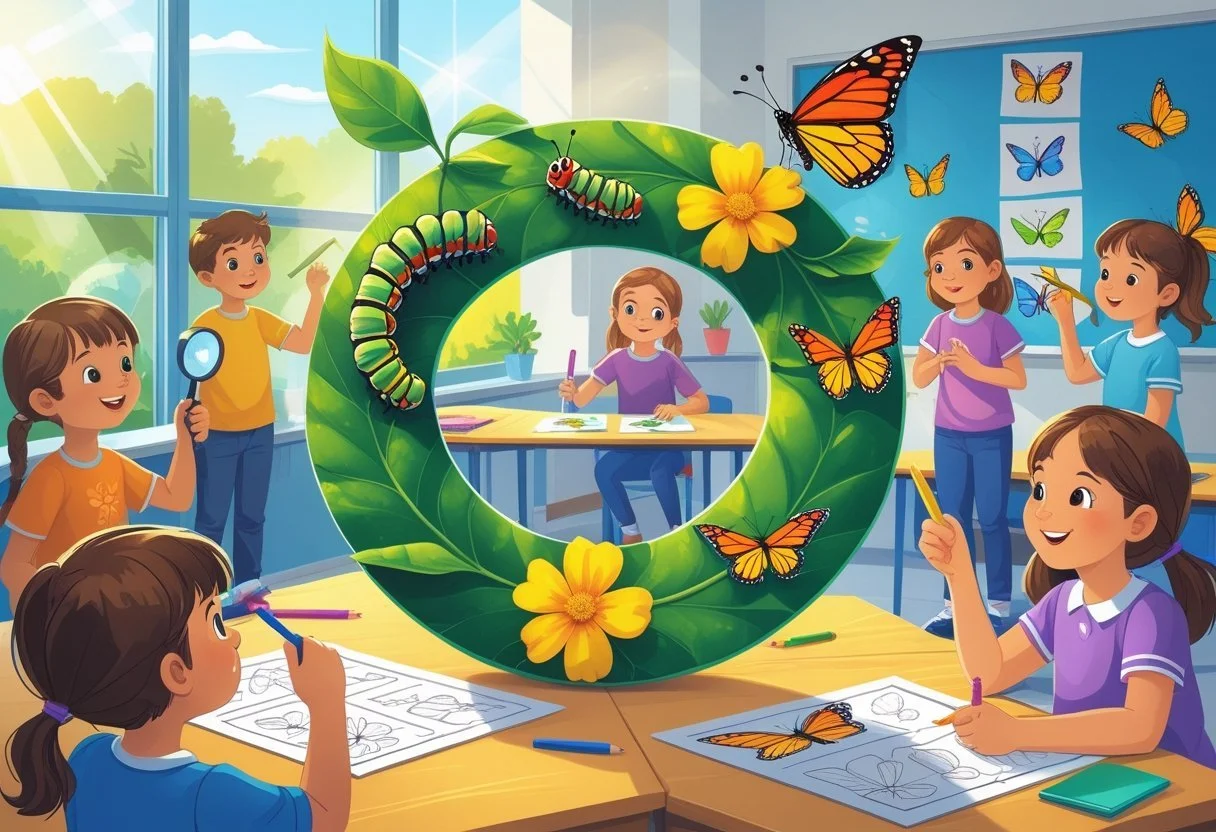
These lessons can also help build important science and reading skills. With crafts, games, and printables, students stay interested and learn new words while discovering the wonders of nature.
Key Takeaways
Activities and worksheets help students understand each stage of a butterfly's life.
Hands-on projects and educational games support science and reading skills.
Visual tools and clear guides make learning about butterflies easy and fun.
Understanding the Life Cycle of a Butterfly
Every butterfly goes through a unique process called metamorphosis. This change includes several stages and uses special terms that students will need to know.
Stages of Metamorphosis
The butterfly life cycle has four main stages. These are egg, larva (caterpillar), pupa (chrysalis), and adult butterfly.
Egg: The process begins when a butterfly lays eggs on a leaf. The eggs are tiny and sometimes hard to see.
Larva (Caterpillar): The egg hatches into a caterpillar. Here, the caterpillar spends most of its time eating and growing.
Pupa (Chrysalis): After the larva grows big enough, it becomes a pupa. This stage is also called the chrysalis. The caterpillar changes inside the pupa into an adult.
Adult Butterfly: Finally, an adult butterfly emerges from the pupa. It has wings and can fly, starting the cycle over again by laying eggs.
This complete process is called metamorphosis because the butterfly changes form at each stage.
Key Vocabulary Words
Learning vocabulary words helps children better understand the butterfly lifecycle. Some of the most important words include:
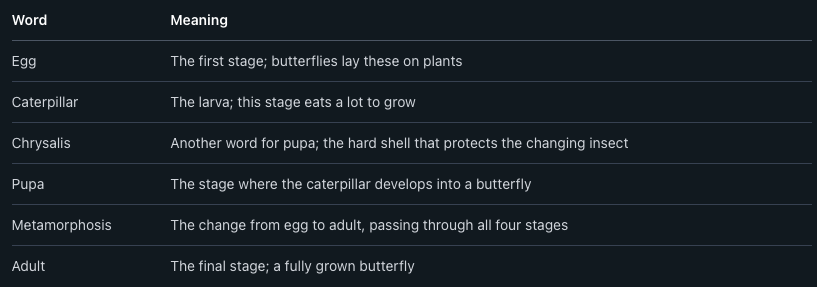
Practice using these words in sentences or short quizzes to reinforce learning.
Real Caterpillars and Adult Butterflies
Observing real caterpillars and adult butterflies helps students understand life cycles. A simple activity is to collect caterpillars or buy a butterfly kit. Keep the caterpillars in a container with fresh leaves.
Students watch as the caterpillar forms a chrysalis and later turns into an adult butterfly. Keeping a daily journal with drawings and notes helps students notice changes during each stage.
Release the adult butterflies outside after they emerge. This hands-on experience supports lessons and makes the butterfly life cycle for kids real and memorable.
Essential Butterfly Life Cycle Activities
Activities that let children see and touch different butterfly stages help them learn faster. Watching real caterpillars change and exploring a butterfly garden can make science come alive.
Hands-On Projects for Preschoolers
Young children learn best by doing. Simple crafts and activities help preschoolers understand the four stages of a butterfly: egg, caterpillar, chrysalis, and butterfly.
Egg Carton Caterpillars: Kids use paint, pipe cleaners, and egg cartons to make their own caterpillars. This builds fine motor skills and helps them remember the early stage of a butterfly.
Life Cycle Wheel: Students can cut and color a paper wheel showing each stage. They turn the wheel to show how the butterfly grows and changes.
Pasta Butterfly Craft: Children glue different pasta shapes to paper to create the life cycle. For example, a small round pasta can be the egg, a spiral pasta the caterpillar, shell pasta the chrysalis, and bowtie pasta the butterfly. This uses hand-eye coordination and creativity.
All these activities are easy to set up and let kids learn through touch, sight, and movement.
Butterfly Garden Exploration
A butterfly garden is an outdoor space with plants that attract butterflies. Kids get to see butterflies up close in different stages of their life cycle.
Teachers or caregivers can guide children through the garden. They point out eggs on leaves, hungry caterpillars eating, and butterflies laying eggs. Students might use journals to track what they see and draw pictures of different stages.
They can also help plant flowers that butterflies like, such as milkweed or zinnias. Planting and taking care of the garden teaches responsibility. It also connects butterfly activities to real nature and builds fine motor skills as children dig and plant.
Being outside and watching butterflies move from flower to flower is exciting for kids and deepens their understanding of how living things grow and change.
Observing Real Caterpillars
Having children observe real caterpillars is one of the most direct butterfly life cycle activities. These caterpillars can be found in a butterfly garden or bought as part of a butterfly kit for classrooms.
Kids watch caterpillars eat leaves, form a chrysalis, and finally emerge as butterflies. Observing this transformation in real time helps them understand each stage. Children can use magnifying glasses to study details like caterpillar movement or chrysalis color.
Teachers may show a table like this to help students track what they see:
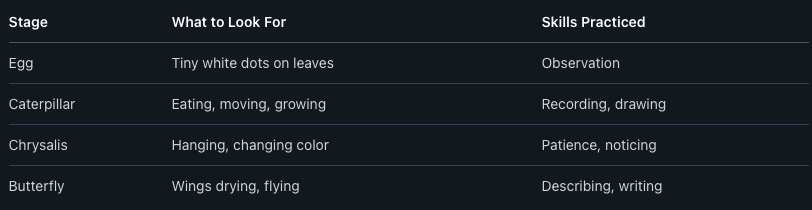
Working with real caterpillars also supports basic science skills like making predictions, comparing stages, and caring for living things. This kind of close-up learning stays with children longer than just looking at pictures or videos.
Creative Butterfly Crafts for All Ages
Hands-on butterfly crafts are fun and help kids remember the stages in the life cycle of a butterfly. These activities also let children practice skills like cutting, gluing, and following instructions.
Tissue Paper Butterfly Craft
A tissue paper butterfly craft is easy to prepare and popular with teachers and parents. Children start by folding a coffee filter or piece of tissue paper in half, then coloring it with markers or watercolors. Spraying the colored tissue with water and letting it dry makes a bright, unique design.
Next, kids pinch the center using a clothespin or pipe cleaner to form butterfly wings. Adding googly eyes and drawing a smile turns this into a friendly butterfly character. This project reinforces symmetry and scissor skills if kids help trim the wings or decorate with pre-cut shapes.
Supplies needed:
Tissue paper or coffee filters
Washable markers or watercolors
Pipe cleaners or clothespins
Googly eyes (optional)
Scissors
Spray bottle (for water)
This craft connects art with science by letting children use different colors for each stage in the butterfly’s life cycle. It also supports the butterfly theme in the classroom or at home.
Butterfly Suncatcher Craft
The butterfly suncatcher craft lets kids create colorful window decorations that catch the sunlight. Children cut a butterfly shape out of black cardstock or thick paper, which helps them practice scissor skills. The inside wings are filled with small pieces of colored tissue paper or cellophane using glue or contact paper.
When the suncatcher is complete, it can be taped to a window so the light shines through the bright colors. This makes each craft unique, and children enjoy seeing their butterflies glow during the day.
Key steps:
Cut out a butterfly outline from black paper.
Stick contact paper to the back and fill the open spaces with tissue paper pieces.
Seal with another layer of contact paper.
Trim the edges if needed and hang on a window.
The suncatcher craft fits well with any butterfly theme and is easy to adapt for different ages. Young children can use simple shapes, while older children can create more detailed butterfly outlines.
Butterfly Life Cycle Worksheets and Printables
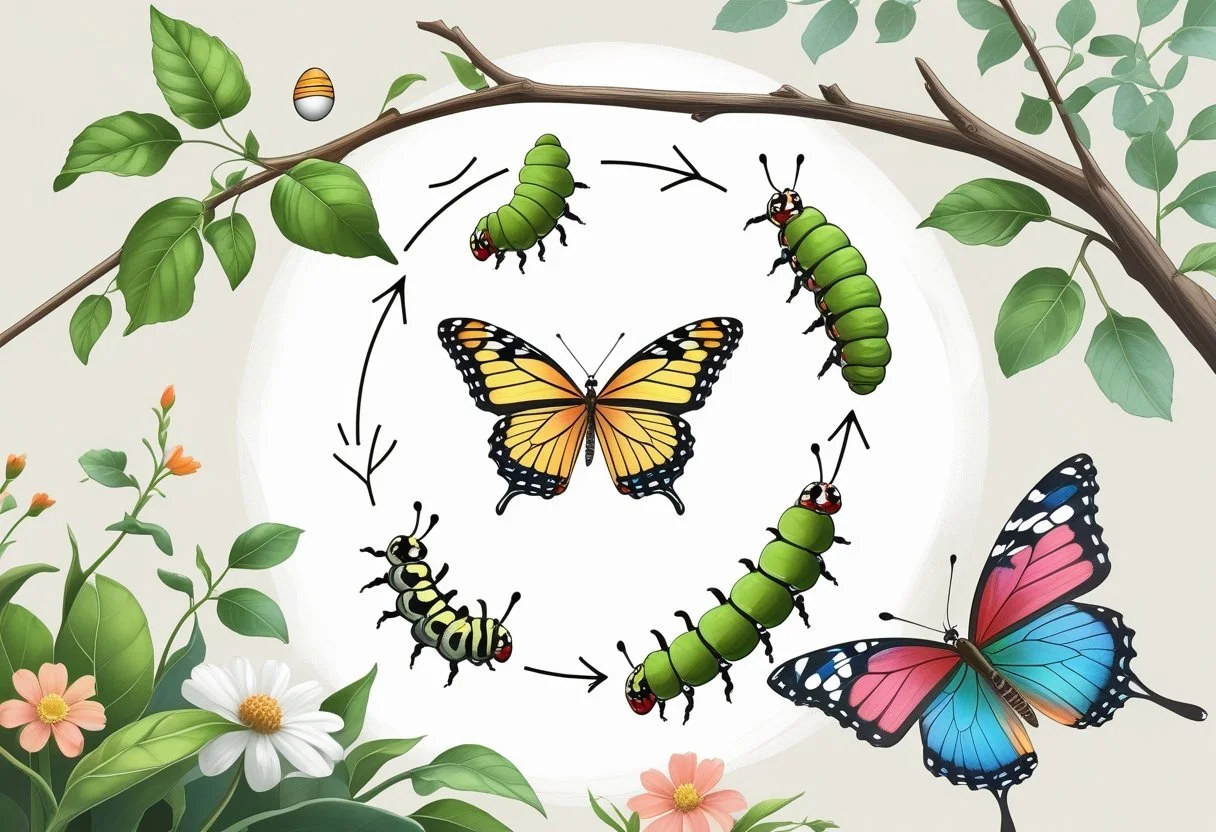
Worksheets and printables are useful tools for helping students understand how a butterfly changes through each stage of its life. Providing varied activities and visual aids gives students more ways to remember and enjoy the lesson.
Free Printable Butterfly Worksheets
Free printable butterfly worksheets offer easy and budget-friendly ways for teachers and parents to bring learning materials into the classroom or home. These worksheets often include coloring pages, matching activities, and simple labeling exercises.
Many of these free butterfly worksheets focus on the four stages: egg, caterpillar, chrysalis, and butterfly. Students can cut out and assemble pieces, match pictures to words, or put the stages in order. Some resources also include line drawing guides that help children create their own butterfly illustrations.
A few popular sites provide a selection of butterfly life cycle printables at no cost. These worksheets are great for centers, take-home assignments, or as part of a science notebook. Using free printables can save time and help reinforce important science vocabulary.
Life Cycle of a Butterfly Worksheet
A life cycle of a butterfly worksheet usually focuses on the process from egg to adult butterfly. The goal is to help students see and label each stage clearly. Most worksheets use diagrams, arrows, or circles to describe the cycle: Egg → Larva (Caterpillar) → Pupa (Chrysalis) → Adult Butterfly.
Some worksheets include fill-in-the-blank sections, where students write in the stage name. Many offer mini-quizzes or short comprehension questions at the bottom. Others have sequencing activities, which challenge students to put pictures or text about each stage in the correct order.
Teachers value worksheets that use real images as well as drawings. These can prompt class discussions or serve as review before a test. An effective butterfly life cycle worksheet encourages students to think about change and growth in nature.
Printable Pack and Printable Book
A printable pack is a group of different butterfly life cycle worksheets and activities collected in one file or download. These packs often include tracing sheets, labeling pages, puzzles, and cut-and-paste crafts. Some printable packs provide both simple and advanced versions, making it easier to reach a range of students.
A butterfly life cycle printable book allows students to create their own small book. Each page covers one stage of the cycle, often with a short sentence and space for a drawing or coloring. These books help students practice reading, sequencing, and summarizing.
Most printable packs and mini-books use large, easy-to-read fonts and clear illustrations. Teachers find these resources helpful for both group and independent work. Printable packs and books can be sent home for extra practice or displayed on classroom walls.
Educational Games and Math Activities
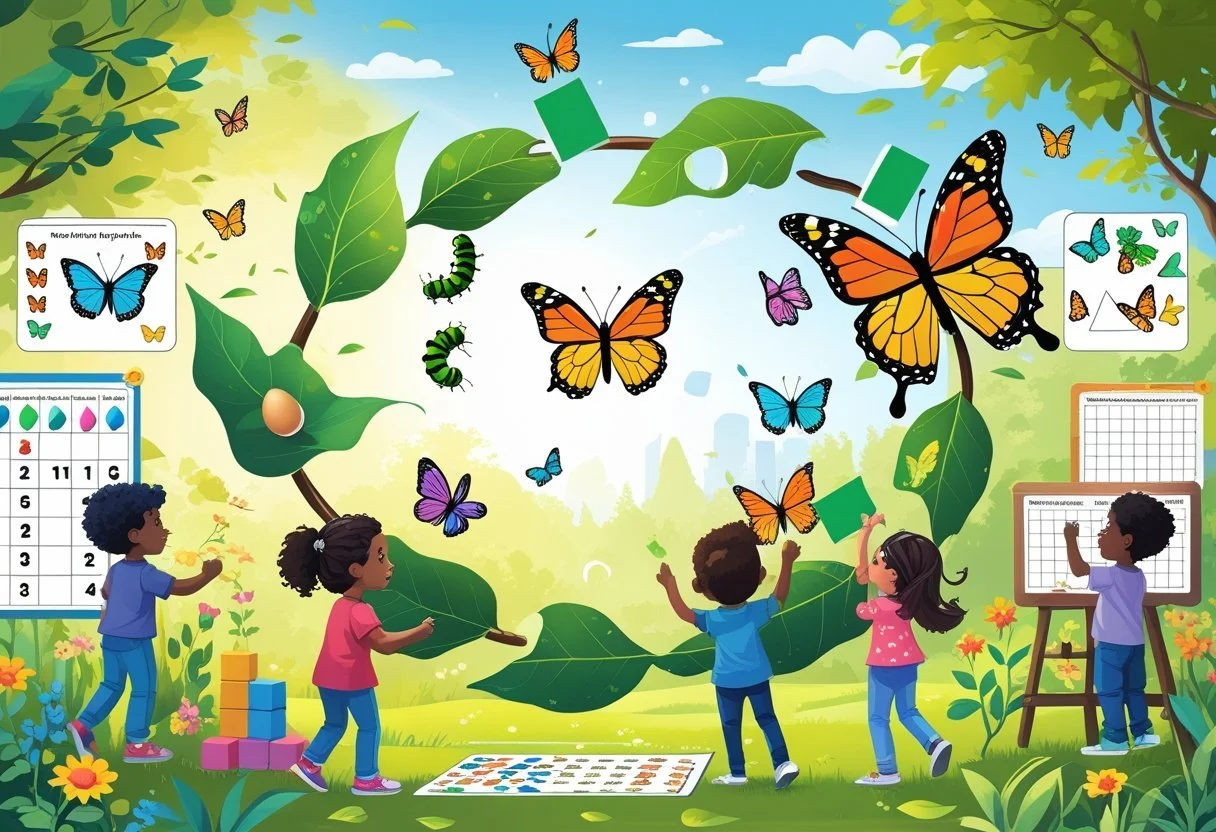
Children can learn about butterflies while practicing important math and literacy skills. Using hands-on games and worksheets, students can count, trace, and identify letters in the context of the butterfly life cycle.
Butterfly Math and Counting
Butterfly math activities help children understand numbers and simple addition or subtraction. One popular idea is to use butterfly cutouts and have children add or take away spots on their wings, counting each time. Teachers can ask questions like, “How many spots are on this butterfly now?” or “If you add two more, how many altogether?”
Another option is to make a table to track butterfly eggs, caterpillars, chrysalises, and butterflies spotted outside. Students can fill in numbers each day and compare results as a class.
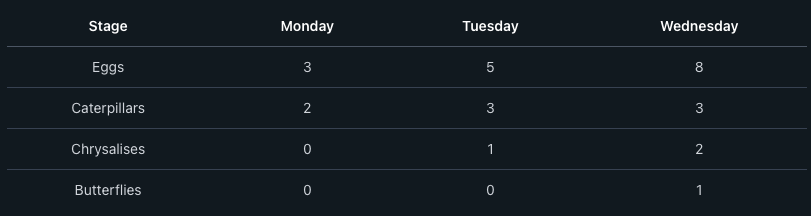
These activities make learning math fun and link numbers to real-world observations.
Find the Letter and Tracing Activities
Find the letter games help students recognize letters and connect them to words like “butterfly,” “egg,” and “wing.” In one activity, children can color in every letter “B” on a printable butterfly image, or circle the letter “C” in the word “caterpillar.”
Tracing worksheets support handwriting practice and letter recognition. Students follow dotted lines to trace words or the shapes of butterflies. Some worksheets ask children to trace the word “butterfly” or names of each life cycle stage.
Lists can be helpful for tracing practice. For example:
Trace "egg"
Trace "caterpillar"
Trace "chrysalis"
Trace "butterfly"
These activities strengthen fine motor skills and help children remember important vocabulary related to butterflies.
Reading and Literacy Connections
Linking butterfly life cycles with classroom reading activities helps students remember key facts and improves their language skills. Students can use picture books, write their own journal entries, and read simple texts about butterflies and their transformations.
Literature: The Very Hungry Caterpillar
The Very Hungry Caterpillar by Eric Carle is a popular choice for introducing the butterfly life cycle. This book uses bright illustrations and simple text to show how a caterpillar becomes a butterfly. Children see the sequence of events—egg, caterpillar, chrysalis, and butterfly—through the main character's journey.
Teachers or parents may read the story aloud, encouraging children to join in with repeated phrases. After reading, students can discuss the changes in the caterpillar’s diet and appearance. Many local libraries offer story hours or lend out butterfly books like this one.
Simple activities can include picture sequencing, acting out each stage, or drawing favorite scenes. Using this story as a reading foundation helps reinforce both science and literacy concepts, especially for young learners.
Butterfly Life Cycle Journal
Keeping a butterfly life cycle journal is a hands-on way for students to record changes they observe. Children can draw, write, or use printed worksheets to document each stage. Teachers often provide prompts or questions, such as:
What does the caterpillar look like today?
How does the chrysalis change?
When does the butterfly emerge?
Students may use crayons or colored pencils to illustrate their entries. For beginning writers, using short sentences and practicing handwriting skills is encouraged. These journals can be individual or completed as a class project.
Older students might compare real-life observations with information from butterfly books. This process helps connect personal experience with factual knowledge. The journal also builds important writing and reflection habits.
Emergent Reader Resources
Emergent readers need simple texts and pictures to understand new vocabulary and concepts. Teachers can use printable booklets about the butterfly life cycle that feature one sentence and matching illustration per page. This supports reading fluency and word recognition.
Classrooms may set up a small library with butterfly books appropriate for young readers. Some books focus on labeling stages, while others use basic questions and answers. Labels, flashcards, and matching games also help reinforce key terms like egg, caterpillar, chrysalis, and butterfly.
These resources are especially useful for early elementary students and those learning English. They allow children to practice reading, build confidence, and connect literacy with science content in a supportive way.
Incorporating Science Curriculum and Unit Studies
Integrating butterfly life cycles into science lessons helps students understand both biology and the world around them. Lesson planning, cross-curricular activities, and student work tools focus learning and track progress.
Butterfly Unit Study Planning
A butterfly unit study supports science curriculum goals by breaking down complex processes into easy-to-follow steps. Teachers can map out key stages like egg, caterpillar, chrysalis, and adult butterfly.
A basic planning table can help:
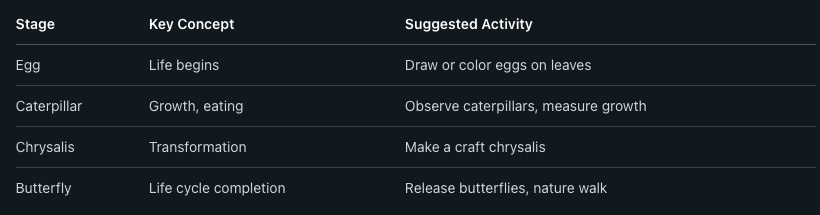
Field trips to gardens or parks, raising butterflies in class, and charting changes daily help support unit goals. Teachers should include vocabulary words, diagrams, and short reading passages for reinforcement.
Cross-Curricular Connections
The butterfly life cycle blends well with other subjects. Reading butterfly-themed stories introduces new vocabulary and supports literacy. In math, students can graph chrysalis stages or count butterfly wing patterns.
Art and science mix through drawing, painting, or using different art supplies to create butterflies and their habitats. Social studies connections come from comparing local butterflies to those in other parts of the world.
Sample cross-curricular ideas:
Math: Count and tally butterflies seen outside
Art: Craft symmetrical butterfly wings
Writing: Keep a log of butterfly observations
Geography: Map butterfly migration routes
Pairing subjects gives students a deeper understanding and helps them see how science fits into daily life.
Graphic Organizers and Journals
A graphic organizer, such as a life cycle chart, helps students visualize each butterfly stage. Venn diagrams compare butterflies to other insects.
Students use science journals to record observations, draw pictures of each stage, and answer simple questions. This builds science vocabulary and records progress throughout the unit.
Simple templates work best for younger students. A KWL chart (Know, Want to know, Learned) focuses attention and tracks questions before, during, and after lessons. Checklists help students mark off each activity or observation as they complete it.
Visual Learning: Coloring Pages and Charts
Children often understand new ideas faster when they can see and interact with them. Using pictures, colors, and diagrams helps make the butterfly life cycle clear and easy to remember.
Butterfly Life Cycle Coloring Page
A butterfly life cycle coloring page shows the four main stages: egg, caterpillar (larva), chrysalis (pupa), and adult butterfly. Each stage is drawn as a separate part of the page, often in a circle or row. This lets students see how one stage leads into the next.
Teachers can give each child a blank page and ask them to color each part differently. For example:
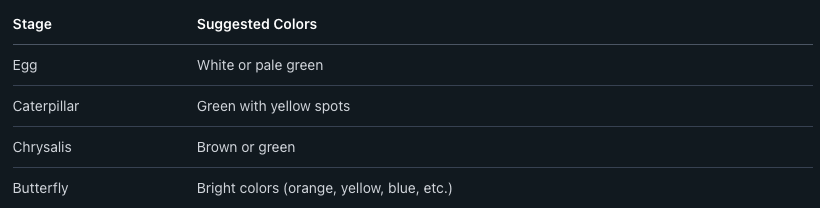
Coloring helps students remember what each stage looks like. They can also label each stage with the correct name. This activity is simple but effective for both learning and creativity.
Life Cycle Diagrams and Charts
Life cycle diagrams and charts give a clear view of how butterflies change as they grow. These visuals show each stage in order, sometimes using real photos and other times using drawings.
Students can make their own charts by cutting out pictures and gluing them onto paper in the correct order. Teachers may use printable worksheets or draw the diagram on the board for everyone to see.
Some charts also list key facts about each stage. For example, they might note how many days each stage lasts or what the caterpillar eats. Diagrams that use arrows and lines help students follow the cycle step by step.
Charts and diagrams make it easier for students to connect what they see to what they read or hear in class. This helps all learners, including those who might struggle with long text.
Comparing Butterfly Life Cycle to Other Organisms
Many organisms go through life cycles, but the steps can be quite different. By comparing different life cycles, students learn key differences and similarities between animals and plants.
Life Cycle of Frogs and Ladybugs
Frogs begin as eggs in water, then hatch into tadpoles. Tadpoles have tails and live in the water, breathing with gills. Over time, they grow legs and lose their tails to become adult frogs. This process is called metamorphosis, which is also seen in butterflies.
Ladybugs have four stages like butterflies: egg, larva, pupa, and adult. A ladybug life cycle worksheet often shows the tiny yellow eggs, long black larvae, resting pupae, and then the adult ladybug. The larva stage, just like the caterpillar stage in butterflies, is when most feeding happens. Both frog and ladybug life cycles show big changes, but the details are unique for each animal.
Plant and Animal Life Cycle Printables
Printable worksheets help students practice what they learn. Common worksheets include the plant life cycle worksheet, apple life cycle printable, pumpkin life cycle worksheet, and life cycle of a sunflower worksheet. These may use drawings, word banks, and labeling exercises.
Some printables, like the watermelon life cycle printable spinner, offer a hands-on way to see each plant stage. For animals, students use the spider life cycle worksheet, turkey life cycle, penguin life cycle worksheet, and salmon life cycle worksheet to compare with butterfly life cycles. These materials support understanding by letting students see and work with the life cycle steps of many living things.
Resources and Tips for Teaching the Butterfly Life Cycle
Teachers can use online worksheets, hands-on classroom tips, and extra learning materials to help students learn the butterfly life cycle. It is important to choose clear, accurate resources and create an engaging environment with reliable activities.
Finding and Using Butterfly Printables
Butterfly life cycle printables are easy to find on websites like Teachers Pay Teachers, Twinkl, and Education.com. Many of these worksheets include matching games, coloring pages, cut-and-paste activities, and diagrams for labeling each life stage.
When choosing printables, look for options that match the grade level. Make sure they include the four main stages: egg, caterpillar (larva), chrysalis (pupa), and butterfly (adult). Some worksheets offer life cycle wheels or movable pieces, which can help students understand the order of each stage.
Printables can also be reused for small group work or homework. Laminating worksheets lets students use dry erase markers so they can practice more than once. Visual aids help reinforce vocabulary and sequencing skills.
Tips for Effective Classroom Activities
Simple classroom activities make the butterfly life cycle easy to understand. Setting up a caterpillar habitat lets students observe real-life changes from egg to butterfly. If hatching butterflies is not possible, videos and time-lapse clips work as a substitute.
Use props or models to show the size and shape of each stage. Drawing the life cycle on large posters or making a class mural turns the lesson into a group effort. Encourage students to keep a life cycle journal, where they draw or write what they see each day.
Make space for questions. Give students time to share what they notice about the process. For some, handling models or looking at close-up photos provides extra clarity.
Supplemental Butterfly Resources
Many organizations provide butterfly life cycle resources for teachers. The National Wildlife Federation, local nature centers, and some museums offer free online guides and lesson plans. Educational videos on YouTube or from PBS Kids can make life cycle changes easy to see.
Books like From Caterpillar to Butterfly by Deborah Heiligman or The Very Hungry Caterpillar by Eric Carle can be used for read-aloud sessions. Kits for hatching butterflies can be ordered online, with instructions for classroom use.
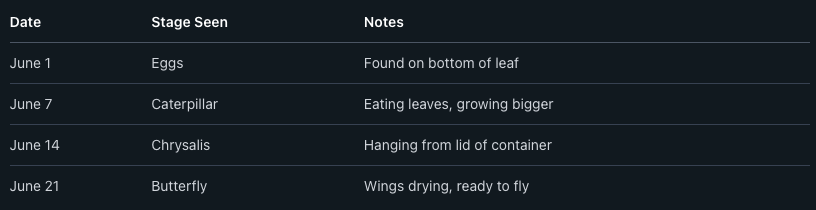
Use a simple table to keep track of daily observations:
Frequently Asked Questions
Teachers and parents may have questions about helping students learn the stages of a butterfly’s life. Worksheets, classroom activities, and free online resources can all help make the process clear and fun at different grade levels.
What are the stages of the butterfly life cycle that worksheets should cover?
Worksheets should include four main stages: egg, caterpillar (larva), chrysalis (pupa), and adult butterfly. Some worksheets may have pictures or blank spaces for drawing and labeling each stage.
These worksheets often use simple language and images. Activities like matching or sequencing help reinforce the stages.
How can I teach the butterfly life cycle to grade 1 students through activities?
Young children learn well through hands-on activities. Teachers can use coloring pages of each stage and simple crafts like making butterflies out of paper and pipe cleaners.
Acting out each stage or reading a story about butterflies can also help first graders understand.
Are there any free resources available for teaching the butterfly life cycle?
Many websites offer free worksheets, diagrams, and activity ideas. Sites like Teachers Pay Teachers, Education.com, and Scholastic provide printable materials.
YouTube also has educational videos that show the butterfly life cycle.
What activities can help illustrate the butterfly life cycle for grade 3 students?
Grade 3 students can complete science journals where they record observations of caterpillars turning into butterflies. They may also cut and paste pictures to build the life cycle in order.
A classroom butterfly kit lets students watch real caterpillars grow and change. Writing short reports or group presentations can further their learning.
Where can I find a comprehensive butterfly life cycle worksheet for grade 4?
Websites like Education.com, Teach Starter, and Twinkl have detailed worksheets for older students. These often include vocabulary words, diagrams to label, and questions that require short written answers.
Some worksheets provide short reading passages followed by comprehension questions.
How can I integrate the butterfly life cycle into a science curriculum with worksheets and hands-on activities?
Combine worksheets with real-life observation using live caterpillar kits in the classroom. Lessons can include discussions, reading assignments, and drawing the life cycle.
Teachers may also create science centers with books, magnifying glasses, and models of each stage. Worksheets can be used before, during, and after activities to help students review and remember each part.

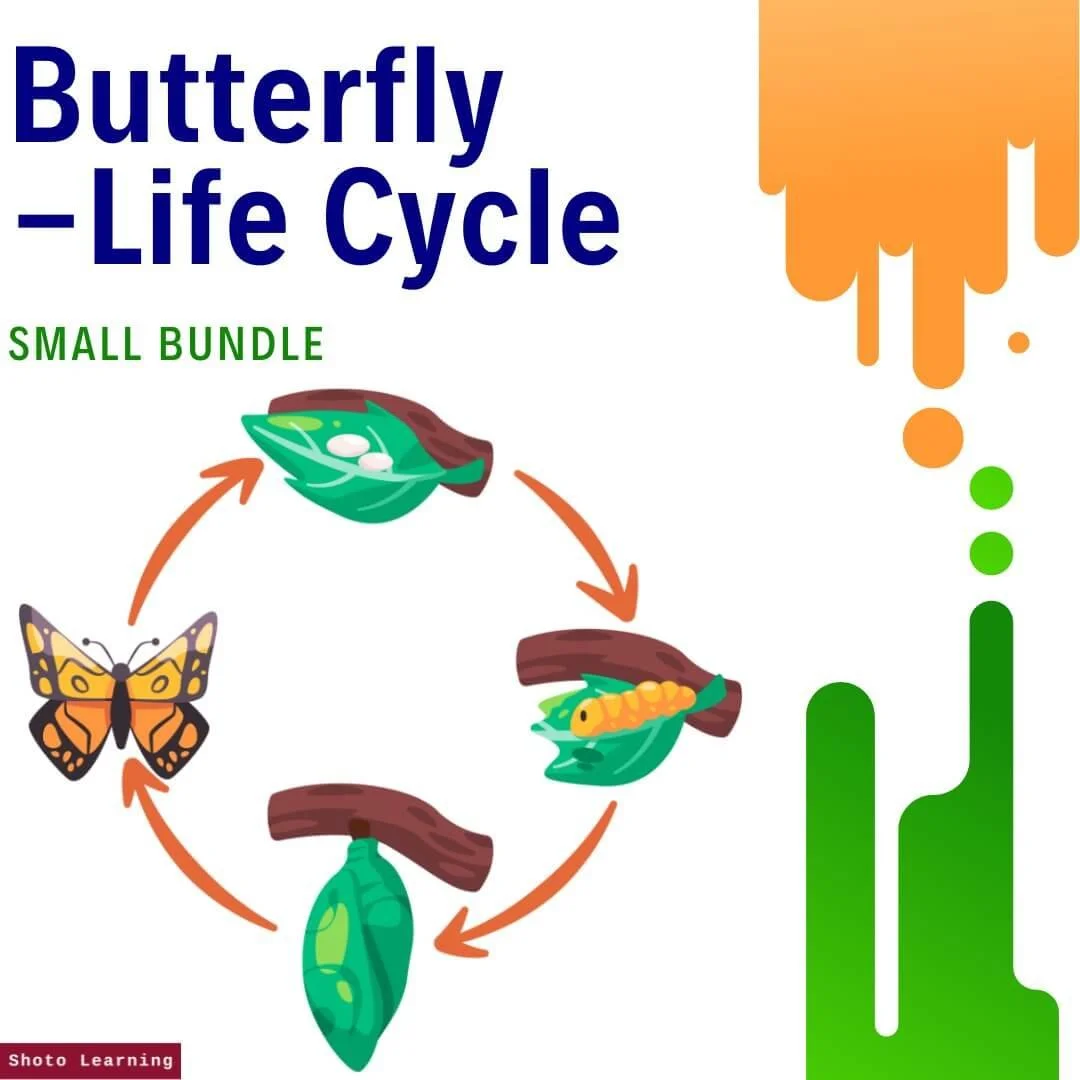


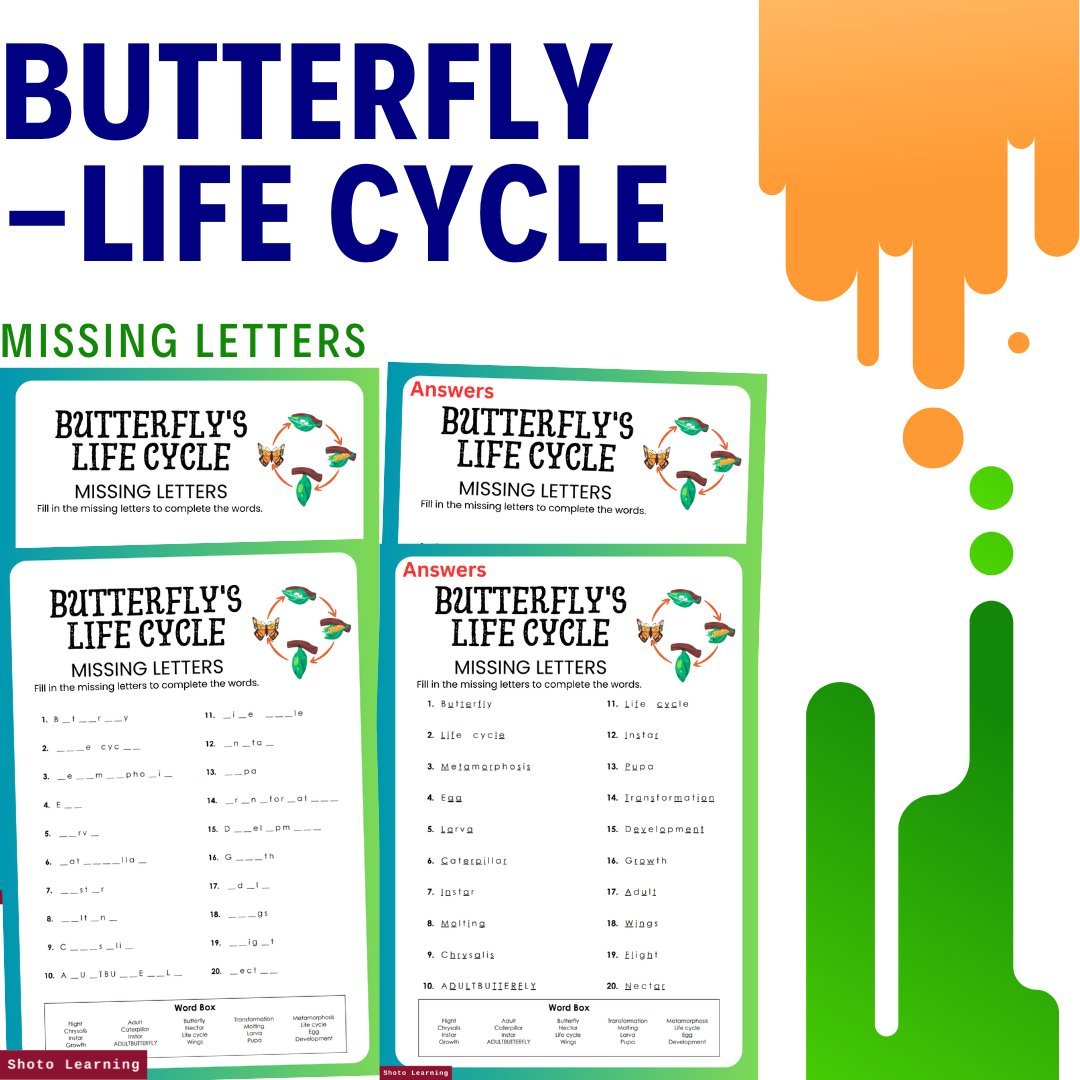


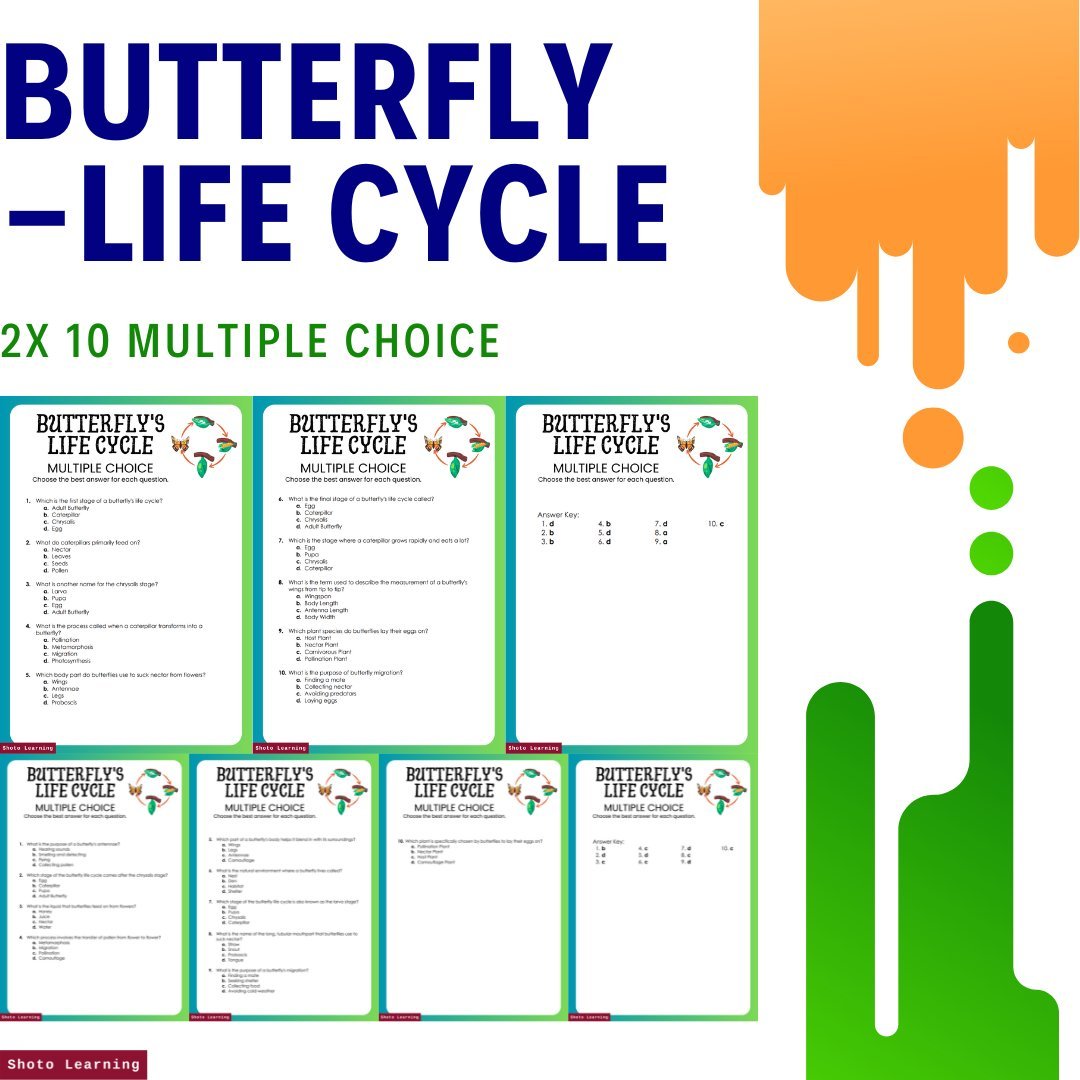

Dive into the mesmerizing transformation of butterflies with our all-inclusive Butterfly Life Cycle Worksheets Bundle! Packed with engaging activities and resources, this bundle is tailored to captivate and educate primary school students.
Key Features:
Variety of Activities: Engage students with a wide range of interactive activities, including ABC order, assignments, bingo, crosswords, cryptograms, debates, experiments, PowerPoint presentations, fill-in-the-blank exercises, flashcards, matching, missing letters, multiple choice, Q&A, reading comprehension, scrambles, tests, true or false, word searches, and writing prompts.
Primary School Focus: Activities are specifically designed for primary school students, ensuring age-appropriate content that enhances understanding and retention of butterfly life cycle concepts.
Detailed Lesson Plan: A comprehensive lesson plan provides structured learning with engaging activities and discussion topics to foster a deeper understanding of the butterfly life cycle.
Multifaceted Learning: Activities reinforce vocabulary, spelling, critical thinking, problem-solving, memory retention, and knowledge reinforcement, ensuring a holistic learning experience.
Immersive PowerPoint: A visually engaging PowerPoint presentation offers a complete overview of the butterfly life cycle, featuring captivating images and informative slides suitable for classroom instruction or individual review.
Flexible Usage: Perfect for traditional classrooms, homeschooling, or science units, this bundle adapts to various educational settings and needs.
Assessment Tools: Evaluate student progress with tests, true or false activities, and more, while promoting critical thinking and class discussions through debates and Q&A worksheets.
How to Use It:
Introduce the Topic: Start with the PowerPoint presentation to give an overview of the butterfly life cycle.
Engage with Activities: Choose from a variety of activities such as crosswords, flashcards, and reading comprehension to reinforce key concepts.
Encourage Critical Thinking: Use debates and Q&A worksheets to promote discussion and deeper understanding.
Assess Understanding: Conduct tests, true or false activities, and scrambles to evaluate student retention and comprehension.
Supplement Learning: Utilize writing prompts and assignments to encourage further exploration and creativity.
Fuel curiosity, spark imagination, and deepen understanding with our Butterfly Life Cycle Worksheets Bundle. Empower students to embark on a captivating educational journey that will leave a lasting impact on their knowledge and appreciation of these remarkable creatures.
Download the Butterfly Life Cycle Worksheets Bundle today and inspire a love for learning in your students!