
Teaching USA Independence Day: Effective Strategies for Educators
Teaching USA Independence Day gives students and families a chance to learn about the country's history and values. This holiday helps kids understand why July 4th is important and how it shaped America's story. Lessons about Independence Day also help children recognize key people, events, and symbols that make the day special.
Simple classroom activities, crafts, and discussions can spark interest and help students remember what they learn. Teachers and parents can use readings, games, and creative projects to make Independence Day lessons engaging and meaningful.
Key Takeaways
Understanding July 4th brings American history to life for children.
Activities and crafts help students connect with important events and traditions.
Families and teachers can find many resources to support learning and celebration.
Understanding USA Independence Day
Independence Day is a national holiday in the United States. It marks the adoption of the Declaration of Independence and celebrates the country’s break from British rule.
Significance of American Independence Day
Independence Day is held every year on July 4. On this date, people across the United States remember the moment when the 13 American colonies declared themselves free from the control of Great Britain.
The day is important because it stands for the start of the United States as an independent nation. Americans celebrate with fireworks, parades, and gatherings, showing national pride. Federal offices, schools, and most businesses close so people can take part in these events.
For many, July 4 is a symbol of freedom and democracy. It brings together families and communities to honor the history of their country. The traditions highlight the values and identity of the United States.
Origins of the Fourth of July
The origins of Independence Day date back to 1776, when the leaders of the American colonies met to address their disagreements with the British Empire. Colonists were unhappy with taxes and laws placed on them by Great Britain.
On July 4, 1776, the Second Continental Congress approved the Declaration of Independence, written mainly by Thomas Jefferson. This document explained why the colonies wanted to break away and become their own country.
After the declaration, the American colonies fought in the Revolutionary War to secure full independence. Over time, July 4 became a day to remember the start of the United States and the values found in the Declaration of Independence.
Key Historical Events and Figures
Important people and events played key roles in the United States' fight for independence from the British Empire. These moments shaped the country’s history and led to the creation of a new nation.
The Declaration of Independence and Its Authors
The Declaration of Independence was approved on July 4, 1776. It explained why the thirteen American colonies wanted freedom from British rule.
Thomas Jefferson was the main writer of the Declaration. He worked with a group known as the Committee of Five, which included Benjamin Franklin, John Adams, Roger Sherman, and Robert Livingston.
Key ideas in the document were about rights and freedoms. It said that "all men are created equal" and that people have rights like life, liberty, and the pursuit of happiness. The Declaration made it clear that the colonies no longer accepted British control.
Role of the Continental Congress
The Continental Congress was a group of leaders from the colonies who met to discuss issues with Britain. They first gathered in 1774 in response to British laws that many colonists thought were unfair.
The Second Continental Congress met in 1775. They ran the war effort by forming an army, led by George Washington. They also acted as the government for the colonies during the war.
A major achievement of the Congress was agreeing to the Declaration of Independence. In the table below, key actions of the Continental Congress are listed:

American Revolution and the Path to Freedom
The American Revolution lasted from 1775 to 1783. Colonists fought against the stronger British Empire for their freedom.
Many battles took place, such as the Battle of Bunker Hill, Battle of Saratoga, and the final victory at the Battle of Yorktown in 1781. The help of other countries, like France, was important for success.
The war ended with the Treaty of Paris in 1783. Britain recognized the independence of the United States of America. This ended their control over the colonies and marked the birth of a new country.
Symbols and Traditions of July 4th
July 4th is known for its unique traditions and symbols in the United States. These include the American flag, fireworks, parades, patriotic music, historic landmarks, and special pledges, each carrying its own meaning.
American Flag and Stars and Stripes
The American flag is one of the most important symbols on July 4th. The flag is often called the "Stars and Stripes" because of its design. It features 50 white stars for each state and 13 red and white stripes for the original colonies.
People decorate homes, schools, and streets with small and large American flags. The colors—red, white, and blue—can be seen on banners, clothes, and even food items like cakes and drinks. Respect for the flag is a key part of the holiday, and many people stand when the flag is raised or carried by others.
Some families teach children how to fold the flag in the correct, triangular shape. Many holiday activities, like morning gatherings or public events, begin by raising or saluting the flag.
Fireworks, Parades, and Patriotic Songs
Fireworks are a well-known activity on July 4th. They light up the skies in cities and small towns, often after sunset. Fireworks shows are a way to remember the battles and celebrations of the past.
Parades are common in almost every town. Marching bands, decorated floats, and veterans often take part. Many people dress in red, white, and blue as they watch or join the parade.
Patriotic songs such as "The Star-Spangled Banner," "America the Beautiful," and "God Bless America" are played during public events. July 4th events usually include singing these songs as a group, which helps people feel proud of their country.
Here are some common July 4th activities:

Statue of Liberty and Other Symbols
The Statue of Liberty is another strong symbol for July 4th. It stands in New York Harbor and was a gift from France. The statue is a sign of freedom and welcome for people coming to the United States for a better life.
Images of the Statue of Liberty often appear on July 4th shirts, posters, and decorations. She is shown holding a torch, which stands for hope and light. Along with the American flag, the Liberty Bell and the bald eagle are also used as national symbols in July 4th displays.
Every year, people remember these symbols as icons of American values and history. They help remind everyone of the hopes behind the founding of the nation.
The Pledge of Allegiance
The Pledge of Allegiance is often recited at the start of July 4th events. People stand facing the flag, place their right hand over their heart, and speak the pledge together. This is a way of showing respect and unity.
Schools and community groups may begin their Independence Day programs with the pledge. Teaching children the words and meaning of the pledge is common during holiday lessons.
The pledge uses important words like "liberty" and "justice for all." Many see it as a promise to support and care for their country and its people. This tradition helps connect individuals to the shared ideas of freedom and democracy.
Educational Approaches to Teaching Independence Day
Teaching Independence Day can be effective by using clear lesson plans, integrating different subjects, and making activities hands-on. Combining history, reading, and science lets students understand the day from many angles.
Creating Engaging Lesson Plans
Good lesson plans for Independence Day connect facts about the holiday with activities that help students relate to its meaning. Teachers can start with brief stories about the Declaration of Independence and key people like Thomas Jefferson and Benjamin Franklin.
Using group projects, like making timeline posters or acting out important scenes, helps students remember key details. Worksheets with matching terms, fill-in-the-blanks, and short quizzes can check for understanding.
A table comparing events before and after 1776 gives context. For example:

Adding multimedia, such as short videos or pictures, keeps kids interested.
Incorporating Social Studies and ELA
Combining social studies with ELA helps students read about, discuss, and write about independence. Teachers can assign students to read simple articles or short stories about the Revolution.
Writing exercises could include answering questions or creating a journal as if a student were living in 1776. Class discussions about freedom and citizenship can build speaking and listening skills.
A vocabulary list with words like declaration, independence, revolution, and liberty helps reinforce new terms. Writing definitions and using the words in sentences deepens understanding.
Quizzes can check comprehension, such as matching vocabulary words to their meanings or answering multiple-choice questions about the events.
Using Science and Vocabulary Activities
Science lessons can focus on fireworks and the chemistry behind them, making the holiday fun and educational. Teachers can show a simple experiment about how colors in fireworks are made with safe household items.
Students can watch a video or read a short text about how sound and light work in fireworks. They can fill out worksheets with diagrams of how a firework launches and what chemicals make which colors.
Vocabulary activities help explain words like combustion and reaction. Group projects can include designing a safe, paper model of fireworks and labeling the parts.
These activities connect the celebration of Independence Day with real-world science and language learning.
Age-Appropriate Activities and Crafts
Teachers can use hands-on projects and creative lessons to help students learn the meaning behind Independence Day. Selecting crafts and activities that fit each grade level helps students stay interested and learn more about the history and symbols of July 4th.
Pre-K and Kindergarten Activities
For pre-K and kindergarten, simple and fun activities work best. Coloring pages of the American flag, fireworks, or the Statue of Liberty help young children practice fine motor skills. Teachers can provide large printables and encourage kids to use bold red, white, and blue crayons.
Crafts such as "flag collages" with cut-out stars, stripes, and construction paper can teach about flag symbolism. Stickers and glitter add a fun touch. Patriotic music time lets children listen and dance to "Yankee Doodle" or "This Land Is Your Land."
A flag-themed snack—like fruit kabobs with strawberries, bananas, and blueberries—reinforces color recognition and group participation. These activities support early learning through sensory play and teamwork.
Elementary Grades Projects (1st-4th Grade)
Students in 1st through 4th grades are ready for more involved crafts and academic tasks. Teachers can assign group projects like making patriotic windsocks using recycled cans, ribbons, and paper stars.
A simple table comparing symbols of the USA can be filled in during a worksheet activity:

Short reading passages about the Declaration of Independence or famous Americans can be paired with writing prompts. Kids can write or draw what freedom means to them on printables shaped like stars or firecrackers.
Other engaging ideas include Fourth of July crafts such as "firework salt paintings" using glue and colorful salt or a class mural with each child’s handprint forming the flag stripes.
Upper Elementary and Middle School Ideas (5th-7th Grade)
Fifth to seventh graders can engage with more challenging patriotic activities and critical thinking tasks. Teachers can assign a short research project on the history of Independence Day or a famous American involved in the Revolution.
Students can create timelines of key events leading up to July 4th, 1776, using worksheets and group discussion. More complex crafts, like building a mini Liberty Bell from clay or designing a Fourth of July parade float on paper, deepen learning.
Writing assignments can include opinion paragraphs on the importance of Independence Day or compare the U.S. flag with the flag of another country. Providing printable templates for these tasks keeps students organized and on track. Reading excerpts from the Declaration of Independence helps tie history to classroom activities.
Celebrating Independence Day in the Classroom
Teachers can use July 4th as a way to engage students with the history, traditions, and values tied to American Independence Day. Through special classroom events and creative activities, students can better understand why the day is important.
Classroom Events and Themed Parties
Hosting a classroom party helps students connect with the fun and festive side of Independence Day. Decorations in red, white, and blue set the mood. Teachers can organize patriotic activities such as sing-alongs featuring “The Star-Spangled Banner” or “America the Beautiful.”
A timeline display can highlight key events leading to independence. Students may create simple crafts, like paper flags or fireworks art. Games such as trivia contests about 4th of July facts keep students engaged. Some classes watch short, age-appropriate historical videos that explain why July 4th matters.
Sharing food, like red and blue fruits or themed cupcakes, can also add to the celebration. A list of American traditions—like parades or fireworks—helps students see how others celebrate across the country.
Reading and Writing Activities for July 4th
Reading plays a big part in learning about Independence Day. Students can read short stories and texts about the American Revolution. Teachers might use age-appropriate books or even simple passages about the signing of the Declaration of Independence.
Writing assignments help students think about the day’s meaning. Some may write a paragraph or poem about freedom or patriotism. Others could write a letter as if they lived during 1776, describing how they feel about the news of independence.
A reading journal can track what students learn. Teachers may have students make simple tables listing facts about the holiday, important people involved, or traditions still followed today.
Group Discussions on American Values
Group discussions give students a chance to share thoughts on values linked to July 4th. The teacher can ask, “What does freedom mean to you?” or “Why do you think people still celebrate Independence Day?” Students can discuss ideas like equality, liberty, and the importance of community.
Role-playing activities help students picture debates from the time of the Revolution. The teacher may split students into small groups and have them talk about what they would have done in 1776.
A display board with important American values lets the class collect and review ideas like democracy, justice, and respect for others. This helps everyone understand that July 4th is more than fireworks—it’s a reminder of the beliefs that shaped the nation.
Resources for Teachers and Parents
Teachers and parents have access to a variety of practical tools to introduce and reinforce the significance of Independence Day. These include educational worksheets, activity printables, books, and multimedia that bring history to life for students.
Printable Worksheets and Teaching Resources
Printable worksheets help students understand the history and meaning of July 4th. Many websites offer free resources that include vocabulary lists, reading comprehension passages, word searches, and crossword puzzles focused on Independence Day. These printables let students practice core skills like reading, writing, and problem-solving while learning key facts.
Teachers can also use graphic organizers or timelines to help students visually organize events such as the drafting of the Declaration of Independence. Printable coloring pages or flag crafts support younger students as they engage with symbols of the United States.
For classroom settings, teaching resources might include lesson plans, patriotic songs with lyrics, or role-play scripts about historical events. Using a mix of worksheets and hands-on activities helps reach different learning styles.
Books and Multimedia Materials
Books and multimedia give context and background to the celebrations. Picture books like The Story of America’s Birthday by Patricia A. Pingry or nonfiction books such as What is the Declaration of Independence? make key ideas accessible for elementary students.
Teachers and parents can use documentaries about the American Revolution, short educational videos, or animated clips from trusted sources like PBS Kids. These materials offer real-life visuals and bring historical figures, like Thomas Jefferson and George Washington, into focus.
Music playlists of traditional songs and photo slideshows of Independence Day parades help children see how Americans celebrate. Libraries and many school resource lists recommend age-appropriate books and online videos that can be used both at home and in the classroom.
Family and Community Traditions
On Independence Day, many families and neighbors gather together to celebrate with food, games, and special local activities. These holiday traditions help people feel a sense of community and pride in their country.
Barbecues, Picnics, and Shared Meals
Barbecues are a popular way to mark the Fourth of July. Families often cook hot dogs, hamburgers, or ribs on the grill. Many people bring potato salad, corn on the cob, and watermelon to share. Some neighborhoods organize potlucks where everyone brings a dish.
Picnics in local parks are common, too. People spread out blankets, play music, and set up outdoor games like frisbee or horseshoes. Sitting outside with food and friends helps create a relaxed, festive mood.
Shared meals give families a chance to talk about the meaning of the holiday. Some people decorate with flags or dress in red, white, and blue. The focus is on spending time together and making memories around food.
Common Picnic Foods Table:

Participating in Local Events
Many communities host public events on July 4th. Parades are a big tradition in cities and small towns. Marching bands, decorated floats, and veterans' groups walk down main streets while people wave flags and cheer.
Some places organize outdoor concerts or firework displays at night. Local groups might hold games, face painting, or craft booths for children. These activities help bring people together and offer a fun way to celebrate.
Volunteering is also important in some areas. People help set up events or hand out water during races and fun runs. These local traditions make the holiday feel special and connect people to their neighbors.
Frequently Asked Questions
The Fourth of July marks the day when the United States adopted the Declaration of Independence. Americans honor this day with celebrations, traditions, and symbols related to the country's founding.
What historical events led to the establishment of Independence Day in the United States?
In the 1700s, thirteen American colonies were ruled by Great Britain. Many colonists wanted freedom because they disliked British taxes and laws. The colonies united and declared independence in 1776 after long debates and rising tensions.
How do Americans typically celebrate Independence Day?
Most people watch fireworks, go to parades, and gather for cookouts or picnics. Some towns hold concerts or fairs. People often decorate with red, white, and blue.
What is the significance of the Declaration of Independence?
The Declaration of Independence explained why the colonies wanted to break away from Great Britain. It laid out important ideas about individual rights and government by the people. This document set the United States on its path as a new nation.
Which year was the Declaration of Independence adopted, and by whom?
The Declaration of Independence was adopted in 1776. It was approved by the Second Continental Congress on July 4th.
What symbols and traditions are associated with the Fourth of July?
The American flag, the bald eagle, and fireworks are common symbols. People also sing patriotic songs and display the flag at their homes and in public places. Parades and public readings of the Declaration also take place in some areas.
How has the celebration of Independence Day evolved over the years?
Early celebrations focused on speeches, public readings, and small community events. Over time, fireworks, parades, and festivals became more common. Today, many people also watch televised concerts or gather with family for food and games.


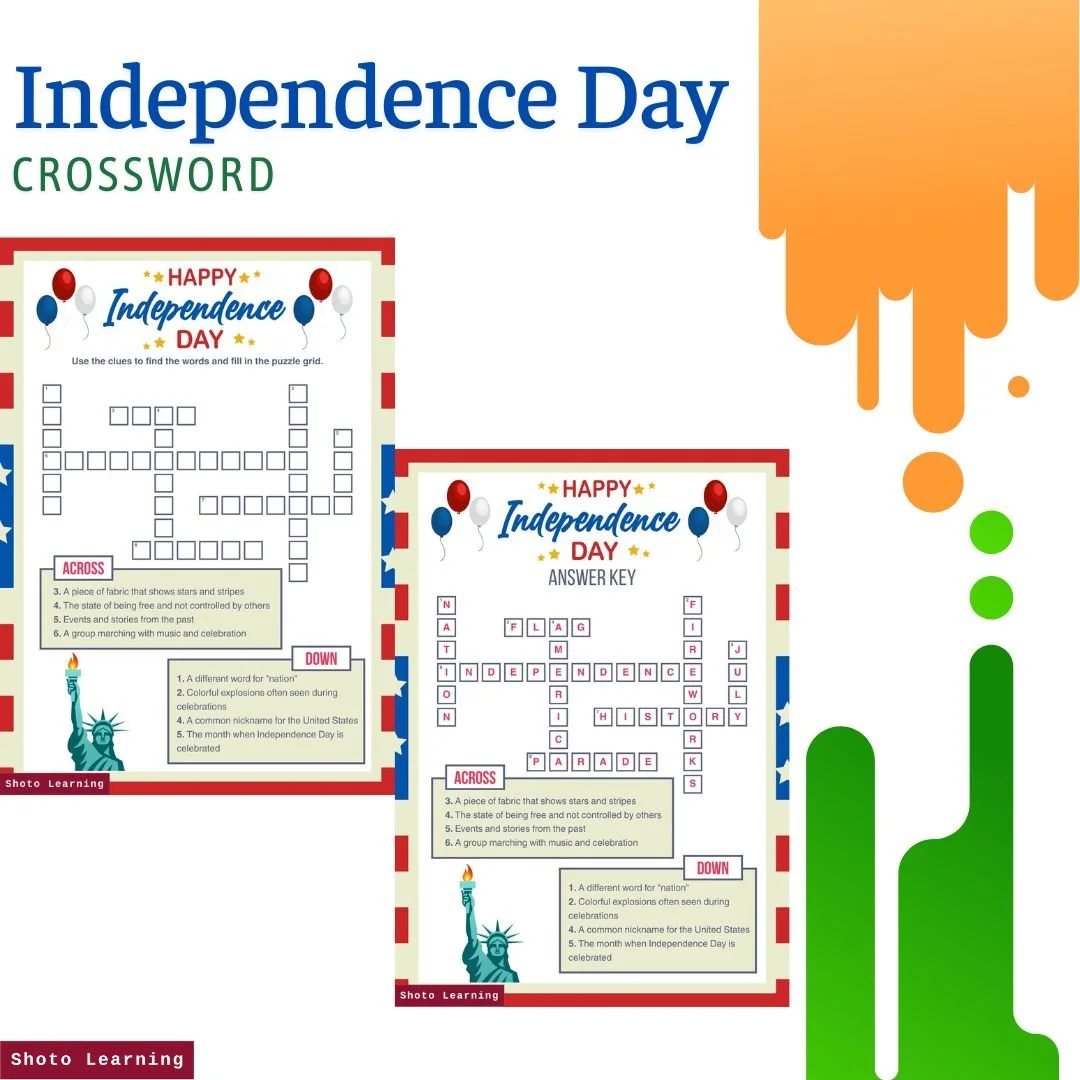


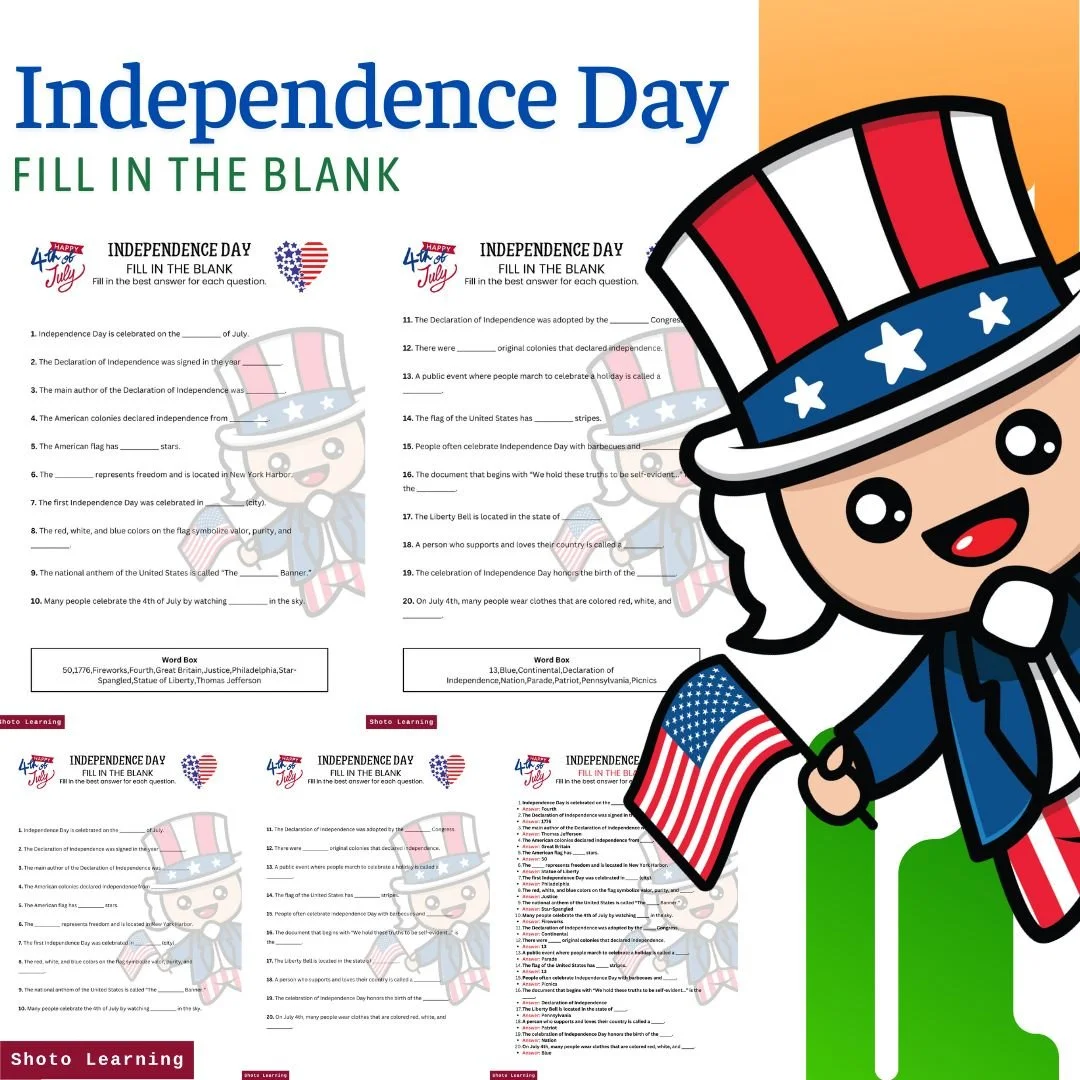


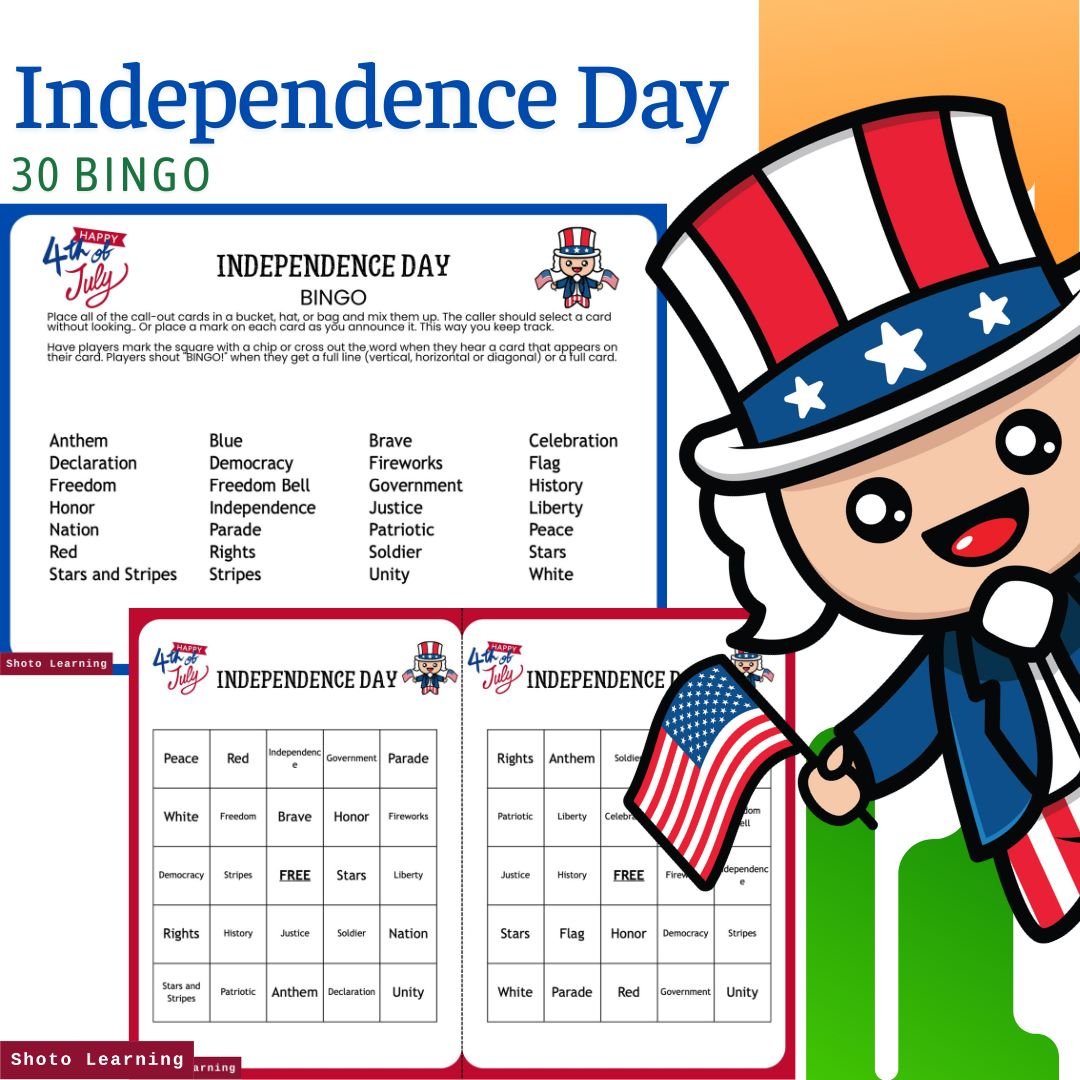
Make teaching Independence Day easy and meaningful with this complete lesson plan! Designed for Grades 3–6, this structured and flexible resource covers history, vocabulary, symbols, and classroom discussions about the significance of July 4th. It includes warm-up prompts, vocabulary building, guided learning, and optional extension activities.
Note: This download is for the lesson plan only. Worksheets, flashcards, and activities are sold separately to allow flexible bundling.
What’s Included:
Full 45–60 minute Independence Day lesson plan
Clear objectives, procedures, and assessment ideas
Suggestions for integrating vocabulary, worksheets, and optional science or debate activities
Cross-curricular links to ELA, Social Studies, and Civics
Key Features:
Ready-to-use printable PDF
Aligned with history, civics, and ELA goals
Includes discussion prompts, group ideas, and independent tasks
Ideal for classroom, homeschool, or sub plans
Works with matching Independence Day worksheets (sold separately)
Perfect for mixed-ability groups or Grades 3–6
Engage your students in the meaning and symbols of Independence Day with a thoughtful, structured plan that saves you prep time!