
Teaching Number Identification to Early Learners: Effective Strategies for Classroom Success
Learning how to recognize numbers is one of the first building blocks in a child’s math journey. Early number identification helps students understand basic math and sets them up for future success. Kids who can spot, name, and use numbers easily have an easier time with counting and more complex math later on.
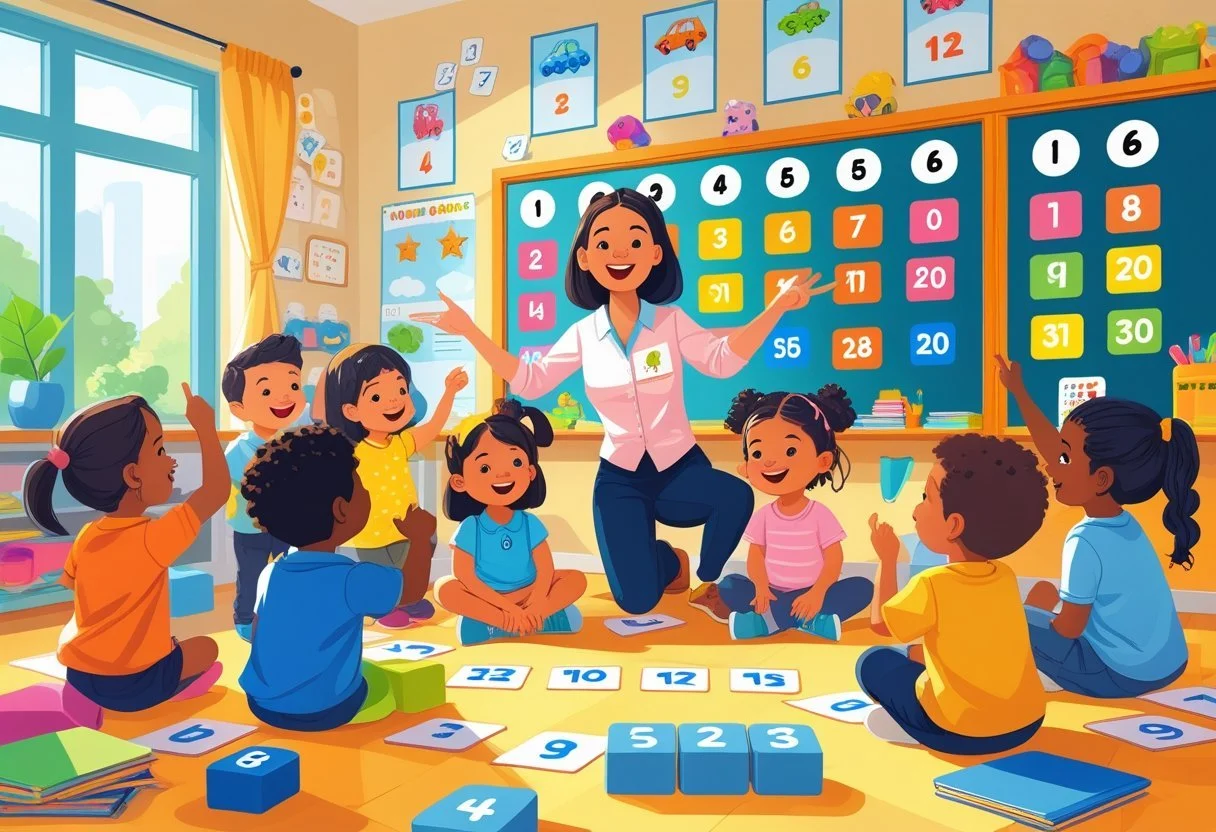
Teaching number identification doesn’t have to be boring. Through games, hands-on activities, and clear practice, children can learn while having fun. When they use real objects or practice writing, they grow more confident in working with numbers.
Key Takeaways
Number identification is a key skill for early learners.
Fun activities and games make learning numbers easier.
Practicing with different tools supports math readiness.
Understanding Number Identification in Early Education
Number identification is a basic yet essential part of learning math. Young children need to connect the look and sound of each number before they can use numbers in real math problems. Recognizing numbers by sight and by name helps them build the base for all future math learning.
What Is Number Identification?
Number identification is the ability to recognize and name numbers by sight. Children learn to see a written numeral, such as "4," and say "four" when asked. This skill uses both visual memory and verbal language.
Children start learning with single-digit numbers (0–9). Then, they move on to two-digit numbers and higher. Number identification is different from counting because it is just about recognizing the symbol and name, not about how many objects the number means.
Teachers and parents often use flashcards, number charts, and games to help with number recognition. Consistent practice with these tools helps children remember what numbers look like and how to say them.
Importance of Foundational Math Skills
Learning numbers and how to identify them is a key building block in early math. Without number identification, children struggle with basic math skills like counting, adding, and subtracting.
Many early math concepts require children to know and say number names. Skills like comparing amounts or reading numbers in everyday life, such as on clocks or in books, all need number recognition.
Key foundational math skills connected to number identification:
Recognizing numbers by sight
Matching number symbols with their names
Reading numbers out loud
Connecting numbers to real-life objects and quantities
Early success in these areas supports confidence in math as students move to harder topics.
Developmental Milestones in Number Recognition
Children usually reach certain steps, or milestones, as they learn to recognize numbers. By age three, most can spot and name a few numbers up to about five. By age four and five, they can usually identify numbers up to ten, then up to twenty as they prepare for kindergarten.
These ages are general guides—children learn at different rates. It is normal for some children to need more time for number names and recognition.
Methods to support milestones include:
Reading number books together
Using number puzzles and matching games
Repeating number names out loud during daily routines
Caregivers and teachers can watch for progress and give extra help if a child struggles with learning numbers. Proper support at each stage ensures students are ready for more complex math skills later on.
Establishing the Basics: Number Recognition and Counting
Early learners need to build a strong understanding of numbers before moving to math concepts. Teaching number recognition and counting helps lay the groundwork for future skills.
Introducing Numbers to Preschool and Kindergarten Learners
Children in preschool and kindergarten first need to see and hear numbers used in daily life. Teachers often use songs, stories, and games to show what numbers look and sound like.
Flashcards and number puzzles can help kids match spoken numbers to printed symbols. Using real objects, like counting blocks or buttons, lets children touch and move items as they practice. This makes learning active and fun.
Teachers should repeat these activities often. Repetition helps young children remember number shapes and patterns. Visual and hands-on experiences are key to teaching number recognition at this stage.
One-To-One Correspondence
One-to-one correspondence means matching one object to one number when counting. This skill is important, as it teaches children that each number stands for one specific item.
For example, if a student counts five blocks, they should touch each block once while saying the numbers:
one, two, three, four, five. This prevents skipping or double-counting.
Teachers can use activities like:
Giving students objects to count out into cups.
Marking each step as they count up a staircase.
Lining up toys and counting each toy aloud.
Checking for accuracy helps correct mistakes early. Mastering one-to-one correspondence makes counting tasks easier later on.
Number Names Versus Number Symbols
Young children often mix up how numbers look (symbols) and how they sound (names). They may know the word "five" but not match it to the symbol 5.
It's helpful to:
Show number pictures and say the name at the same time.
Let children trace or write numbers as they say them.
Play matching games with cards showing number names and symbols.
Simple tables can help children compare:

Children benefit from lots of practice seeing, saying, and writing both number names and symbols. This helps build stronger number recognition skills.
Hands-On Learning Activities for Teaching Number Identification
Using real objects and interactive games helps children quickly connect numbers to their meanings. Hands-on learning gives early learners direct experience and supports better understanding by allowing practice with counting, matching, and naming numbers.
Exploring Everyday Objects as Counting Tools
Common items found at home or in the classroom can turn into useful counting tools. Children can count buttons, toy cars, blocks, or snack pieces. This helps them link the numbers they say to real quantities. It also teaches that math is part of daily life.
A simple tray with different objects can make counting feel like play. For example, a teacher might place ten apples on a table. The child can touch and move each apple while saying the numbers out loud. This activity connects objects, spoken numbers, and written numerals.
Here is a basic table showing everyday objects and counting ideas:

Integrating Engaging Activities
Children stay interested when learning feels like a game. Teachers and parents can use matching cards, scavenger hunts, or number songs. For example, during a number scavenger hunt, learners search for items grouped in numbers placed around the room.
Another engaging idea is number bingo. Each child receives a card with numbers. When a number is called, the child identifies and marks it. This helps with both number recognition and listening skills. Active and fun tasks like these keep learners focused.
Simple technology, like educational apps, can add variety, but hands-on action should come first. Using music, dance, or storytime with counting tasks also adds excitement and supports different ways of learning.
Hands-On Activities to Reinforce Learning
Physical activities help children remember numbers better by connecting them to actions. Using number puzzles and building blocks are effective because children can touch, move, and see the pieces come together.
Sample hands-on activity:
Write numbers on sticky notes and place them around the room. Ask learners to walk around, find a number, say its name, and bring it back.
Other ideas include:
Sorting objects into labeled baskets by number
Drawing numbers with finger paint
Counting steps when walking or clapping hands while saying numbers
Frequent, short activities give children many chances to practice identification skills.
Active Learning Techniques
Active learning means children are moving, talking, and thinking through problems. In number recognition, this could be a hopscotch game where each square is labeled with a digit. As they jump, they call out each number.
Role-playing as "store clerks" using play money or toy items also links numbers to daily activities. They count out items or change, saying the numbers as they go. Another option is to have students form groups that create the shape of numbers with their bodies.
These activities improve both memory and understanding. The use of movement and talk in learning helps children connect what they see, say, and do when working with numbers.
Game-Based Strategies for Number Recognition
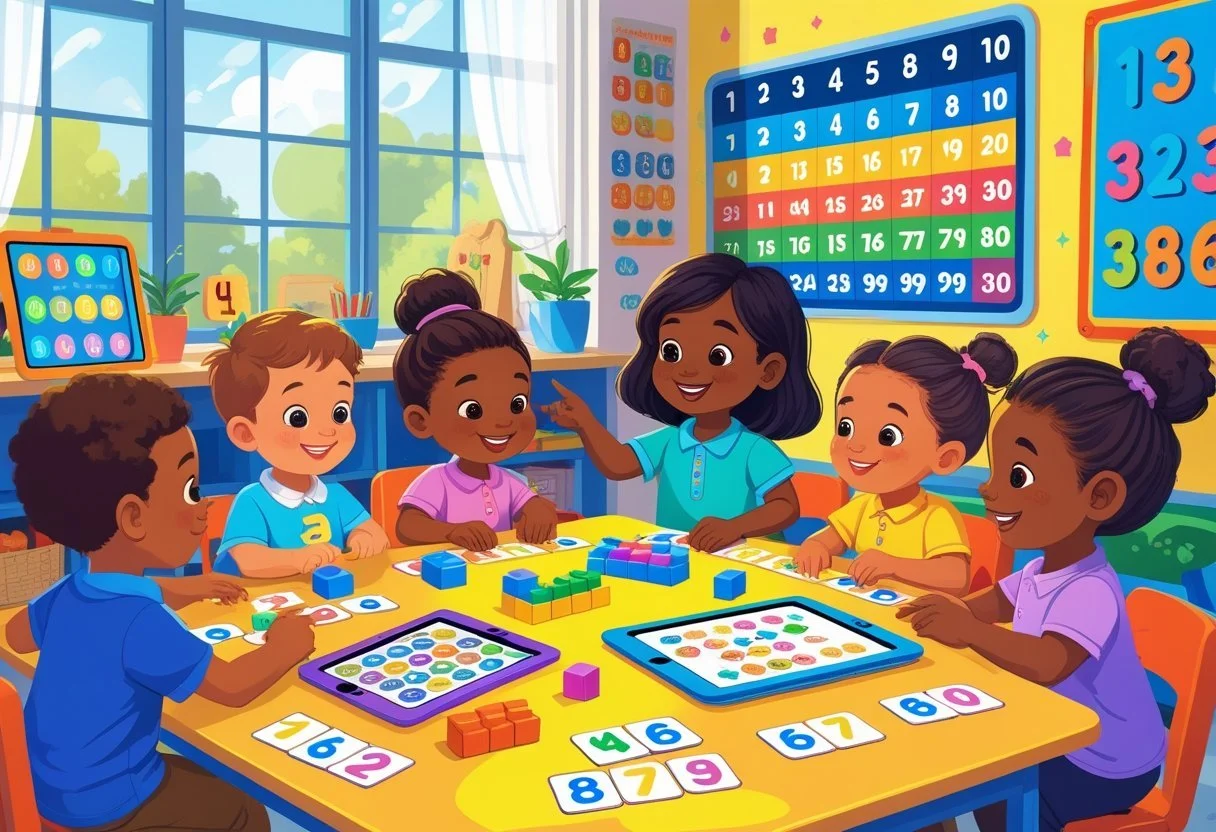
Children learn more when they are active and engaged. Game-based strategies use activities like matching, searching, and rolling dice to make number recognition fun and memorable.
Number Recognition Games
Number recognition games focus on helping children identify written numbers. Simple matching games can use cards with numbers, where children match the number to the correct amount of objects.
Bingo is another popular option. Each child gets a bingo card with numbers, and the teacher calls out numbers for them to mark. This helps them quickly spot and name written numbers.
Electronic games and apps allow for self-paced practice. These often use sounds, bright colors, and instant feedback. Puzzles that ask children to fit numbers into the correct spots combine fine motor skills and recognition.
Variety keeps children interested. Switching from one game to another during the week also helps reinforce learning in different settings.
Incorporating Memory Games
Memory games can build strong number recognition skills by asking children to remember where numbers are located. Cards with numbers are placed face down. Players take turns flipping two cards, looking for a match.
If a match is found, that player keeps those cards. If not, the cards are flipped back over. Repeated play helps children remember where each number is. This strengthens both short-term memory and number awareness.
Using both numbers and matching sets of dots can connect the idea of quantity to the symbol. Memory games can be made easier or harder by changing how many cards are used.
With small groups, children can discuss which numbers they find. This lets them talk about numbers and listen to each other.
Number Hunt Activities
Number hunts bring movement into the learning process. Teachers or parents hide numbers around a room or outside area. Children must find and bring back cards marked with specific numbers.
This works well with numbers written on large cards, blocks, or sticky notes. When a child finds a number, they can name it out loud or show it to the teacher.
Lists or checklists can make the activity more organized. For group play, children can work as teams. This activity combines physical movement, observation, and speaking skills.
Number hunts can also include matching the found number to a set of objects. For example, after finding the number 4, a child could look for 4 blocks. This links symbols to real-world objects.
Dice Games for Math Skills
Dice games are a simple way to promote number recognition using play. Standard six-sided dice can be rolled, and children identify the number shown. They then match the number to a card or a group of objects.
Roll-and-Cover is one easy game. Children roll a die and cover the matching number on a board. This can be played with groups or alone.
Adding a second die introduces more challenge. Children can count all the dots and find the matching numeral.
Dice games give instant, random practice. They also help children subitize, or quickly see and know a number of objects without counting.
List of dice game ideas:
Roll and Match (roll, then find a card with the same number)
Race to Ten (roll a die, move a counter along a numbered track)
Dot Counting (roll multiple dice and say the total number of dots)
Developing Fine Motor Skills with Written Practice
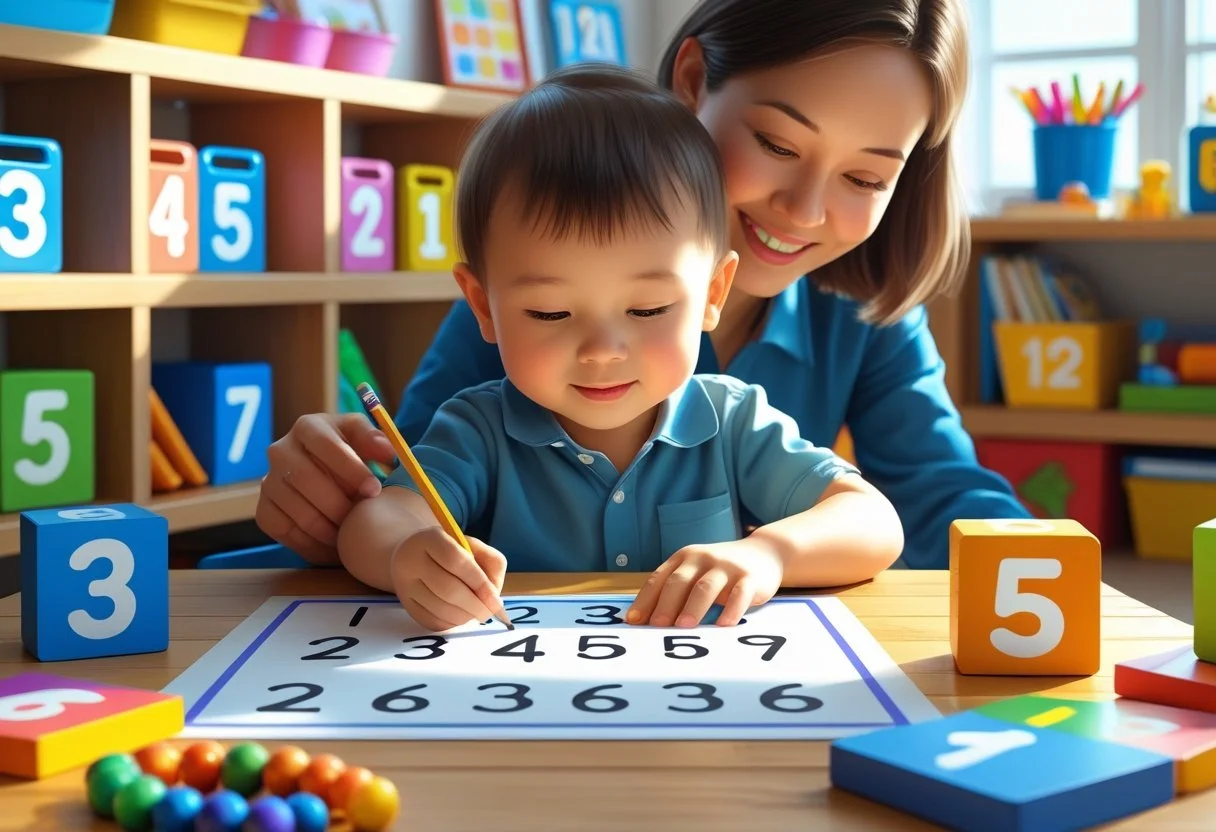
Learning to write numbers supports both number identification and finger strength. Tracing, writing, and using worksheets help children gain better pencil control and accuracy in their math work.
Importance of Fine Motor Skills in Math Learning
Fine motor skills allow children to hold pencils, crayons, and markers correctly. These skills help them write numbers clearly. Without good fine motor control, children may struggle to form numbers or keep them inside lines.
Writing numbers also builds hand-eye coordination. Many classroom tasks require fine motor skills, like sorting objects, using scissors, or arranging counters. Strong fine motor skills link directly to better performance in counting, matching, and basic math activities.
Children who develop these skills early usually find written math tasks easier. Teachers and parents can encourage fine motor growth through simple daily activities like coloring, playing with playdough, or stringing beads.
Number Tracing and Writing Numbers
Number tracing is a common method for practicing fine motor skills. Children trace dotted or dashed numbers with a pencil or marker, learning the correct formation and direction. This builds muscle memory and teaches the proper way to write each digit.
After tracing, writing numbers independently is important. Short, focused sessions (5–10 minutes) help children practice without feeling overwhelmed. Adults can offer feedback by pointing out neatness and formation. Tools like sand trays or whiteboards make the practice more fun and engaging.
Repeating tracing and writing gives children the confidence to write numbers on their own. These tasks should adjust to a child’s skill level to reduce frustration.
Utilizing Worksheets and Printables
Worksheets and printables let children practice tracing and writing numbers in a structured way. Many resources include tracing lines, copying numbers, and simple counting tasks. Worksheets can be themed by seasons, animals, or holidays to capture interest.
Below is an example of what worksheets might include:

Teachers can print worksheets at home or use online resources. Many printables offer picture clues, which support number recognition while fine motor skills improve. Consistent practice with worksheets helps children gain confidence in both writing and identifying numbers.
Visual and Manipulative Tools to Support Number Understanding
Hands-on materials help children connect abstract symbols to real numbers. These tools allow learners to use their eyes and hands, making number identification easier and more memorable.
Using Number Lines Effectively
Number lines help children see numbers in order and understand their values. Placing cards with numbers along a number line teaches left-to-right counting and number positions.
Teachers can use a classroom-size number line on the wall or individual desk strips for kids to interact with. Asking students to point to or move markers to different numbers supports number recognition. It also helps them see how numbers grow bigger as they move right and smaller as they move left.
Number lines are also useful for simple math problems like "What comes after 4?" or "Which number is before 6?" This builds a strong sense of numerical order and sequence.
Number Sort and Number Puzzles
Number sort activities ask children to group numbers together or match them with sets of objects, like sorting the digit "5" with a group of five blocks. This method links the number symbol to a real amount.
Number puzzles are another way to build number knowledge. Children can match up pieces that fit together based on numbers and groups of items, such as connecting a puzzle piece marked "3" to a piece with three apples.
Matching and sorting activities can be done with printable cards, magnetic tiles, or interactive games. These activities encourage repeated practice, making number identification easier over time.
Subitizing for Quick Recognition
Subitizing is the skill of recognizing how many items are in a set without counting one by one. Using dot cards, dice, or ten frames, children can learn to see "three" or "five" instantly.
Practicing subitizing helps children move from slow counting to fast recognition. Teachers might quickly show a card with dots and ask how many are shown, giving children only a second or two to answer.
Regular subitizing practice supports quick number identification and lays a foundation for more complex math skills later on. Using visual tools like dot patterns or small objects ensures children become comfortable seeing and naming numbers almost instantly.
Building Higher Order Math Skills Through Number Identification
Identifying numbers helps young children build a strong base for math skills. It allows them to learn how to add, subtract, and understand groups of objects in real life.
Introducing Addition and Subtraction
When children recognize numbers, they can start basic addition and subtraction. For example, they might use blocks or fingers to show simple math stories like, “You have 2 apples and get 1 more. How many do you have?”
Teachers often use games to let children match numbers to groups. This lets them see how numbers get bigger or smaller. Such hands-on practice helps children see why understanding numbers is needed for adding or taking away.
Here is a simple way to link number identification to these skills:

Knowing numbers makes it easier for students to count up or down.
Understanding Quantity and Problem-Solving Skills
Children who know numbers can better understand quantity. For instance, when they see the number “4,” they can picture four objects. This link between numbers and actual amounts is important in math.
Teachers may show groups of objects and ask students to guess how many there are. Next, students count and match to the correct number. This practice grows their problem-solving skills.
Identifying numbers also teaches children to break problems into steps. For example, solving, “If you have five balls and lose two, how many are left?” uses estimation, subtraction, and counting skills. This kind of thinking supports later math learning and daily decision-making.
Frequently Asked Questions
Number identification is an important skill for young children. There are many simple ways to build these skills, including games, worksheets, and using technology.
What are effective number recognition activities for early learners?
Activities like matching numbers to pictures, sorting objects by number, and using number cards help children learn. Pointing out numbers in daily life, such as on clocks or signs, can also reinforce learning. Singing songs that count and tracing numbers are helpful, too.
Can you suggest educational games that help with number recognition for children?
Games like “Number Bingo” or “Number Memory Match” are good choices. Apps and online games that focus on matching numbers or counting objects provide interactive learning. Board games that use numbered spaces, like “Chutes and Ladders,” also support number recognition.
Where can I find number recognition worksheets suitable for preschoolers?
Many educational websites offer free printable worksheets for preschoolers. Teachers Pay Teachers, Twinkl, and Education.com are popular sources. Local libraries and bookstores also have workbooks with number activities for early learners.
How can I teach children to recognize numbers 1-10 efficiently?
Start with numbers 1-3 and add more numbers slowly. Use visual aids like flashcards, number puzzles, and hands-on counting objects. Repeat activities daily and mix in movement, like jumping to numbers on the floor mats, to keep learning active.
What role does artificial intelligence play in teaching number recognition?
Some apps and learning programs use artificial intelligence to adjust questions based on a child’s answers. This helps provide practice at the right level. AI can also track progress and suggest areas where more help is needed.
Is there an age-appropriate number recognition game for children under five?
Yes, simple games like “Number Hunt” where children find and point to numbers around the room are suitable. Apps designed for toddlers, such as Endless Numbers or Moose Math, include engaging number activities with bright visuals and easy instructions. Matching toys with numbers written on them are also helpful for this age.