
Guide to Teaching Addition 1 to 5: Effective Strategies for Early Learners
Learning to add numbers from 1 to 5 is an important skill for young learners. It helps children understand how numbers work and builds a strong base for more complex math later. Effective teaching focuses on simple, hands-on activities that make addition clear and fun.

Using objects children can see and touch makes learning easier. Visual tools like counting blocks or fingers help students grasp how numbers combine to make new totals. Teaching addition early also sets up the skill of solving simple problems quickly.
With the right methods, children can quickly learn to add and feel confident in their math skills. This guide will explore straightforward ways to teach addition 1 to 5 and help young learners succeed.
Key Takeways
Simple, hands-on activities improve understanding of addition.
Visual aids support quick learning and confidence.
Teaching early builds a strong foundation for future math.
Understanding Addition 1 to 5
Teaching addition from 1 to 5 involves helping children build a strong number sense and develop early counting abilities. These skills include understanding what addition means and using simple counting methods to find the sum of small numbers.
Foundational Concepts
Addition is the process of putting two groups of objects together to find how many there are in total. For numbers 1 to 5, children learn that the sum is the total amount you get when you add two numbers.
Children must understand that addition is about combining parts to make a whole. Using real objects or pictures helps them see this clearly. They also explore the idea of the number line to visualize how numbers increase when added.
Key terms like sum, add, and plus become familiar. Recognizing that addition uses these ideas lays the groundwork for learning more advanced math later.
Counting Skills for Young Learners
Counting is the skill that supports learning addition. Children start by counting objects one by one, which improves their number sense. They learn to count forward without skipping numbers and recognize the order of numbers up to 5.
Using the strategy called counting on, children begin with the first number and count up the amount from the second number. For example, with 3 + 2, they count "3, 4, 5" to find the sum.
Simple activities with fingers, blocks, or a number line help children practice these skills. This hands-on experience strengthens their understanding of addition as adding steps forward in a sequence.
Teaching Methods for Addition 1 to 5
Teaching addition 1 to 5 should focus on tools that help children see and understand numbers clearly. Using hands-on objects and clear visual models helps students grasp how small numbers combine.
Using Physical Objects and Manipulatives
Using physical objects like counters, blocks, or beads helps children learn by touching and moving items. Ten frames are a common tool. They show numbers in a 2x5 grid, helping students see how numbers fill up parts of ten. This supports understanding of place value and part-part-whole relationships.
Number bonds, which link two smaller parts to a whole number, can be shown using these objects. For example, placing 2 red counters and 3 blue counters in a ten frame helps students see that 2 + 3 = 5. Manipulatives make abstract concepts like addition more concrete.
Hands-on practice with objects builds confidence and helps children internalize how numbers combine. It also allows them to solve problems by visualizing and physically grouping items.
Employing Number Lines and Visual Aids
Number lines are effective for teaching addition within 1 to 5. A simple line numbered from 0 to 5 can show how to count forward when adding. For example, starting at 2 and moving three steps forward reaches 5.
Visual aids like number bonds charts and part-part-whole diagrams help reinforce how numbers split and join. These visuals support understanding that addition is putting parts together to form a whole.
Using number lines alongside ten frames or place value charts helps students connect physical counting to number order and value. This strengthens their mental math skills and their ability to model addition in different ways.
Building Fact Fluency in Addition
Fact fluency means quickly knowing addition facts without needing to count. Teaching this skill helps children solve problems faster and builds confidence by using methods like doubles and adding 9 tricks.
Introducing Addition Facts
Children start with simple facts like 1 + 1 or 2 + 3. Teaching doubles (like 2 + 2 or 4 + 4) gives them a strong base because these facts are easier to remember.
Adding 9 is often taught using the idea that 9 is one less than 10. For example, 9 + 5 is the same as 10 + 5 minus 1. This makes tricky facts easier to solve in their heads.
Using flashcards and visual aids, such as fingers or number lines, helps children see the facts clearly. Repetition is key to moving from counting to quick recall.
Practice Strategies for Fact Recall
Regular practice is important. Short, daily sessions with games or timed drills can improve speed. Using apps or matching games turns practice into something fun.
Grouping facts by patterns, like doubles or pairs that add up to 10, helps children spot connections. For instance:

Encouraging children to explain how they find answers builds deeper understanding. Fact fluency grows best when practice is active and varied.
Connecting Addition and Subtraction
Addition and subtraction are closely related. Understanding how they work together helps children solve problems with numbers 1 to 5. This connection shows that knowing addition facts can make subtraction easier, and vice versa.
Understanding Fact Families
Fact families are groups of three numbers that work together in addition and subtraction. For example, the numbers 2, 3, and 5 form a fact family because:
2 + 3 = 5
3 + 2 = 5
5 - 2 = 3
5 - 3 = 2
Fact families show how two addition facts and two subtraction facts link the same numbers. Learning fact families helps students see the relationship between addition and subtraction, making it easier to remember and use these facts.
Applying Subtraction Strategies
Subtraction strategies build on addition skills. One common method is "counting back," where children start with the larger number and count backward to subtract. For example, to solve 5 - 3, a child counts down from 5: 4, 3, 2.
Another strategy is "using addition to subtract." A student can ask, "What plus 3 equals 5?" This helps them find the missing number by thinking about addition.
Both strategies depend on knowing addition facts from fact families, which strengthens their overall number sense.
Exploring Advanced Addition Concepts

This section focuses on adding numbers that go beyond simple sums. It covers how to handle when numbers add up to more than 9 and introduces important skills like regrouping and recognizing key number combinations.
Introducing Regrouping and Carry Over
Regrouping is used when the sum of digits in one place value is 10 or more. For example, adding 8 + 5 equals 13. The 3 goes in the ones place, and the 1 is carried over to the tens place. This process is called carry over.
Teaching regrouping helps students understand place value and numbers larger than 9. It involves breaking down numbers into parts and moving the extra value to the next column. This skill is essential for working with larger numbers and helps prevent errors when adding.
Using visuals like base-ten blocks or drawing tens and ones helps students see how regrouping works. Practice with simple problems builds confidence before moving to larger sums.
Combinations of 10 and Beyond
Combinations of 10 are pairs of numbers that add up to 10, like 7 + 3 or 6 + 4. Learning these combinations helps students add faster and recognize patterns. It creates a foundation for understanding larger numbers.
Once students know these pairs, they can use them to solve sums over 10 more easily. For example, 9 + 6 can be split into 9 + 1 + 5. First, make 10 (9 + 1), then add the 5.
Developing fluency with these combinations supports mental math and speeds up addition. It also ties directly to regrouping because both involve working with sums over 9. Teachers can use flashcards, games, and quick drills to reinforce these patterns.
Assessing and Reinforcing Skills
Tracking how well students add numbers from 1 to 5 helps teachers know what to focus on next. Making sure children understand the total and develop strong number sense is key to building solid math foundations.
Evaluating Progress in Addition
Teachers should use quick quizzes or simple games to check if students can correctly find the sum of numbers from 1 to 5. Observing if children count on their fingers or recall sums quickly shows their number sense.
It helps to ask questions like, “What is 2 plus 3?” or “How many do you get if you add 1 and 4?” If students hesitate or give wrong answers, teachers can spot which pairs need more practice.
Using visual aids, such as counters or number lines, can reveal if students understand that addition means putting two groups together to find a total.
Supporting Ongoing Learning
To strengthen skills, teachers should provide daily practice with varied activities. Flashcards showing different addition pairs and sums from 1 to 5 can make repetition less boring.
Games that involve adding objects or matching sums help reinforce number sense in an interactive way. For example, matching cards with "3 + 1" and "4" makes connections clear.
Praising effort and progress encourages students to keep practicing. Revisiting tricky addition facts regularly prevents forgetting and builds confidence in knowing totals quickly and accurately.
Frequently Asked Questions

This section covers practical ways to teach addition effectively. It includes methods, activities, and tips for working with young learners.
What are effective strategies for teaching addition to kindergarten students?
Teachers can use visual aids like counters or fingers to help students understand addition. Breaking problems into smaller parts and using stories also supports learning.
Repetition and consistent practice with simple problems build confidence. Encouraging students to explain their thinking promotes deeper understanding.
What activities can make learning addition fun for 5-year-olds?
Games like counting objects or using blocks help make addition hands-on. Songs and rhymes with numbers can also engage children.
Simple puzzles or matching cards with sums can keep students interested. Using everyday items such as snacks makes learning relevant.
How can the Montessori method be applied to teach addition to young children?
The Montessori method uses hands-on materials like beads and number rods. Children can physically combine groups to see the total amount.
It encourages self-paced learning and discovery. The focus is on concrete experiences before moving to abstract symbols.
What tips can help make teaching addition to first graders more engaging?
Using story problems with real-life examples helps first graders relate to addition. Drawing pictures and diagrams supports visual learning.
Involving students in creating their own problems can increase interest. Using technology like simple math apps adds variety to lessons.
How can parents and educators introduce the concept of addition to preschoolers?
Start with counting objects together to build number sense. Use everyday moments like setting the table to show adding one more.
Focus on play-based learning with toys or finger counting. Keep sessions short and interactive to hold their attention.
What is the step-by-step approach to teaching addition to early elementary students?
First, ensure students recognize numbers and can count reliably. Next, use physical objects to show joining groups.
After basic understanding, introduce number sentences like 2 + 3 = 5. Practice with worksheets and games helps solidify skills.


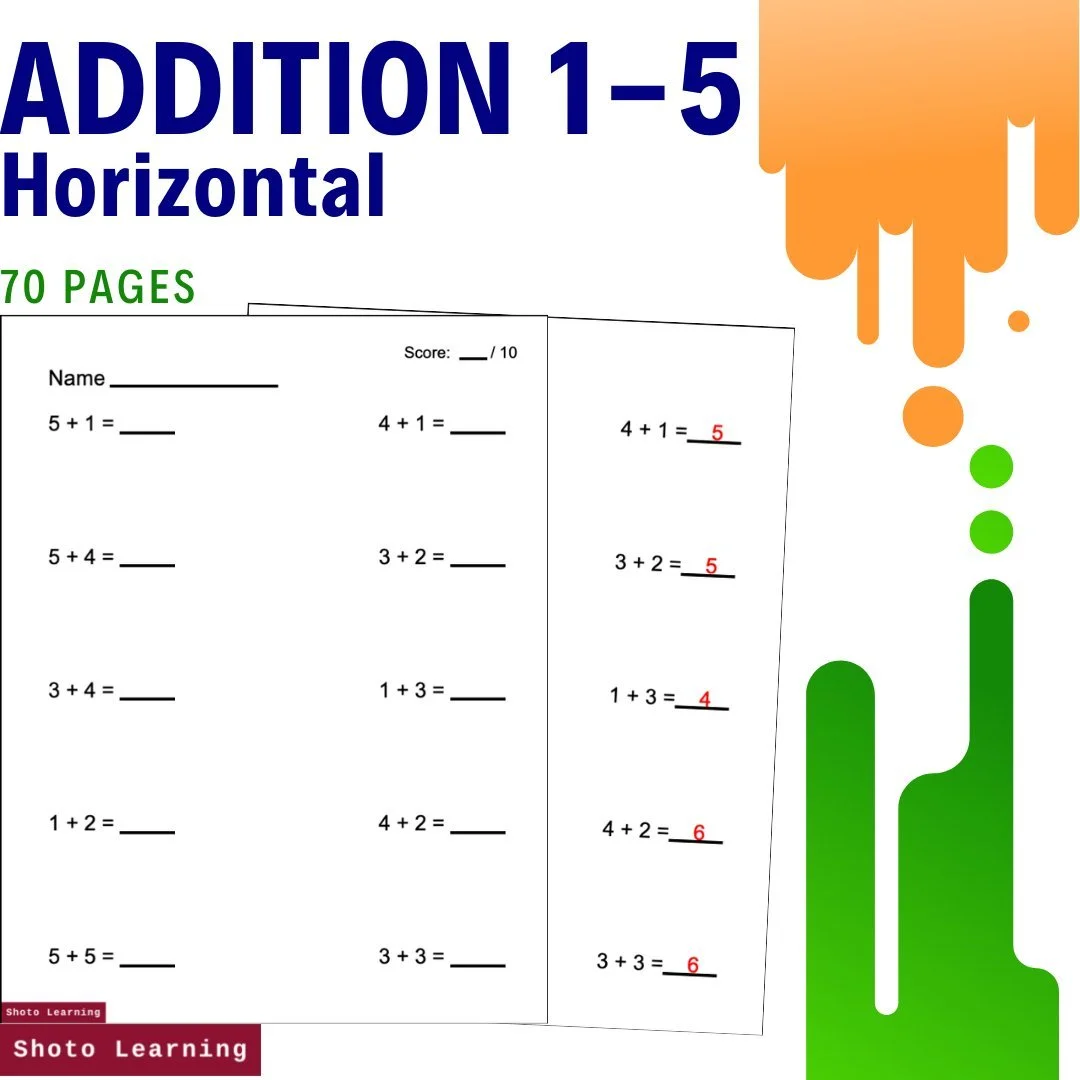


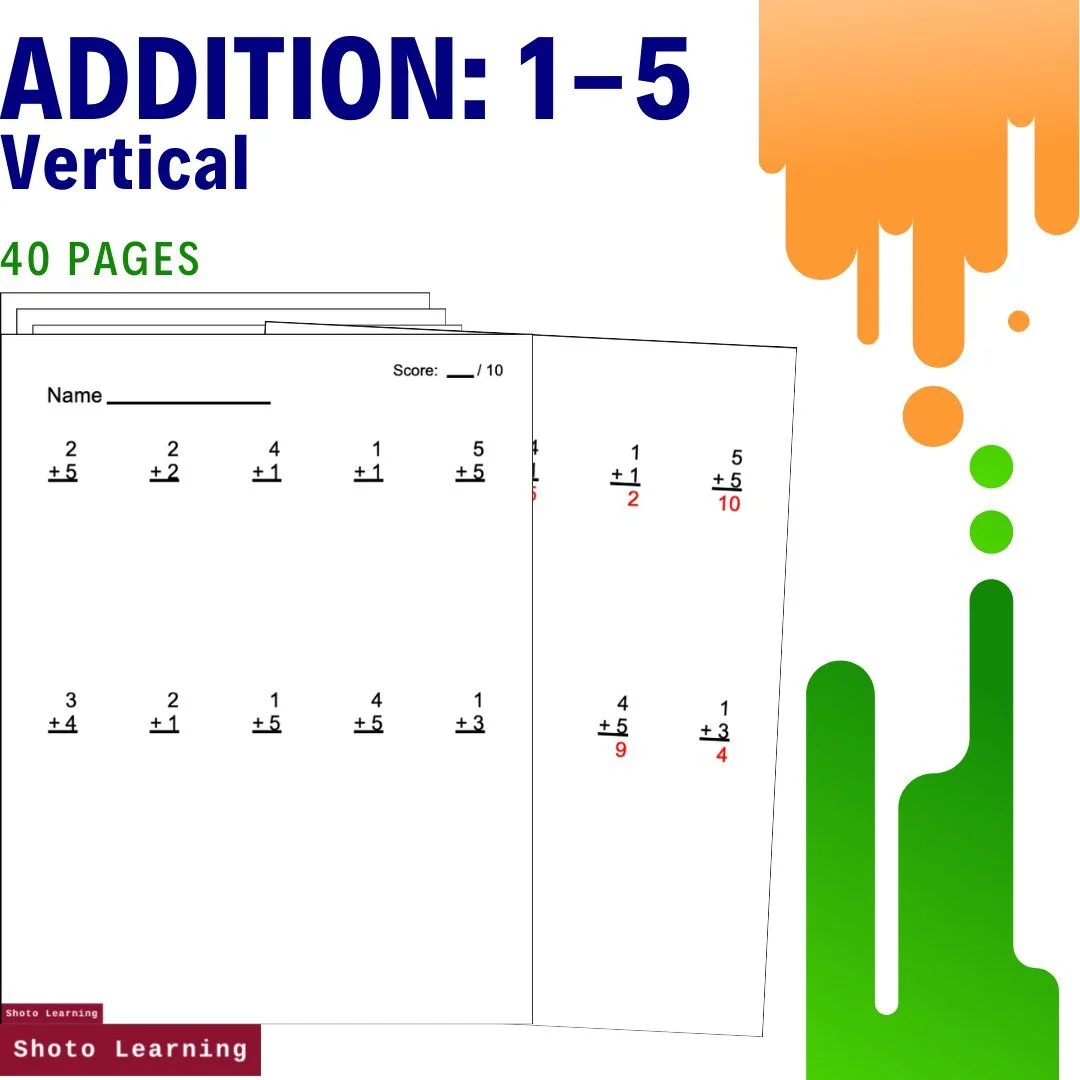
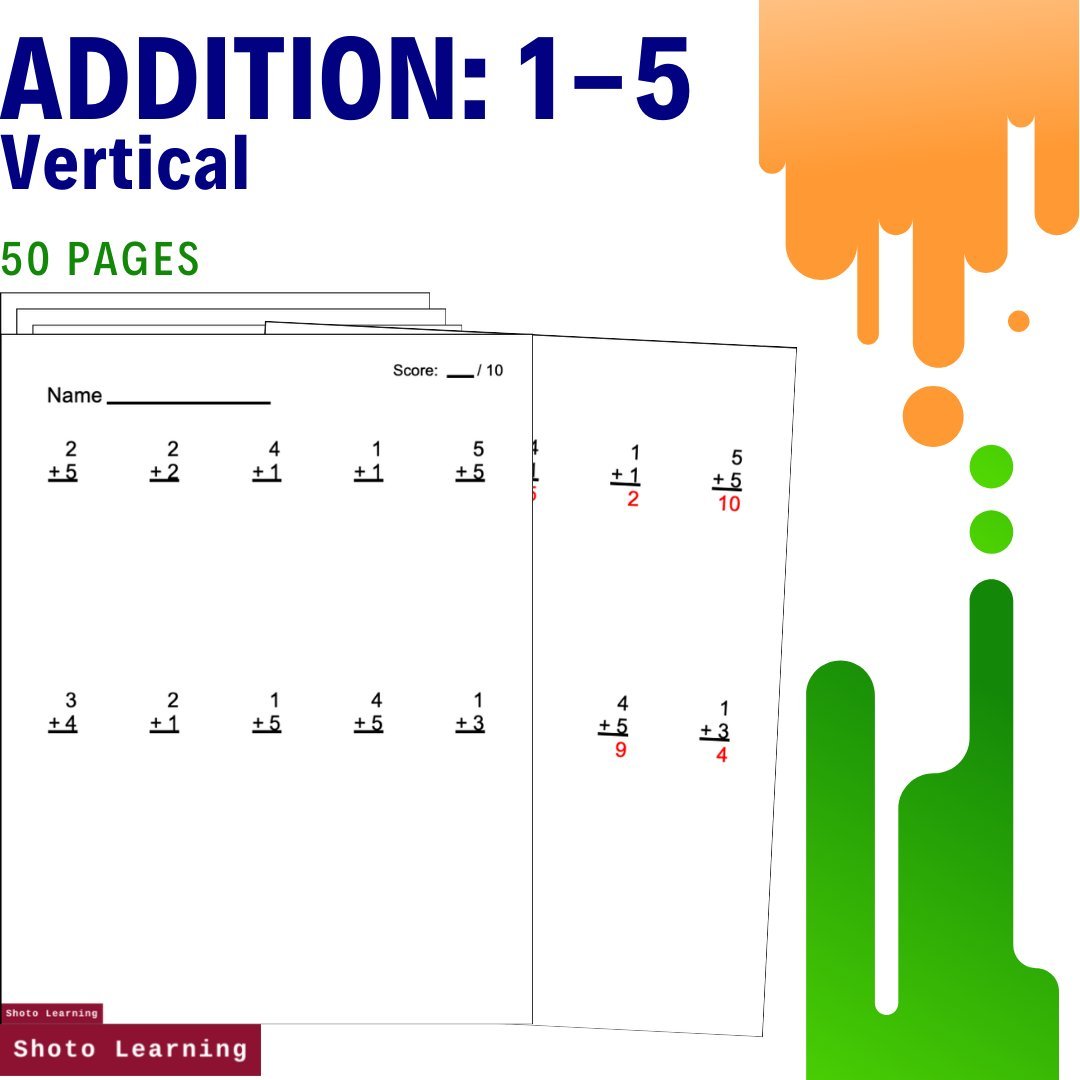


This FREE Addition 1-5 worksheet set is perfect for beginner students looking to practice simple math. With 10 horizontal addition problems per page, this is an excellent tool for assessments, homework, or classroom workstations. The problems include numbers between 1-5, ensuring that all answers are below 10.
Key Features:
10 horizontal problems per page for effective practice.
Simple numbers 1-5 to focus on early addition skills.
Answers included for quick grading or self-checking.
One-page format for easy printing and use.
Ideal for homework assignments, classroom activities, or assessment purposes.
How to Use:
Print the worksheet for individual or group practice.
Use it as a quick warm-up during class.
Perfect for at-home practice to strengthen addition skills.
Teachers can use this as a workstation activity or homework assignment.
Encourage your students to master addition with this straightforward and effective worksheet!