
Easy Ways to Teach States of Matter with Practical Classroom Activities
Teaching the states of matter can be simple and fun with the right approach. Using hands-on activities, clear visuals, and real-life examples helps students grasp the concepts of solids, liquids, and gases quickly. These methods make learning interactive and keep students engaged.
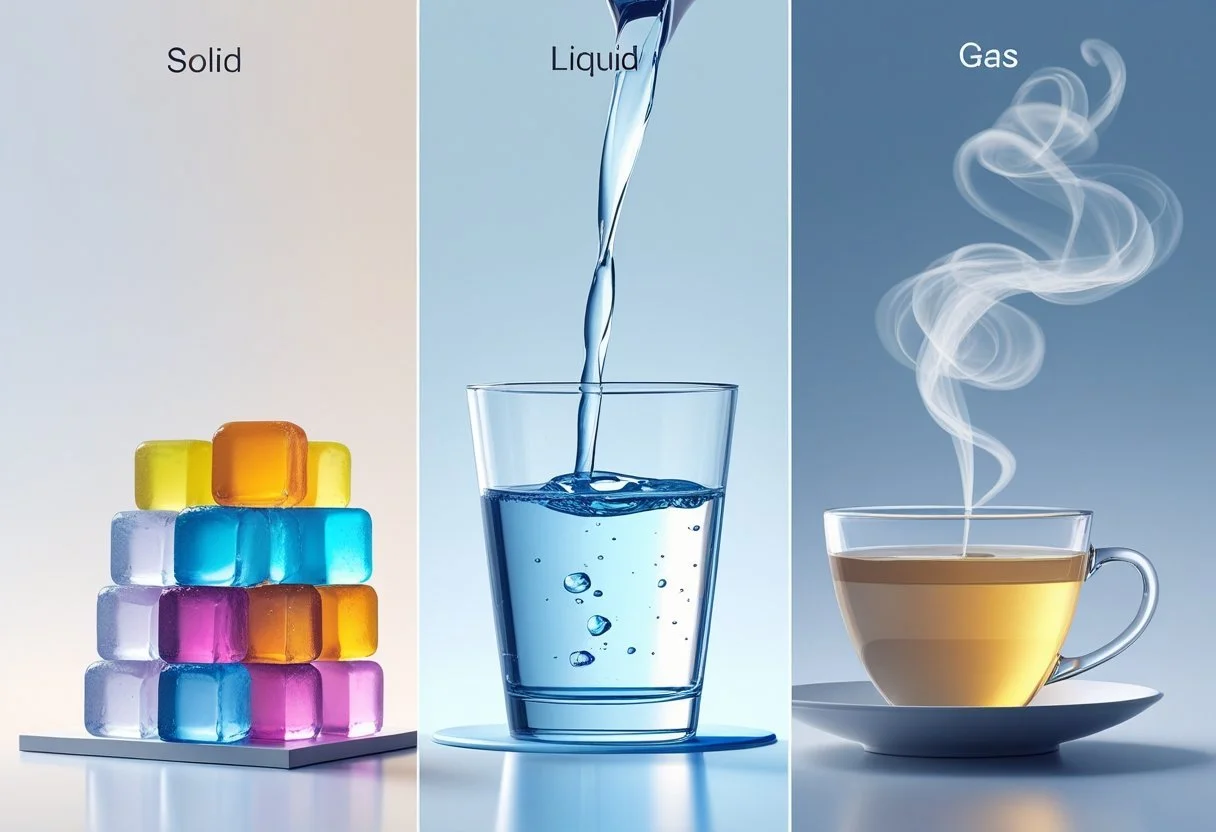
Many easy ways exist to introduce these ideas without long lectures. Short experiments or models allow students to see changes in matter and understand its properties firsthand. This approach supports better understanding and makes science more exciting.
Incorporating technology and connecting lessons to everyday experiences also helps deepen learning. When students relate science to the world around them, it becomes easier to remember and apply what they learn.
Key Takeways
Hands-on activities improve understanding of matter’s different forms.
Visual tools and simple experiments make lessons engaging and clear.
Connecting lessons to real life strengthens learning and interest.
Understanding States of Matter
Matter exists in different forms, each with unique properties. Learning about these forms helps explain how substances behave and change in everyday life. Teaching states of matter clearly shows the differences between solids, liquids, and gases.
Definition of Matter
Matter is anything that has mass and takes up space. It is made up of tiny particles called atoms and molecules. These particles are always moving, but the way they move changes based on the state of matter.
There are three main states of matter: solid, liquid, and gas. Each state has a different arrangement and movement of particles. Understanding this helps explain why solids hold their shape, liquids flow, and gases expand.
Importance of Teaching States of Matter
Teaching states of matter helps students see how the physical world works. It builds a foundation for understanding science topics like chemistry, weather, and physics.
Knowing about states of matter allows learners to recognize changes in materials, like water freezing or boiling. It also encourages curiosity through hands-on activities and experiments. This makes science easier to understand and more interesting.
Overview of Solids, Liquids, and Gases
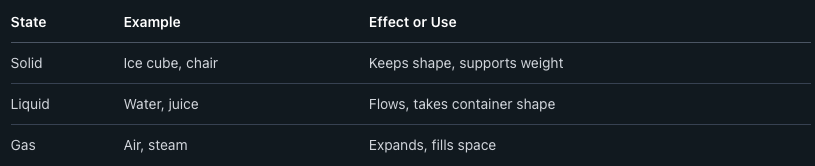
Solids have particles packed tightly in a fixed shape. They don’t change shape easily and have a definite volume.
Liquids have particles that are close but can move past each other. Liquids take the shape of their container but keep the same volume.
Gases have particles that move freely and spread out to fill any space. They don’t have a fixed shape or volume.
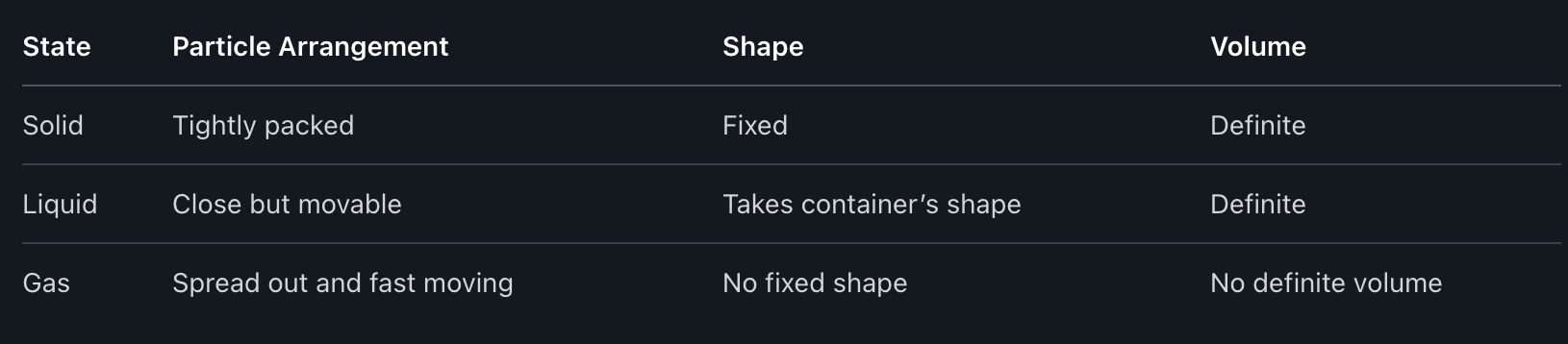
Key Properties of Solids, Liquids, and Gases
Matter exists in three main states: solid, liquid, and gas. Each state has distinct properties that determine how it looks and behaves. These include how particles are arranged, how much space they take up, and whether they can change shape or volume easily.
Characteristics of Solids
Solids have a fixed shape and volume. Their particles are tightly packed and arranged in a regular pattern. This close arrangement makes solids hard to compress or change shape without applying force.
A solid does not flow like a liquid and keeps its form unless broken or melted. Some solids can bend or be shaped when force is applied, but they generally resist changing their overall structure.
Because the particles vibrate but do not move freely, solids hold their shape firmly. Examples include ice, wood, and metal.
Characteristics of Liquids
Liquids have a definite volume but no fixed shape. They take the shape of the container they are in by flowing and spreading out.
Particles in liquids are close together but can move past each other. This allows liquids to be poured and to change shape easily while keeping the same volume.
Liquids are hard to compress because of the close particles. They also form a flat or curved surface called the surface tension. Water, milk, and oil are common examples of liquids.
Characteristics of Gases
Gases have neither a fixed volume nor shape. They expand to fill any container they are in, spreading their particles far apart.
Gas particles move quickly and freely, which makes gases easy to compress. This wide spacing can cause gases to be invisible.
Because of their free movement, gases flow easily and can escape from open containers. Examples include air, steam, and helium.
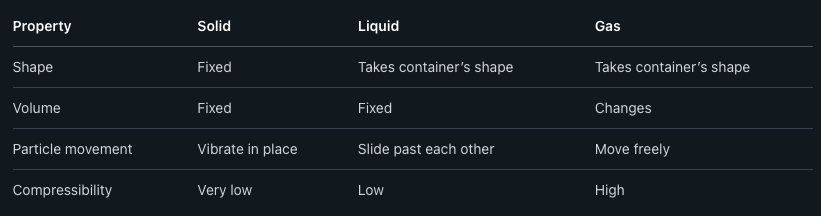
Engaging Activities for Teaching States of Matter
Students learn best when they can touch, see, and interact with what they study. Activities that use simple materials and encourage movement help kids understand solids, liquids, and gases clearly and quickly.
Hands-On Experiments
Hands-on experiments let students explore the properties of states of matter directly. For example, freezing water to make ice shows how a liquid becomes a solid. Heating water to produce steam demonstrates how a liquid changes into gas.
Teachers can provide simple materials like ice cubes, balloons, and bottles. Students can measure changes in shape, volume, and temperature. Recording their observations helps them connect what they see with scientific concepts.
Experiments with dissolving sugar or salt in water also help explain how solids interact with liquids. These activities make learning active and memorable.
Classroom Games
Classroom games reinforce the differences between solids, liquids, and gases in a fun way. One game asks students to act out the particles in each state, showing how tightly or loosely they move.
Another game uses cards with items labeled as solid, liquid, or gas. Students sort and explain their choices. This encourages quick thinking and helps them remember key traits like shape and volume.
Using games like these builds both understanding and engagement, especially for young learners who need movement and interaction.
Demonstrations Using Everyday Objects
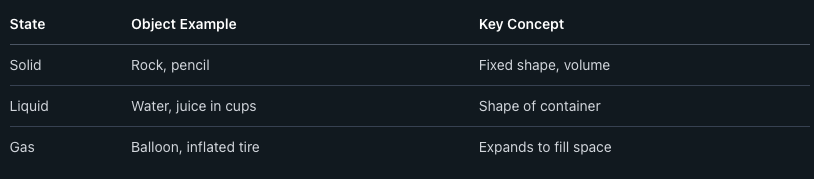
Using objects found around the classroom or home makes teaching states of matter easy and practical. For solids, showing a rock or pencil highlights fixed shape and volume.
Pouring water or juice into different cups shows liquids take the shape of their container but keep the same volume. Inflating a balloon demonstrates how gases fill space and can expand.
Simple tools like ice trays, water bottles, and balloons create clear examples. Demonstrations with these objects help students link science to real life quickly.
Key objects for demos:
Using Visuals and Models
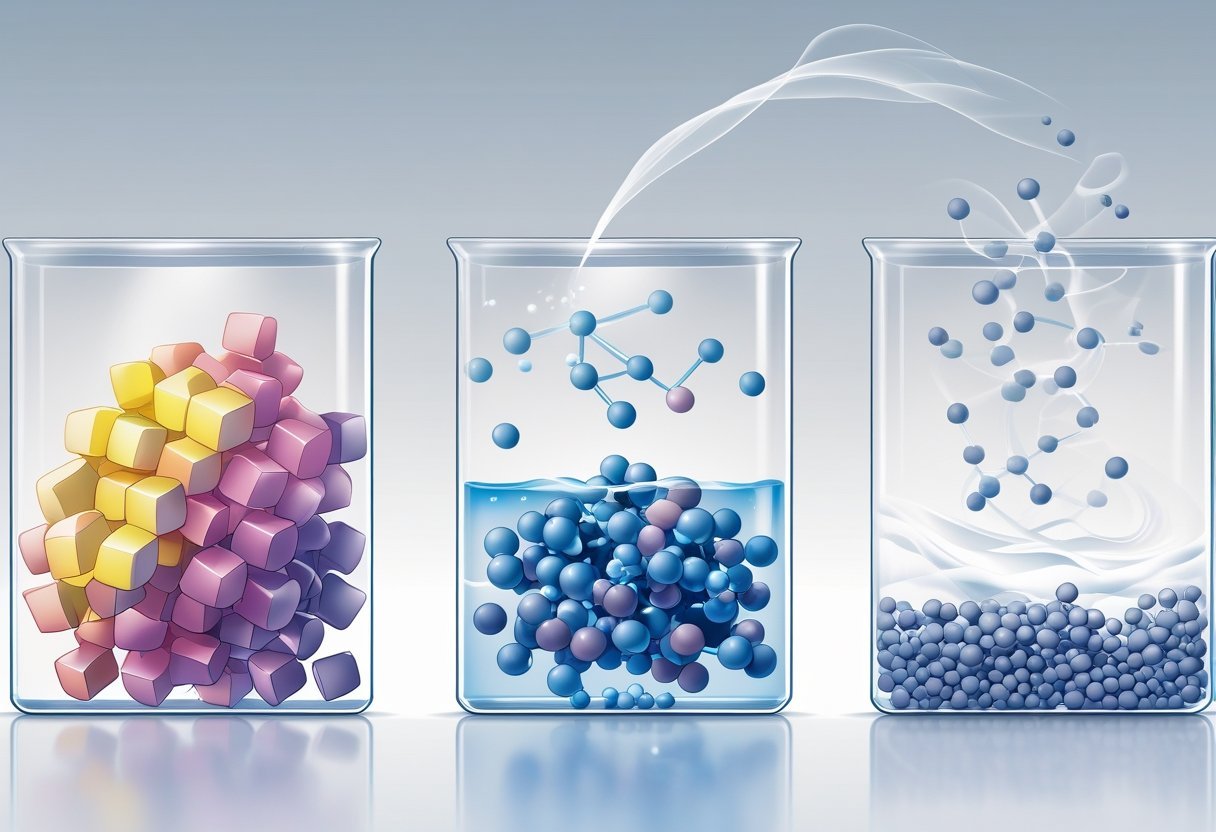
Visual tools help students understand the differences between solids, liquids, and gases by showing how particles behave. Using clear images, hands-on models, and everyday examples makes the learning process more concrete and easier to grasp.
Interactive Models
Interactive models let students see how particles move in each state of matter. For example, simple ball-and-stick models or digital apps can show particles packed tight in solids, loosely arranged in liquids, and spread far apart in gases.
These models help students observe changes like melting or evaporation by adjusting temperature or pressure. Manipulating models encourages active learning and helps students grasp abstract ideas on a physical level. Teachers can use these models in small groups or as a class activity.
Videos and Animations
Videos and animations provide dynamic visuals of solids, liquids, and gases in action. They can clearly show particle movement and state changes, such as ice melting or water boiling.
Animations often zoom in to the molecular level, making it easier for students to see concepts that are too small to observe directly. Short videos work well for lessons because they capture attention and simplify complex ideas, which supports different learning styles.
Real-World Visual Examples
Using real objects to demonstrate states of matter connects lessons to everyday life. Showing a block of ice, a glass of water, and steam from a kettle allows students to identify solids, liquids, and gases in front of them.
Teachers can also highlight examples like fog, candle wax, or cooking oil to cover a range of materials. These visual aids help students recognize states of matter outside the classroom and understand their practical importance.
Incorporating Technology in Lessons
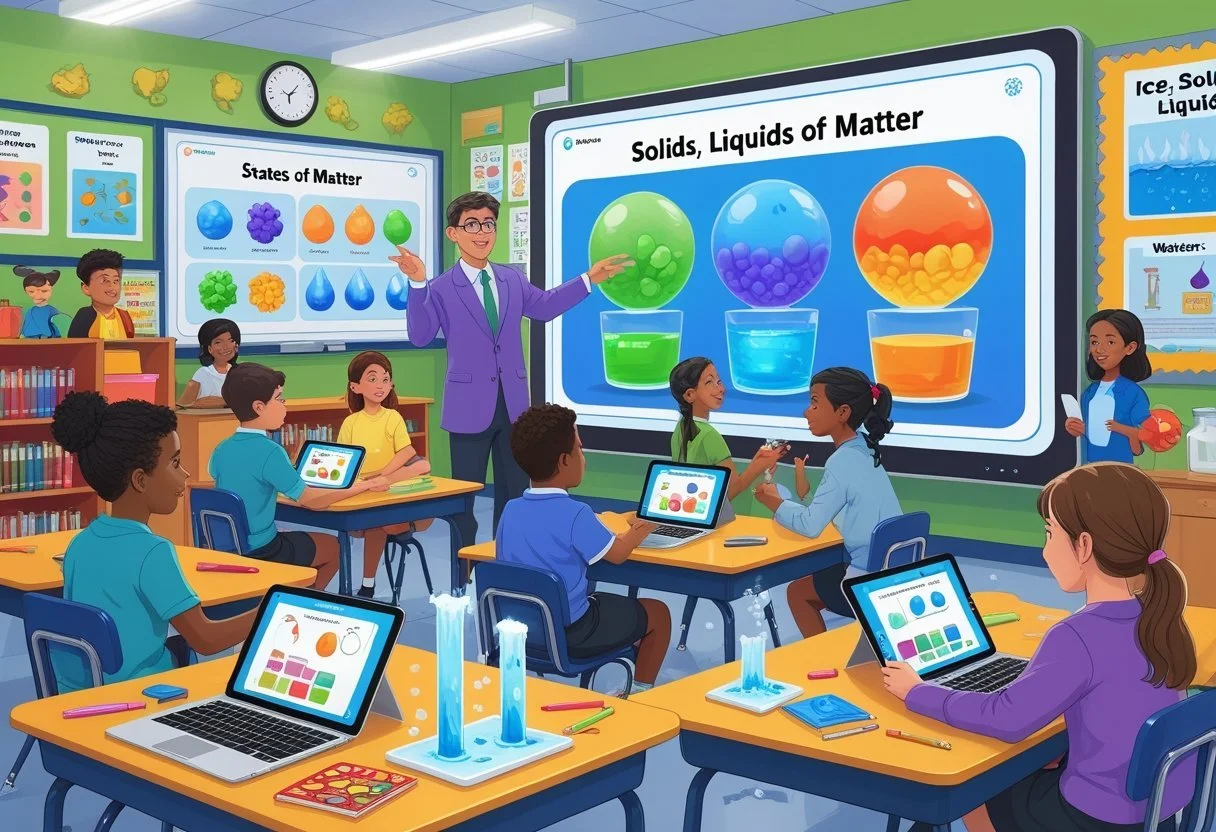
Using technology can make teaching states of matter more engaging and interactive. It offers students hands-on experiences that are hard to achieve with just books. Today’s tools help visualize solids, liquids, and gases clearly and support deeper understanding through play and exploration.
Online Simulations
Online simulations allow students to see states of matter change in real time. They can control temperature or pressure to watch how solids melt, liquids evaporate, or gases condense. This visual and interactive method helps students grasp abstract concepts with ease.
Many free and paid platforms offer simulations that model particles’ behavior in different states. Students can pause, restart, and explore variables, which boosts exploration and critical thinking. Simulations also save class time by replacing long experiments and can be accessed at home for extra practice.
Educational Apps and Games
Educational apps and games make learning about states of matter fun and memorable. They use quizzes, puzzles, and challenges focused on solids, liquids, and gases. These tools provide instant feedback, encouraging students to learn from mistakes and retain information.
Some apps also incorporate STEM challenges related to real-world uses of states of matter. This connects science lessons to everyday life and career paths. Games often include levels or badges to motivate students and help teachers track progress easily.
Connecting States of Matter to Everyday Life
States of matter are a part of daily experiences, showing up in familiar items and actions. Recognizing solids, liquids, and gases in common places helps make the topic clear and relevant.
Examples from Home and School
At home, solids include furniture, ice cubes, and books. Liquids are found in water, juice, and cooking oil. Gases appear as air in balloons or steam from a kettle. In school, desks and textbooks are solids, drinking fountains supply liquids, and the air in the classroom is gas.
Students can observe how these states behave differently. For example, solids keep their shape, liquids flow to fit containers, and gases spread out to fill spaces. Simple activities like watching ice melt or steam rise show phase changes clearly.
Practical Applications
Understanding states of matter helps explain everyday tasks. Cooking involves changing states—water boiling (liquid to gas) or freezing juice (liquid to solid). Heating systems use gases like air or steam to transfer heat efficiently.
In transportation, solids form parts like tires and engines, liquids include fuels, and gases power combustion engines. These examples show how states of matter affect technology and daily life directly.
Tips for Effective Teaching
Effective teaching of states of matter involves clear explanation of important terms and sparking students’ natural interest to explore and understand solids, liquids, and gases. These methods help students build a strong foundation and stay engaged throughout lessons.
Building Scientific Vocabulary
Introducing key scientific words early helps students understand and communicate concepts clearly. Teachers should focus on terms like solid, liquid, gas, melting, freezing, and evaporation. Using simple definitions paired with real examples makes these words easier to grasp.
Creating word walls or flashcards with pictures can support memory. Repeating vocabulary during activities, discussions, and experiments helps reinforce meanings.
Teachers can also encourage students to use these terms when describing experiments or observations. This practice builds confidence and mastery of the language of science.
Encouraging Student Curiosity
Curiosity drives learning. Teachers can promote this by asking open-ended questions like “What do you think will happen if…?” or “Why does ice melt faster in the sun?”
Hands-on experiments are especially effective. Letting students touch, see, and test changes in matter encourages them to ask questions and make discoveries.
Using everyday examples helps make ideas relatable. For instance, discussing why water changes state when heated or cooled connects science to real life.
Creating a safe space for exploration and questions helps students feel comfortable sharing their thoughts and ideas. This makes lessons more interactive and engaging.
Frequently Asked Questions
This section answers common queries about practical activities, projects, and experiments that help students learn about solids, liquids, and gases. It also covers effective teaching tools and group-based activities suitable for different grade levels.
What are some hands-on activities to help students understand states of matter?
Students can explore solids, liquids, and gases by sorting everyday items into categories. Using ice, water, and steam allows them to observe changes firsthand. Simple activities like molding clay, pouring water, and blowing bubbles help demonstrate the properties of each state.
How can you design a classroom project to demonstrate the transition between different states of matter?
A good project involves heating and cooling substances, such as melting ice or boiling water. Students can record temperature changes and observe what happens. Encouraging them to present findings, like at a science fair, makes the experience more engaging.
What worksheets are effective for teaching the concepts of solids, liquids, and gases?
Worksheets with matching exercises, fill-in-the-blank questions, and diagrams are useful. Flip books that guide students to identify key properties help reinforce learning. Clear, simple questions about real-life examples improve understanding.
Can you suggest some simple experiments for 5th graders to learn about states of matter?
Melting and freezing water in small containers is a straightforward experiment. Another idea is capturing air in a balloon to show gas expansion. Mixing different liquids that don't easily blend teaches about liquid properties.
What group activities can effectively illustrate the properties of matter to students?
Role-playing as particles in solids, liquids, and gases helps students visualize movement and spacing. Teams can create physical models using balls or beads. Group discussions about how everyday objects behave in different states deepen comprehension.
What are some suitable states of matter experiments for secondary school students?
Secondary students can explore pressure and temperature effects with more controlled experiments. Using equipment to measure boiling points or create vapor pressure demonstrations fits their skill level. Investigating plasma or non-Newtonian fluids offers advanced insights.



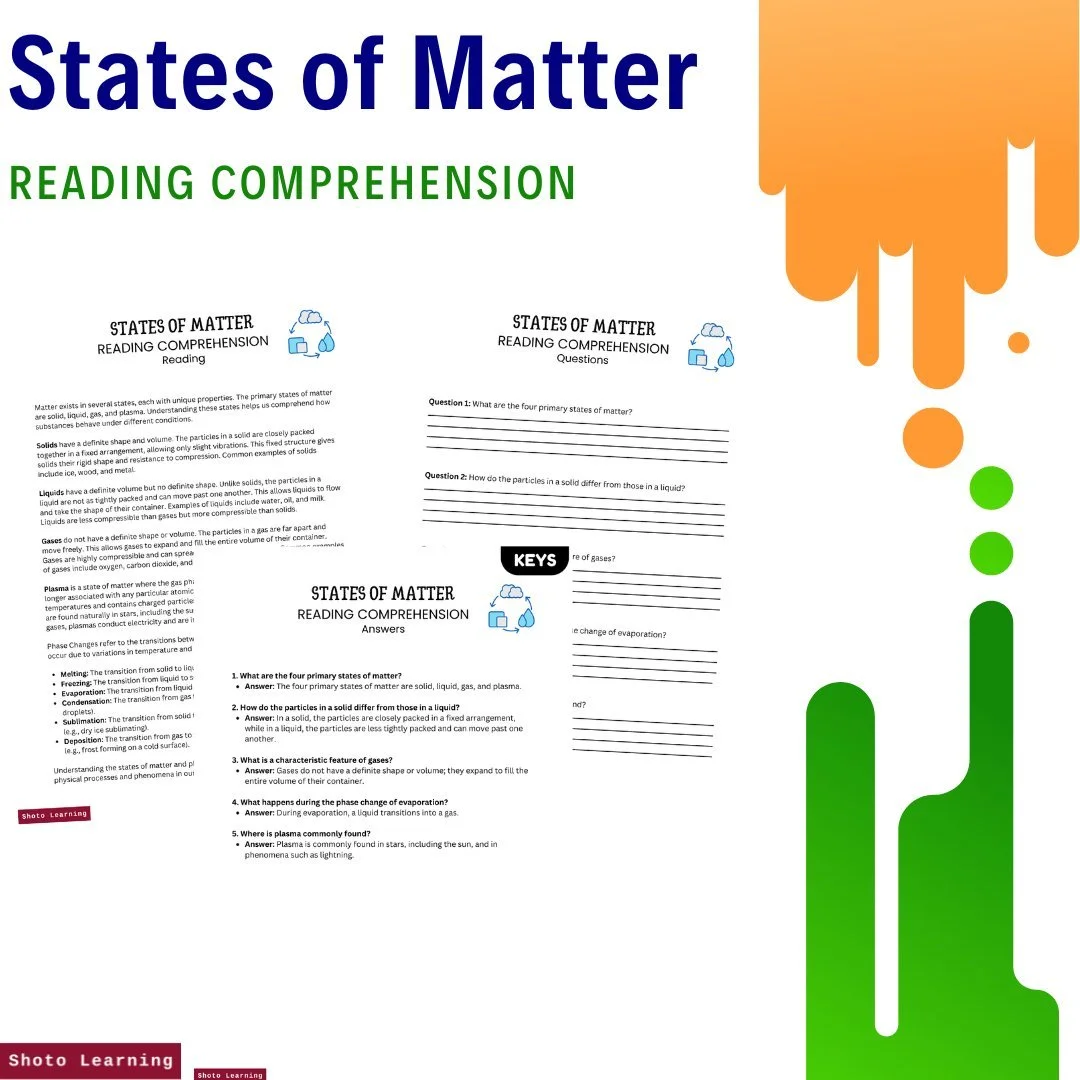
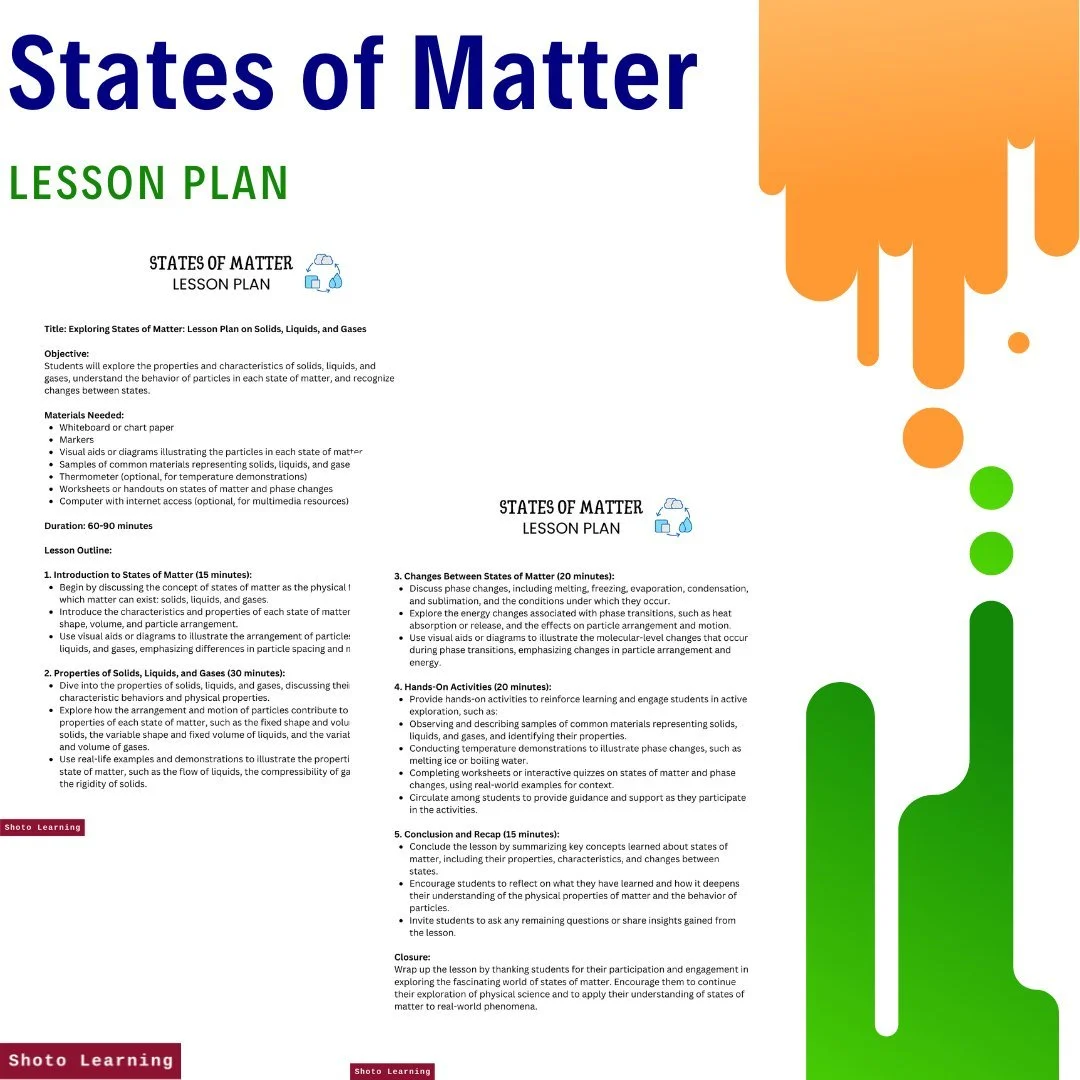


Dive into a comprehensive exploration of states of matter with our all-inclusive worksheet bundle, offering an array of engaging activities to enrich your understanding of gas, solid, liquid, and plasma. This bundle is meticulously curated to cater to various learning styles and preferences, ensuring a captivating and effective learning experience for students, educators, and curious minds of all ages.
Key Features:
Versatile Learning Tools: With an impressive array of worksheets, including ABC Order, Bingo, Crossword, Cryptogram, Debate, Experiments, Fill in the Blank, Flashcards, and much more, this bundle provides a diverse range of resources to reinforce your grasp of state of matter concepts.
Interactive Engagement: Engage in interactive and enjoyable learning experiences with engaging activities like Free Mazes and Free PowerPoint presentations that visually enrich your understanding.
Visual Aids: Reinforce your knowledge with Free Posters that serve as visual aids to reinforce key concepts, making learning visually stimulating and memorable.
Lesson Plan: Dive deep with our detailed lesson plan, complete with engaging activities and discussion topics.
Assessment and Testing: Prepare for assessments with confidence using resources like Tests (45 minutes), Assignments, Reading Comprehension, True or False worksheets, and Multiple-Choice questions that challenge and gauge your understanding.
Creative Exploration: Stimulate your creativity and critical thinking with activities like Writing Prompts, Debates, and Cryptograms that encourage you to delve deeper into the intriguing world of states of matter.
Convenient and Comprehensive: Whether you're a teacher seeking classroom resources or a lifelong learner on a quest for knowledge, our bundle ensures that you have a comprehensive toolkit at your fingertips.
Unlock a wealth of educational opportunities and enhance your mastery of states of matter with this diverse worksheet bundle. From the excitement of Bingo to the thought-provoking challenge of Cryptograms, each activity is designed to make your learning journey engaging, dynamic, and rewarding. Embrace the variety, enhance your understanding, and embark on a captivating exploration of states of matter today!
View on Youtube
Don't wait, order yours today and start enjoying the benefits!