
Fun, ready-to-use worksheet for effective learning.


Latest Blogs

Explore fun and educational ways to teach the frog life cycle! This guide includes engaging worksheets, hands-on activities, and simple experiments to help students understand how frogs grow from eggs to adult frogs.

Teach kids how to compare everyday objects using terms like long and short, heavy and light, and hot and cold. These simple lessons help build strong observation, language, and early measurement skills through fun, hands-on learning.

Games are powerful tools for developing problem-solving skills, teamwork, and creativity. Learn how interactive, engaging activities strengthen learning and real-world performance.

Discover the key differences between prokaryotic and eukaryotic cells explained through fun and simple analogies. Perfect for kids and beginner learners!

Discover creative and hands-on ways to teach materials in kindergarten. Learn how sensory play, storytelling, and outdoor activities make lessons fun and meaningful for young learners.
Using puzzles to teach geometry transforms abstract math into engaging, hands-on learning. Students build spatial reasoning, problem-solving, and confidence.
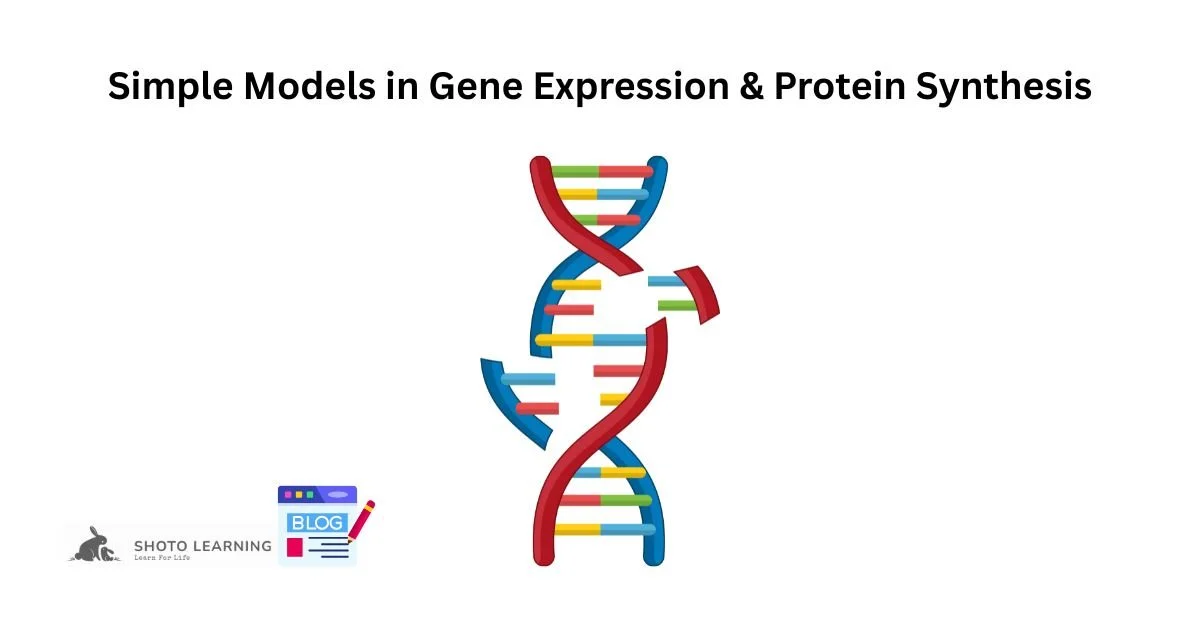
Discover how simple models make gene expression and protein synthesis easier to understand. Learn how DNA turns into proteins that power life.
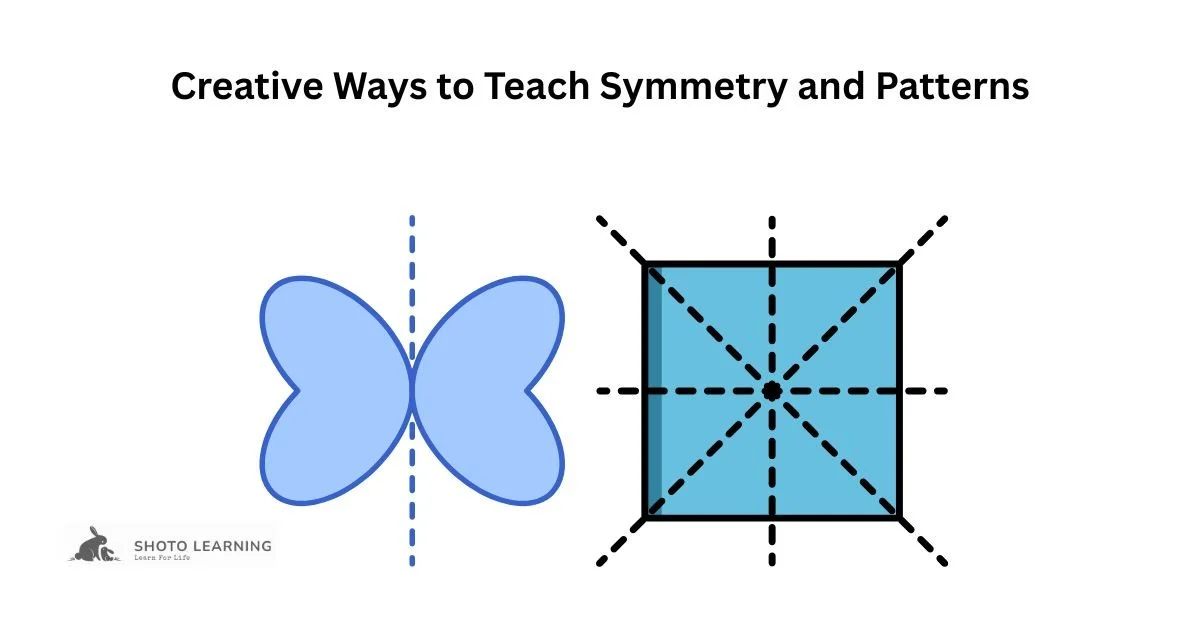
Explore creative ways to teach symmetry and patterns with hands-on activities, art, and nature. Make math engaging, fun, and meaningful for students.
Bacteria play a vital role in modern mining, helping extract metals in eco-friendly ways. This guide shows how to simplify bioleaching and biomining for students.

Teaching cellular respiration early helps students understand how cells use food and oxygen to create energy. This foundation supports future learning in biology, chemistry, and health.

Crosswords and word searches make vocabulary learning fun and effective. They build memory, focus, and problem-solving skills while improving language fluency.
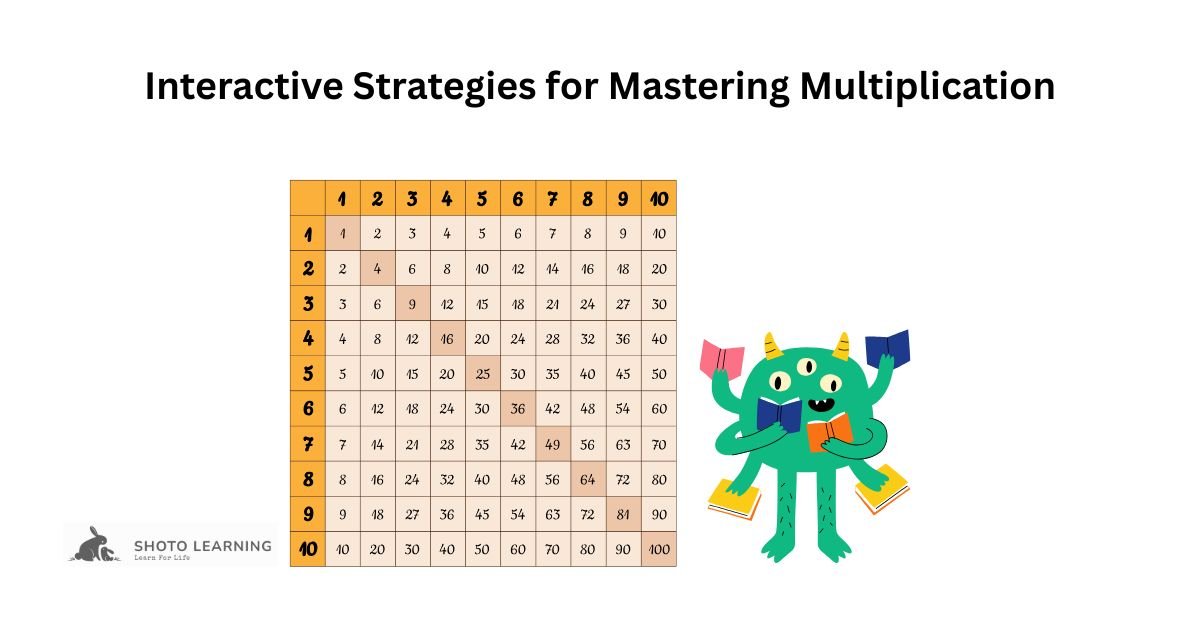
Interactive strategies make learning multiplication tables easier and more engaging. Explore hands-on activities, games, and visuals that boost understanding and mastery.
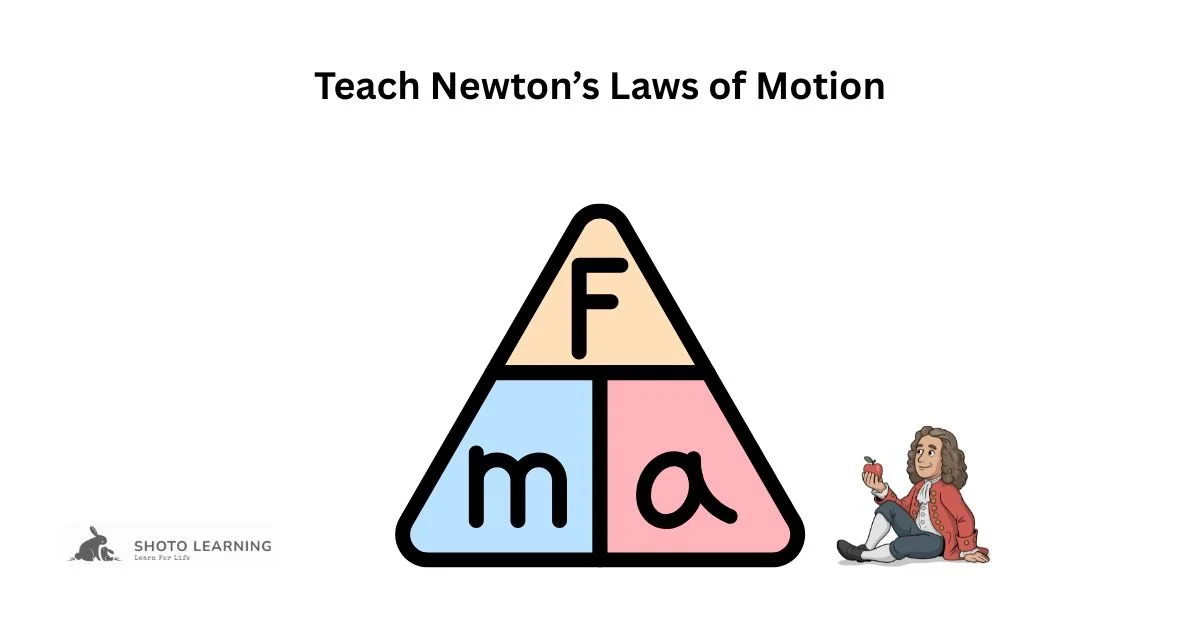
Discover how to teach Newton’s Laws of Motion through fun, interactive games. These activities simplify force and motion concepts while boosting engagement and retention.

Start algebra early to give children a strong foundation in math. Simple activities, patterns, and real-life examples make algebra fun and accessible for young learners.
Latest Youtube Videos
Latest Worksheets
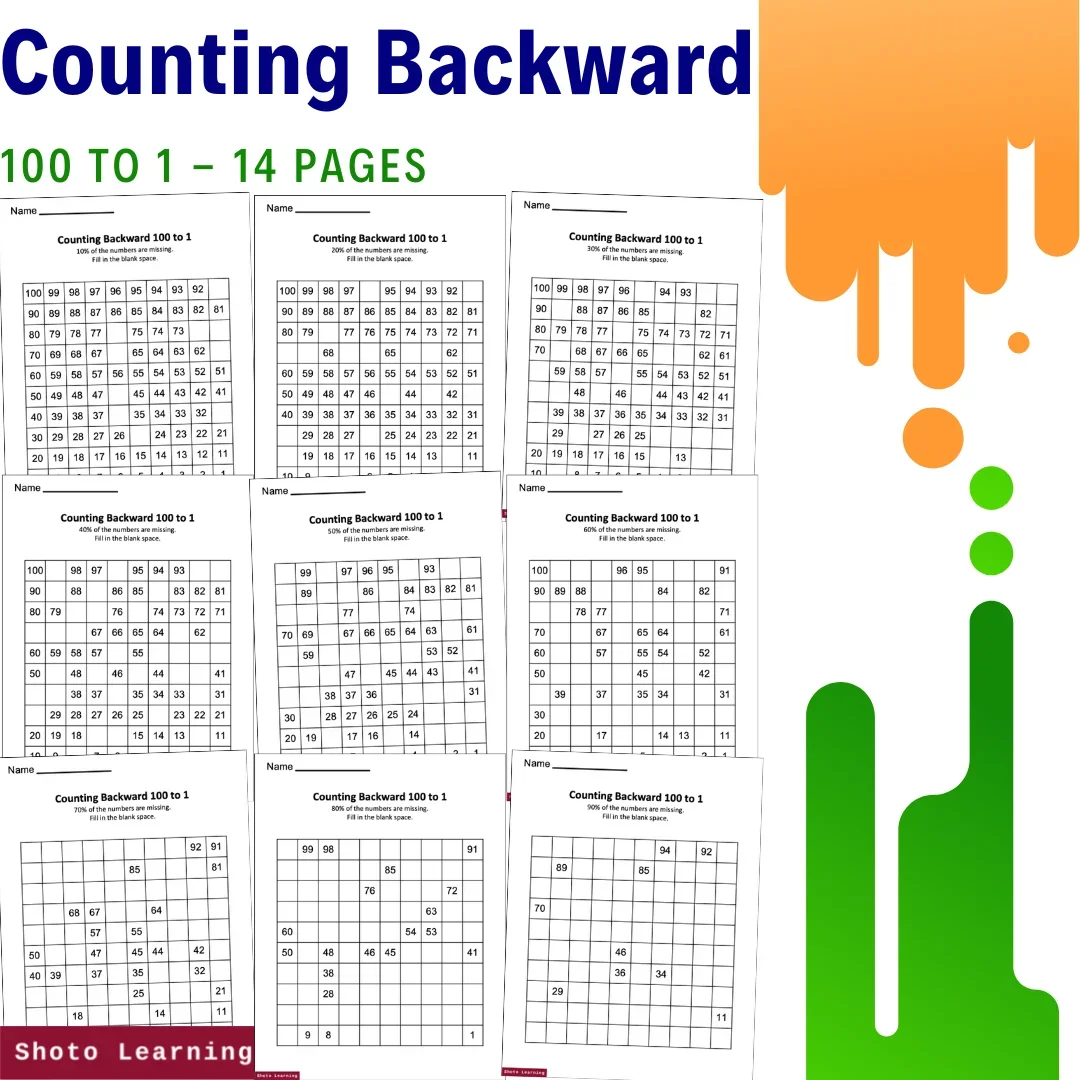
Count backward by one from 100 to 1
Straightforward and simple for beginners! Perfect for identifying numbers and counting backward to 1.
Package
Page 1 - Identification Sheet
Page 2 - 10% Numbers Missing
Page 3 - 20% Numbers Missing
Page 4 - 30% Numbers Missing
Page 5 - 40% Numbers Missing
Page 6 - 50% Numbers Missing
Page 7 - 60% Numbers Missing
Page 8 - 70% Numbers Missing
Pages 9 - 80% Numbers Missing
Pages 10 - 90% Numbers Missing
Pages 11 - 25% Numbers Missing
Pages 12 - 33% Numbers Missing
Pages 13 - 66% Numbers Missing
Pages 14 - 75% Numbers Missing
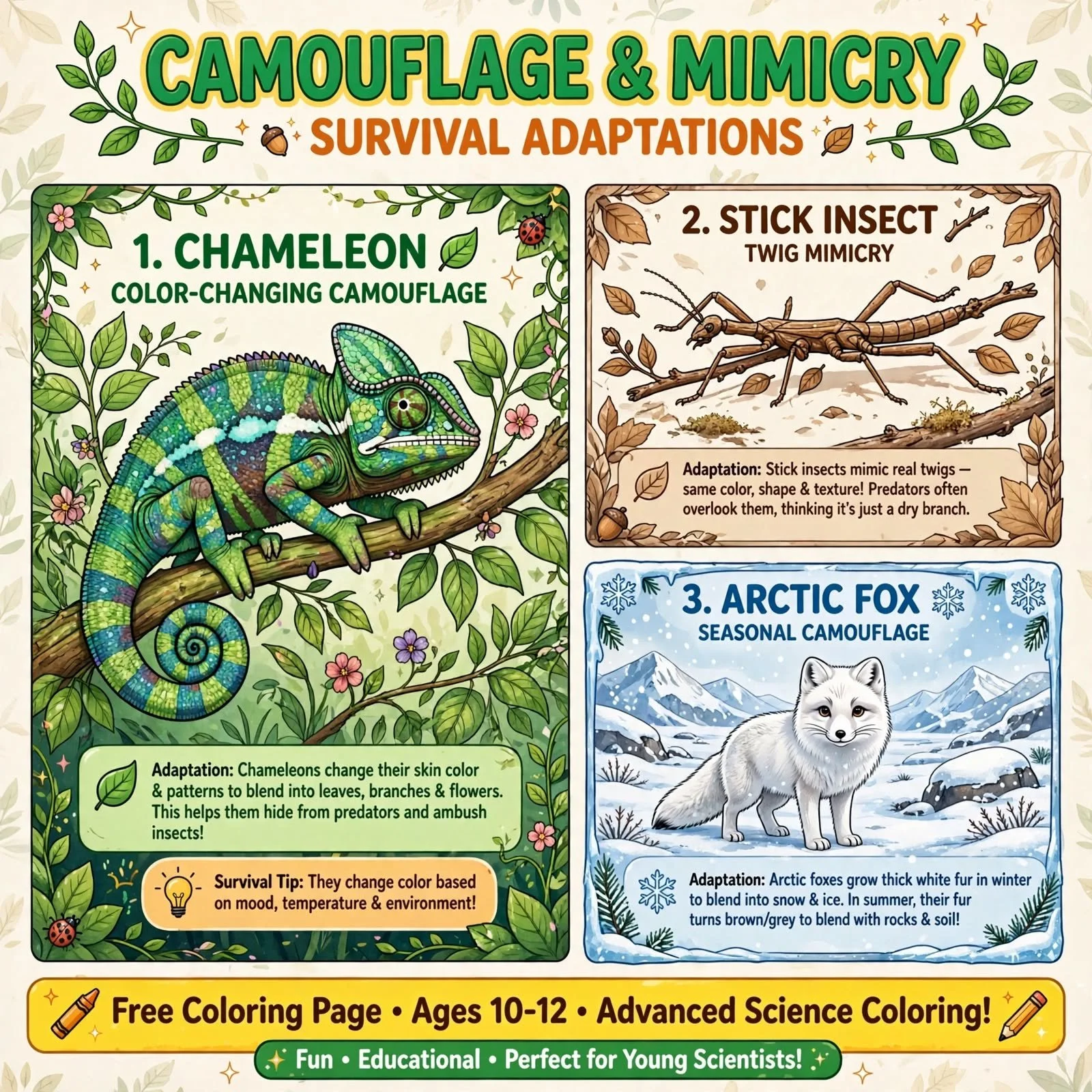
FREE Camouflage & Mimicry - Survival Adaptations Coloring Page - Ages 10-12 (Advanced)
How do animals hide to survive? This FREE detailed coloring page teaches camouflage and mimicry adaptations with 3 amazing examples!
What You Will Learn:
1. CHAMELEON - Color-Changing Camouflage
Adaptation: Chameleons can change their skin color and patterns to blend into leaves, branches, and flowers. This helps them hide from birds and ambush insects!
SURVIVAL TIP: Color change is controlled by mood, temperature, and environment!
2. STICK INSECT - Twig Mimicry
Adaptation: Stick insects mimic the look of real twigs - same color, shape, and texture. Predators overlook them because they look just like a dry branch!
SURVIVAL TIP: They stay very still and sway slightly like a twig blowing in the wind.
3. ARCTIC FOX - Seasonal Camouflage
Adaptation: Arctic foxes grow a thick white coat in winter to blend into snow and ice. In summer, their coat changes to brown/grey to blend with rocks and soil.
SURVIVAL TIP: This camouflage helps them hunt small rodents hidden under FREE Camouflage & Mimicry - Survival Adaptations Coloring Page - Ages 10-12 (Advanced)
BONUS Sections Included:
QUIZ - TEST YOUR KNOWLEDGE! 3 multiple choice questions
BONUS: DRAW YOUR OWN! Design your own animal that uses camouflage!
Key Vocabulary: CAMOUFLAGE = blending to hide. MIMICRY = copying another object to look harmless. ADAPTATION = a trait that helps an organism survive.
What's Included:
1 Printable PDF - High Resolution
Perfect For: Animal adaptations, camouflage unit, survival, ecosystems, 5th-7th grade science
LOVE SCIENCE?
We also sell a best-selling Science Coloring Book for Ages 10-12! This advanced page (10-12) is perfect for older siblings who have outgrown the 7-9 book. For younger learners, our 7-9 book covers life cycles, human body, water cycle, solar system & more in a simpler Color, Learn & Label style!
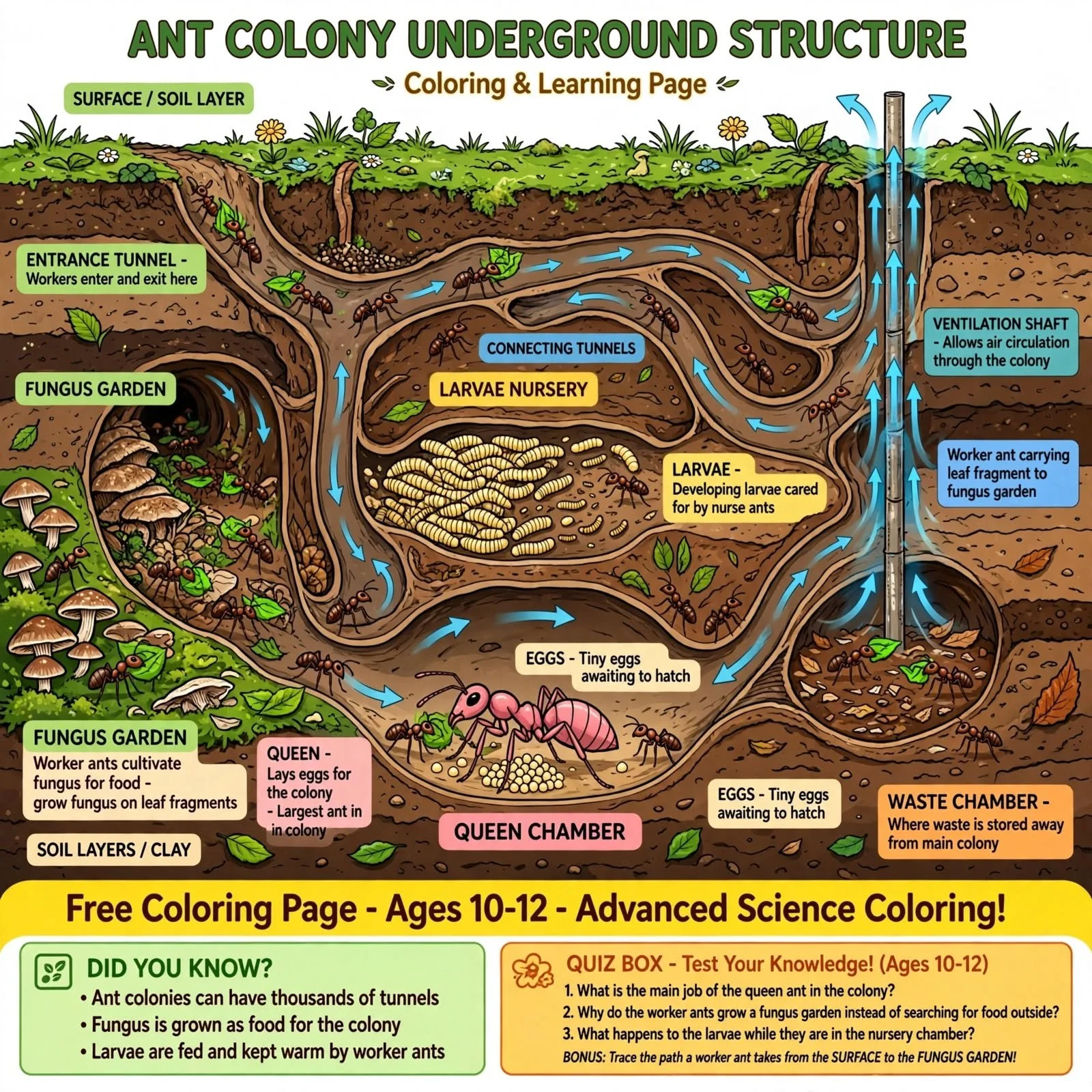
FREE Ant Colony Underground Structure - Coloring & Learning Page - Ages 10-12 (Advanced)
Explore the hidden world under your feet with this FREE detailed ant colony diagram!
Perfect for entomology, ecosystems, and insect units - kids color and learn how an ant colony works like a super-organism city underground!
What You Will Learn - Labeled Diagram:
SURFACE / SOIL LAYER - Where the colony starts
ENTRANCE TUNNEL - Workers enter and exit here
CONNECTING TUNNELS - Highways of the colony
VENTILATION SHAFT - Allows air circulation through the colony
FUNGUS GARDEN - Worker ants cultivate fungus for food - grow fungus on leaf fragments
LARVAE NURSERY - Developing larvae cared for by nurse ants
QUEEN CHAMBER - QUEEN lays eggs for the colony, largest ant in colony + EGGS tiny eggs awaiting to hatch
WASTE CHAMBER - Where waste is stored away from main colony
SOIL LAYERS / CLAY
Plus: Worker ant carrying leaf fragment to fungus garden!
BONUS Learning Boxes Included:
DID YOU KNOW? Ant colonies can have thousands of tunnels, Fungus is grown as food, Larvae are fed and kept warm by worker ants
QUIZ BOX - Test Your Knowledge! (Ages 10-12) 3 Questions + BONUS: Trace the path a worker ant takes from the SURFACE to the FUNGUS GARDEN!
What's Included:
1 Printable PDF - High Resolution
Black-and-white line art version for coloring
Perfect For: Insects unit, ecosystems, underground habitats, science centers, gifted learners, 5th-7th grade
LOVE SCIENCE?
If your kids love detailed science, check out our Science Coloring Book for Ages 10-12! We also have easier versions of life cycles, plant, water cycle, human body & more - perfect for building up to this advanced 10-12 level! For younger siblings (7-9), our main Science Coloring Book is made to color, learn & label.
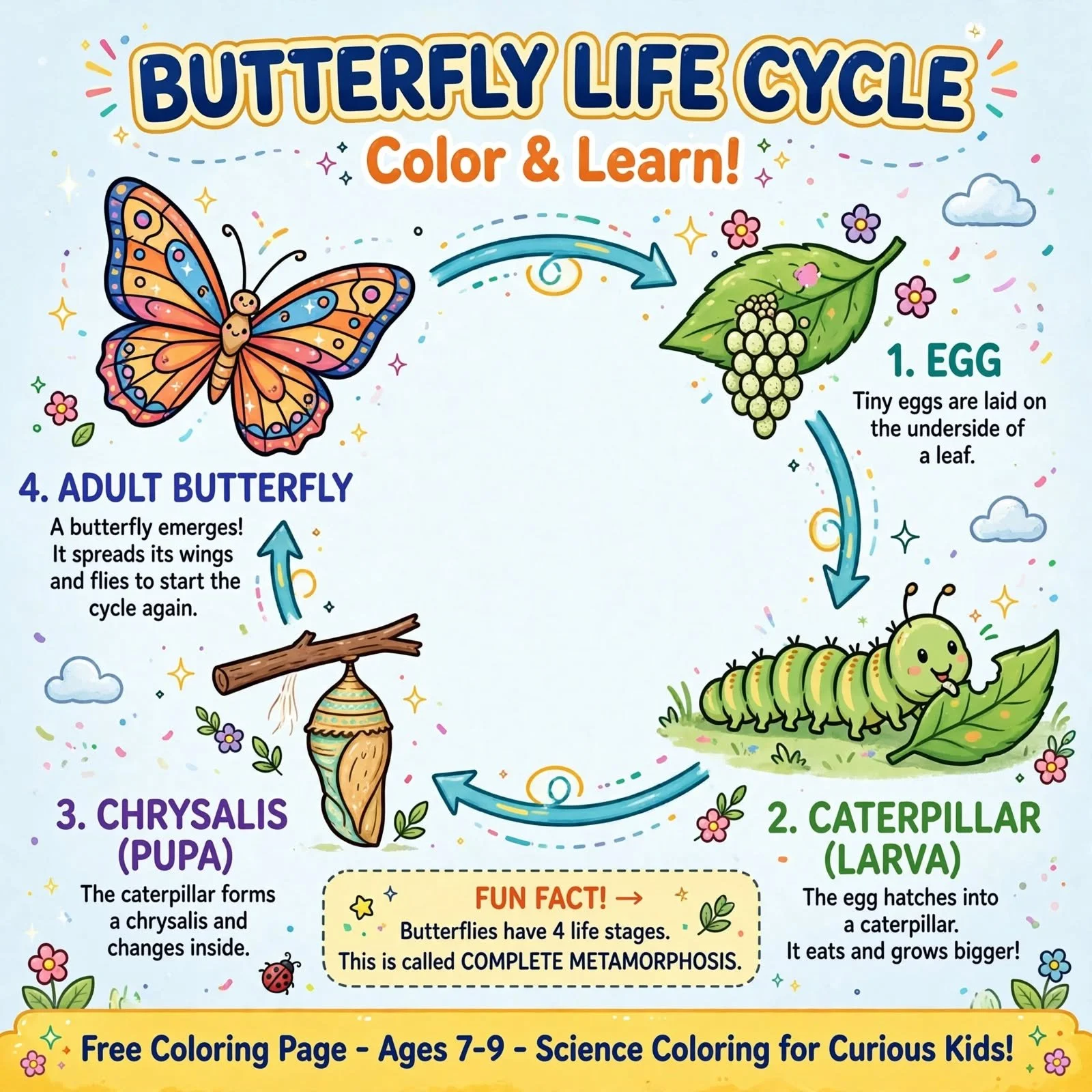
FREE Butterfly Life Cycle Coloring Page - Color & Learn - Ages 7-9
Teach complete metamorphosis with this FREE beautiful butterfly life cycle coloring page!
What You Get - 4 Stages of Butterfly Life:
1. EGG: Tiny eggs are laid on the underside of a leaf.
2. CATERPILLAR (LARVA): The egg hatches into a caterpillar. It eats and grows bigger!
3. CHRYSALIS (PUPA): The caterpillar forms a chrysalis and changes inside.
4. ADULT BUTTERFLY: A butterfly emerges! It spreads its wings and flies to start the cycle again.
BONUS FUN FACT! Butterflies have 4 life stages. This is called COMPLETE METAMORPHOSIS.
What's Included:
1 Printable PDF - High Resolution
Clear circular diagram with arrows
Kid-friendly definitions for each stage
Perfect for 2nd, 3rd, 4th grade
Perfect For:
Life Cycles Unit, Insects Unit
Spring Science, Butterfly Unit
Science centers, homeschool, homework, early finishers
LOVE THIS?
Your students will LOVE our complete Science Coloring Book for Ages 7-9! 50+ pages covering butterfly, frog, plant, human life cycles, photosynthesis, pollination, human body, DNA, water cycle & more - designed to color, learn & label for curious kids ages 7-9!
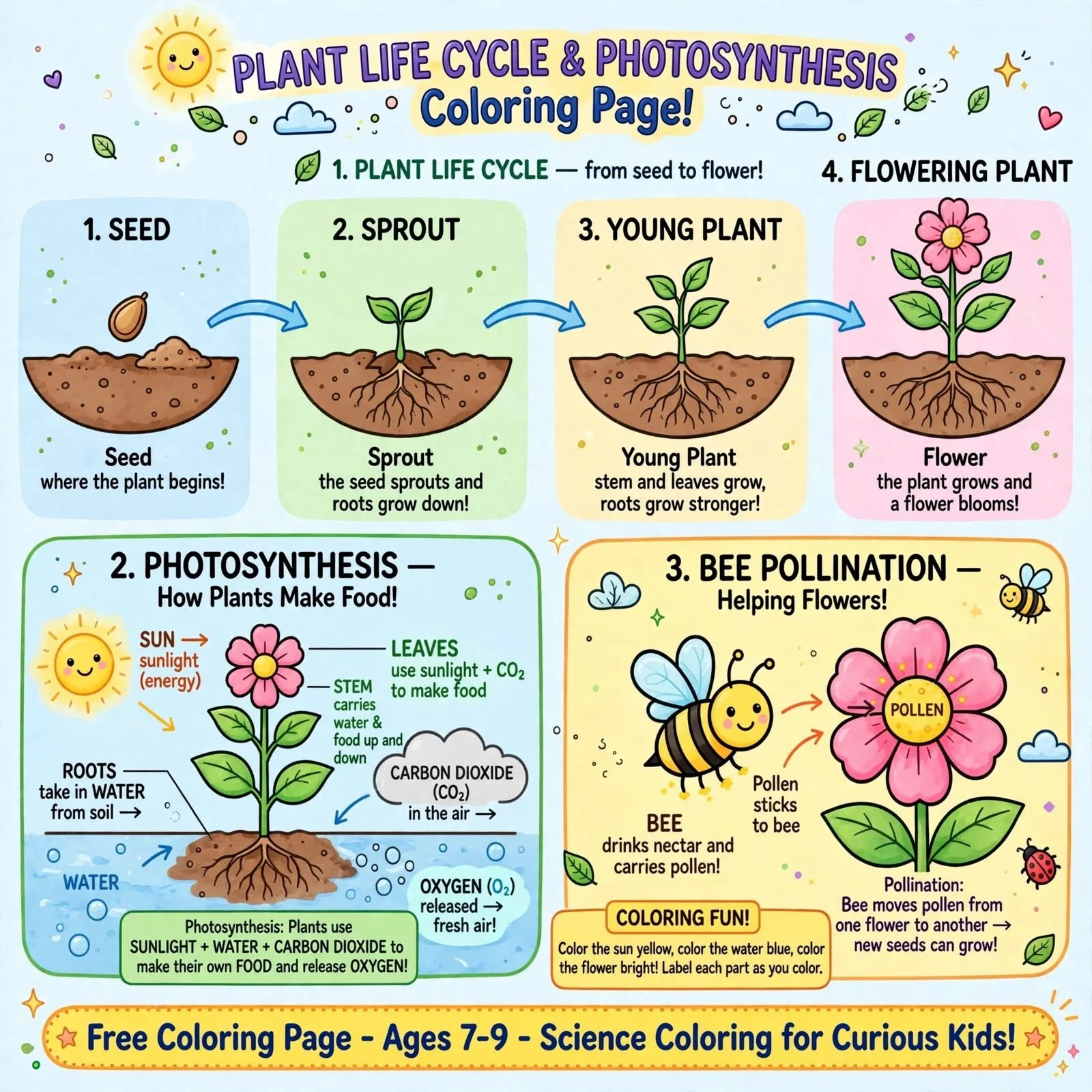
FREE Plant Life Cycle & Photosynthesis Coloring Page - Color, Learn & Label - Ages 7-9
Make plant science click with this FREE 3-in-1 science coloring page!
Kids color and learn how plants grow from seed to flower, how they make their own food through photosynthesis, and how bees help with pollination!
What You Get - 3 Science Topics in 1 Page:
1. PLANT LIFE CYCLE - from seed to flower!
SEED: Where the plant begins!
SPROUT: Seed sprouts, roots grow down!
YOUNG PLANT: Stem and leaves grow, roots stronger!
FLOWERING PLANT: Plant grows and flower blooms!
2. PHOTOSYNTHESIS - How Plants Make Food!
SUN - Sunlight (energy)
LEAVES use sunlight + CO2 to make food
STEM carries water & food up and down
ROOTS take in WATER from soil
CARBON DIOXIDE (CO2) in the air
OXYGEN (O2) released → fresh air!
Formula: SUNLIGHT + WATER + CARBON DIOXIDE = FOOD + OXYGEN!
3. BEE POLLINATION - Helping Flowers!
BEE drinks nectar and carries pollen!
POLLEN sticks to bee, moves flower to flower → new seeds can grow!
What's Included:
1 Printable PDF - High Resolution
Bold clear labels, perfect for 2nd-4th grade
Perfect For: Plant life cycle unit, photosynthesis, pollination, botany, spring science, STEM centers, homeschool
LOVE THIS?
Check out our full Science Coloring Book for Ages 7-9! 50+ pages covering plant life cycles, photosynthesis, pollination, solar system, human body, DNA, atoms, water cycle & more - made to color, learn & label!
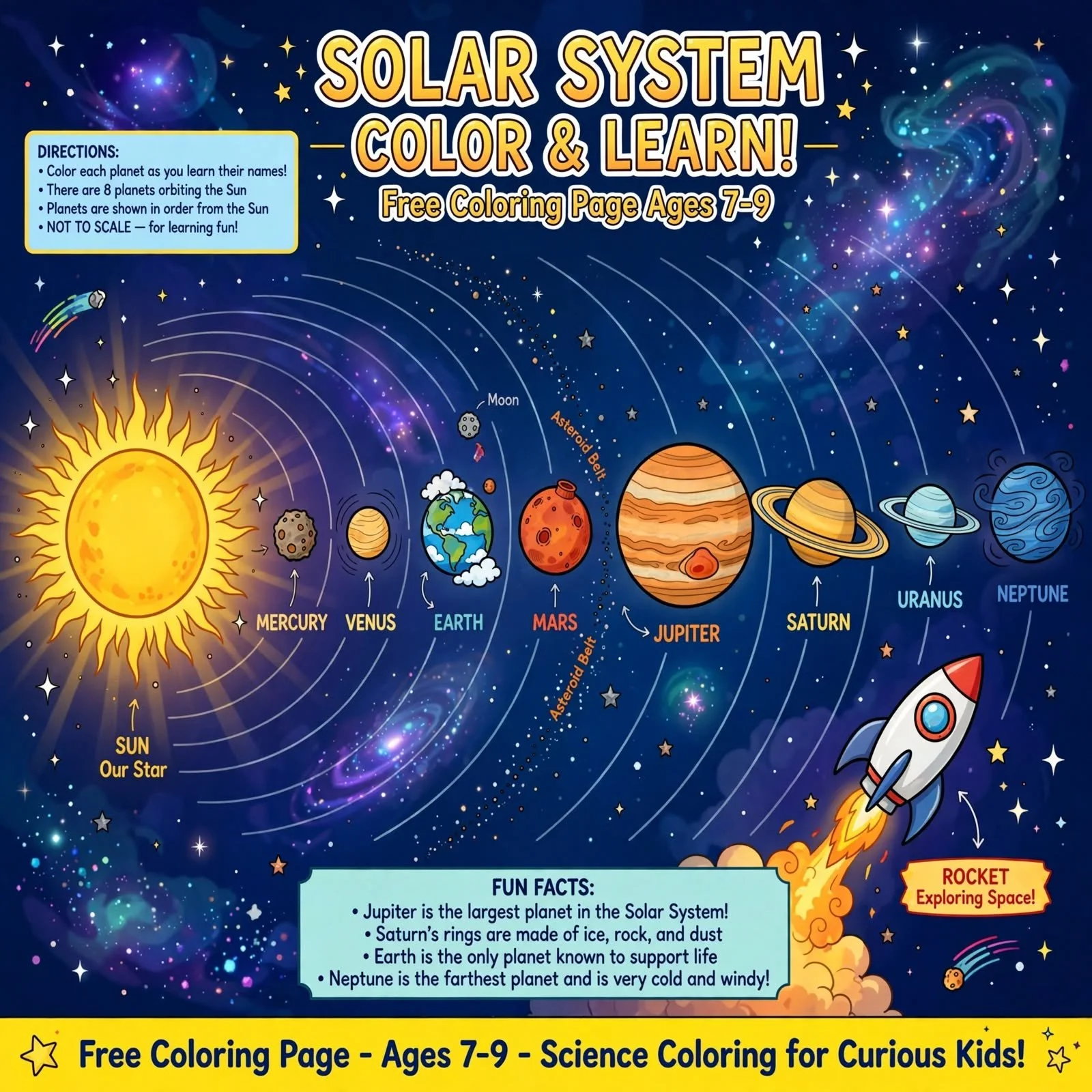
Blast Off! FREE Solar System Color & Learn Coloring Page - Ages 7-9
Make space science exciting with this FREE educational coloring page!
This detailed worksheet shows the 8 planets in order from the Sun - Mercury, Venus, Earth, Mars, Jupiter, Saturn, Uranus, Neptune - plus the Sun, Moon, Asteroid Belt, and a rocket exploring space. Includes directions and FUN FACTS!
What's Included:
1 Printable PDF - High Resolution
Labeled solar system diagram
Directions: Color planets in order from the Sun
Fun Facts: Jupiter, Saturn, Earth, Neptune
Perfect for 2nd, 3rd, 4th Grade
Perfect For:
Solar System & Space Unit
Astronomy lessons
Science centers, homework, homeschool, early finishers
Skills: Planets order, space vocabulary, science facts
LOVE SPACE?
If your students loved this, check out our complete Science Coloring Book for Ages 7-9! With more detailed solar system, life cycles, anatomy, weather, physics & chemistry experiments - designed to make science visual and fun for curious kids ages 7-9.
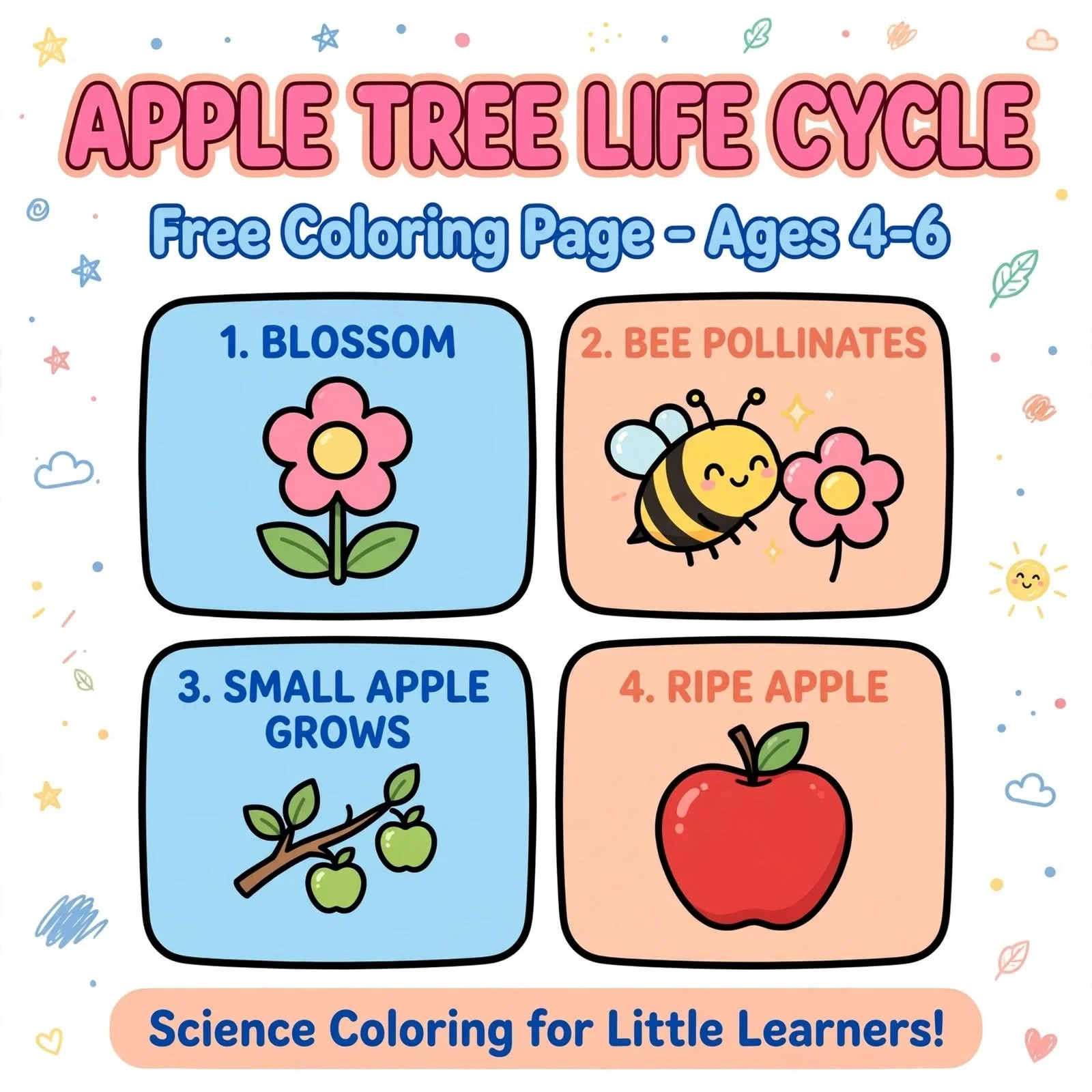
Watch the blossom grow into a ripe apple!
Make learning science fun and hands-on with this FREE Apple Tree Life Cycle coloring page!
This cute and simple 4-step diagram is perfect for preschool, kindergarten, and early elementary learners. Kids will learn how an apple grows - from blossom to bee pollination to a small apple and finally a big, ripe apple.
What's Included:
1 Printable PDF - High Resolution
4 Stages of the Apple Life Cycle:
Blossom
Bee Pollinates
Small Apple Grows
Ripe Apple
Perfect For:
Science centers & life cycle lessons
Spring and Fall / Apple unit studies
Preschool, Kindergarten, 1st Grade
Homeschool science
Quiet time, early finishers, and no-prep activities
Just print and color! Great for crayons, markers, or colored pencils.
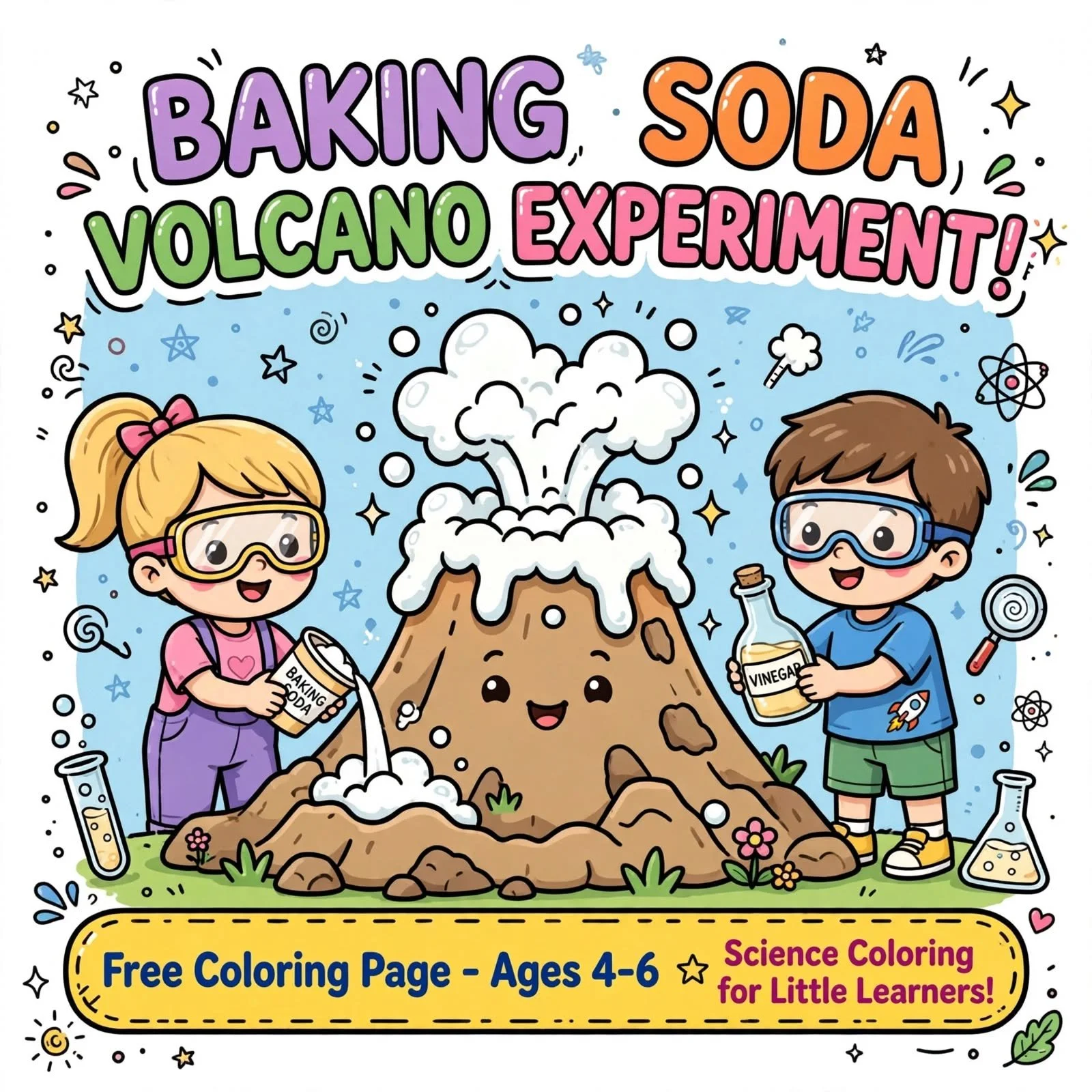
BOOM! Watch it ERUPT!
Bring science to life with this super fun and FREE Baking Soda Volcano Experiment coloring page!
This adorable scene shows two little scientists doing the classic chemical reaction experiment - Pour the baking soda... then pour the vinegar... WATCH IT ERUPT! Perfect for introducing chemistry, reactions, and the scientific method in a safe and playful way.
What's Included:
1 High-Resolution Printable PDF
Bold, easy-to-color lines
Fun details: Safety goggles, bubbling volcano, baking soda, vinegar, and science notebook labeled "OUR EXPERIMENT"
Perfect For:
Science experiments & chemistry lessons
STEM / STEAM activities
Volcano unit study
Preschool, Kindergarten, 1st, 2nd Grade
Homeschool science, classroom centers, early finishers, and no-prep fun
Science Fair week!
Just print and color with crayons, markers, or colored pencils!
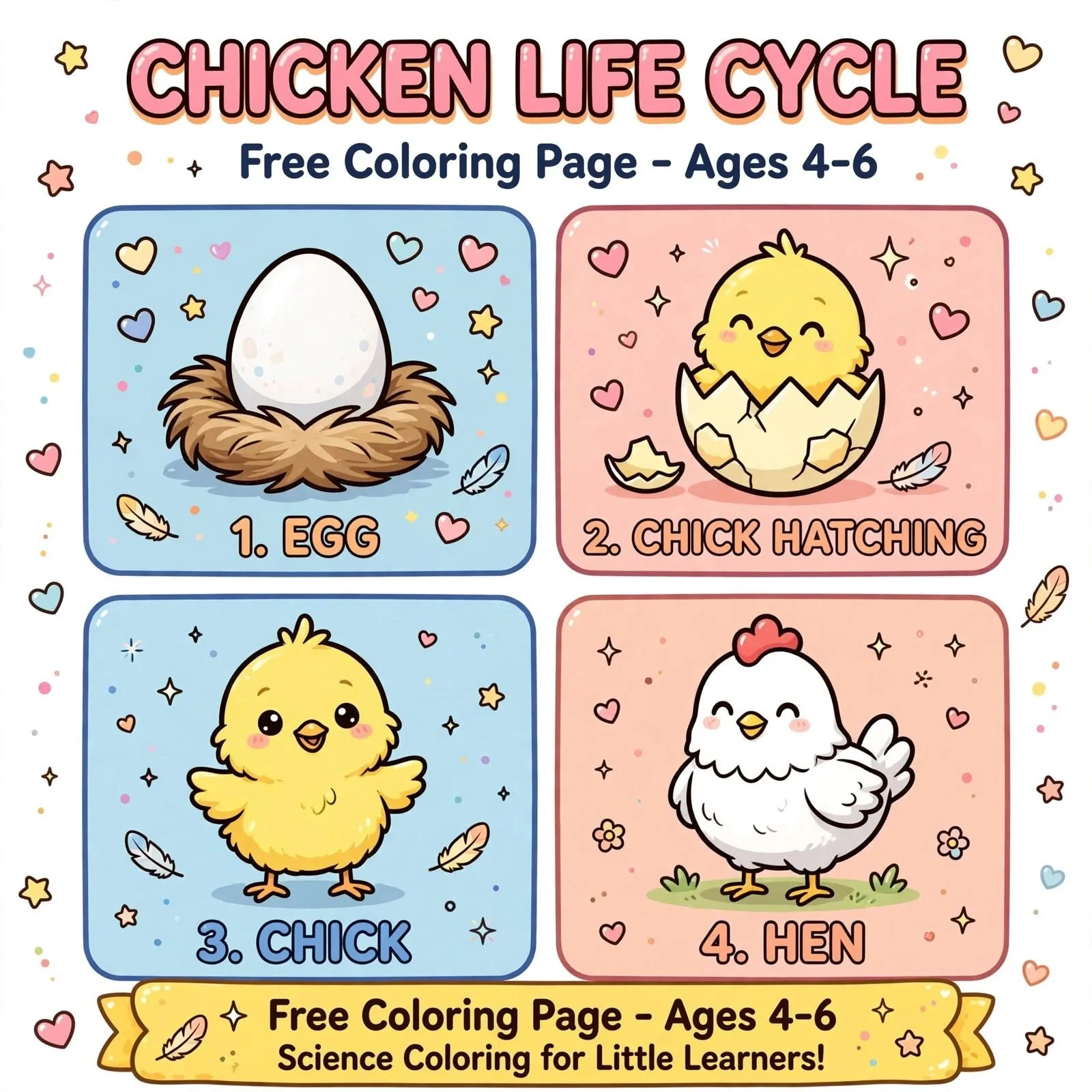
From Egg to Hen - Color and Learn!
Make learning science cluckin' fun with this FREE Chicken Life Cycle coloring page!
Perfect for little learners, this cute and simple 4-step diagram shows how a chicken grows: Egg → Chick Hatching → Chick → Hen. Big, bold lines make it easy and fun for preschool and kindergarten hands to color.
What's Included:
1 Printable PDF - High Resolution
4 Stages of the Chicken Life Cycle:
Egg in the Nest
Chick Hatching
Fluffy Chick
Grown Hen
With a fun "Color Me!" prompt and a simple learn banner at the bottom: The chick grows inside the egg, then hatches, then grows into a chick, then grows into a hen who lays eggs!
Perfect For:
Life cycle lessons & farm animal units
Preschool, Kindergarten, 1st Grade Science
Easter and Spring activities
Homeschool, science centers, morning work, and no-prep fun
Just print and color with crayons or markers!
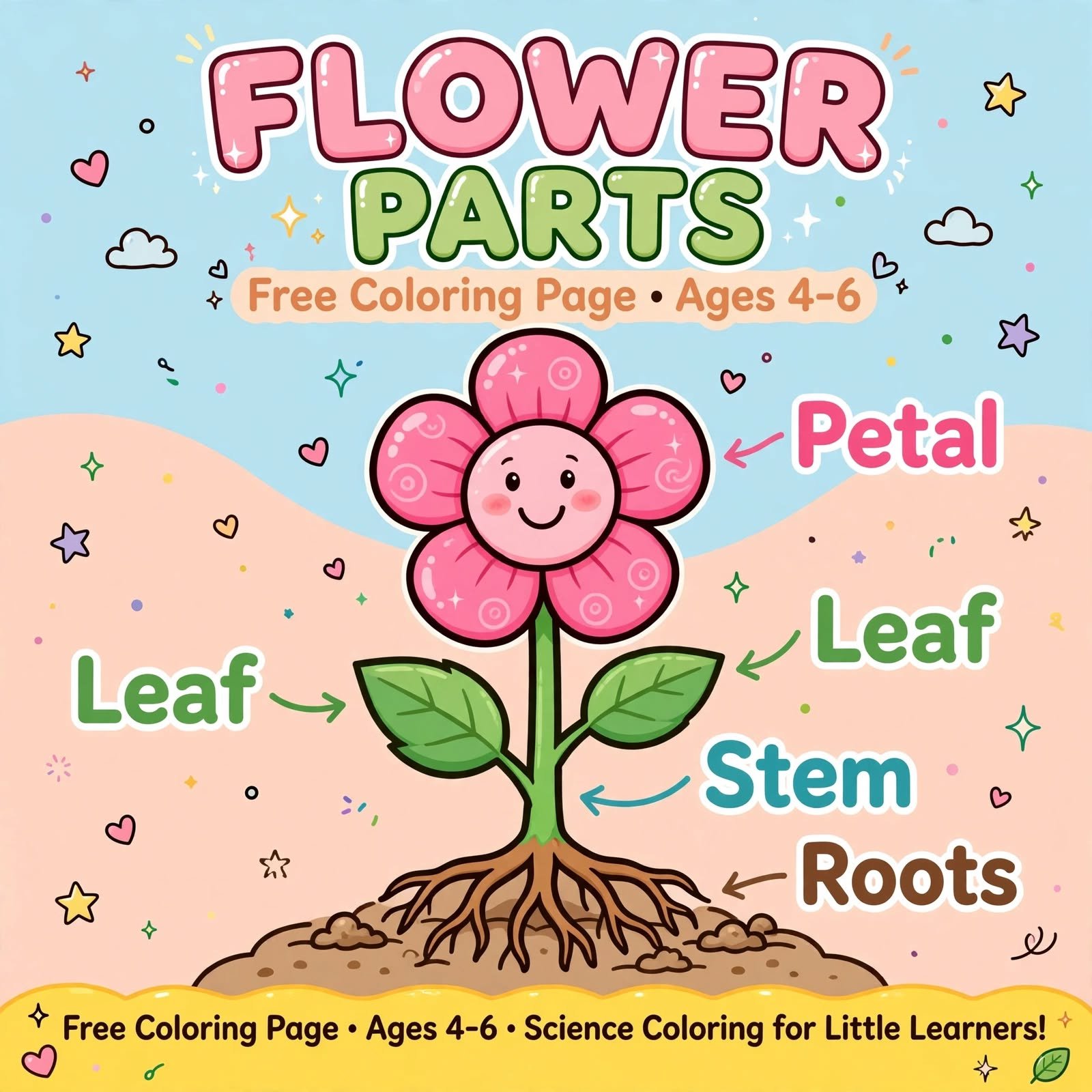
Learn Flower Parts in a Fun Way!
Make botany fun for little learners! This FREE and adorable Flower Parts coloring page is perfect for introducing preschool and kindergarten kids to the basic parts of a plant.
With a cute smiling flower and simple labels, kids will learn: Petal, Leaf, Stem, and Roots while they color!
What's Included:
1 Printable PDF (8.5" x 11") - High Resolution
Bold, thick, easy-to-color lines for small hands
Labeled diagram: Petal → Leaf → Stem → Roots
Cute kawaii flower with happy face
Perfect For:
Plant & Botany lessons
Parts of a plant unit
Spring & Garden theme
Science centers, morning work, homeschool
PreK, Kindergarten, 1st Grade
Just print, learn, and color!
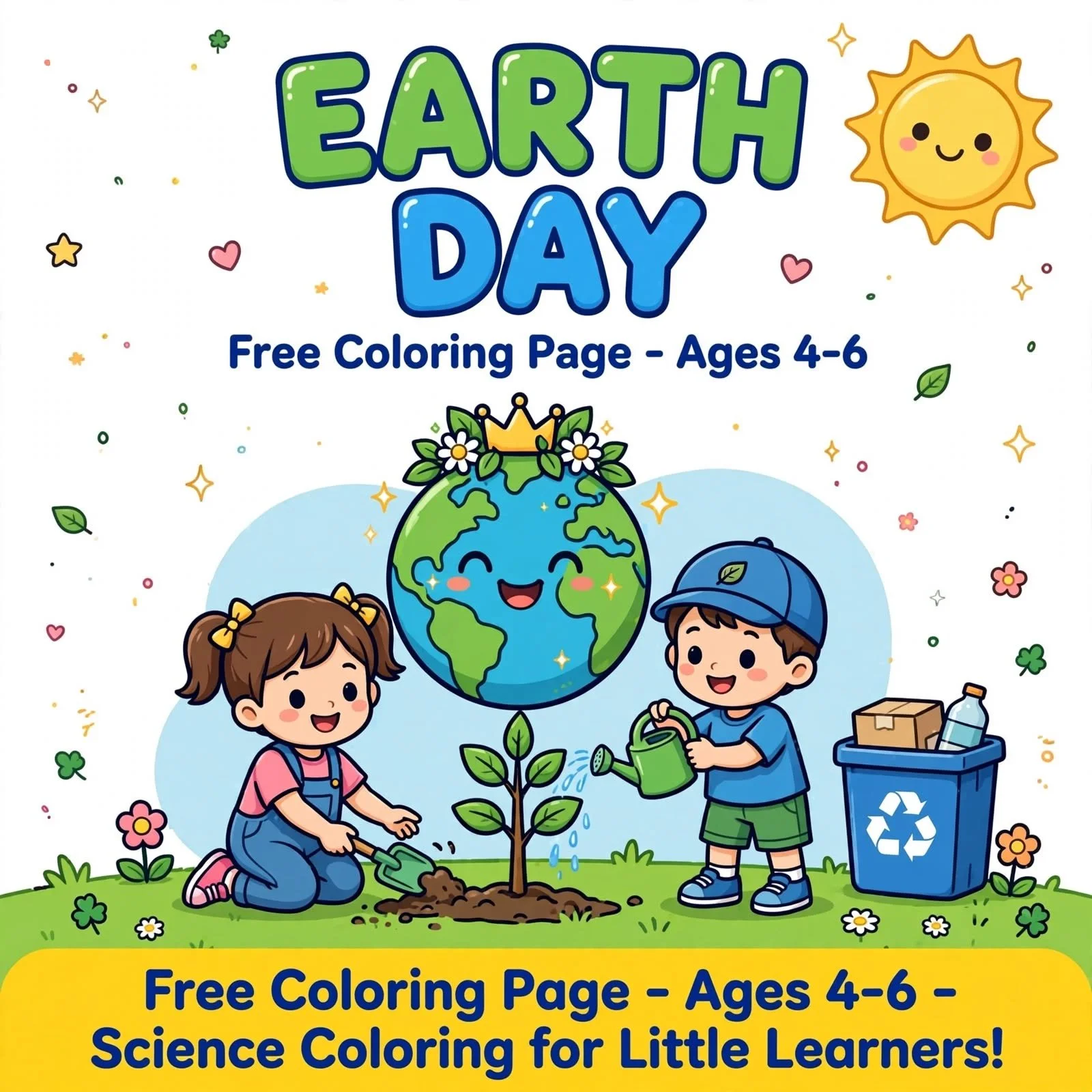
Happy Earth Day! Let's Love Our Planet!
Celebrate Earth Day with this super cute and FREE coloring page for little learners!
This happy scene teaches kids how to take care of our planet — planting trees, watering plants, and recycling — with a big smiling Earth cheering them on!
What's Included:
1 Printable PDF (8.5" x 11") - High Resolution
Bold, thick, easy-to-color lines perfect for ages 4-6
Scene includes: Happy Earth, kids planting, watering can, recycle bin, sun, flowers
Perfect For:
Earth Day unit & April activities
Environment & Recycling lessons
Preschool, Kindergarten, 1st Grade
Science centers, morning work, homeschool, no-prep fun
Just print and color!
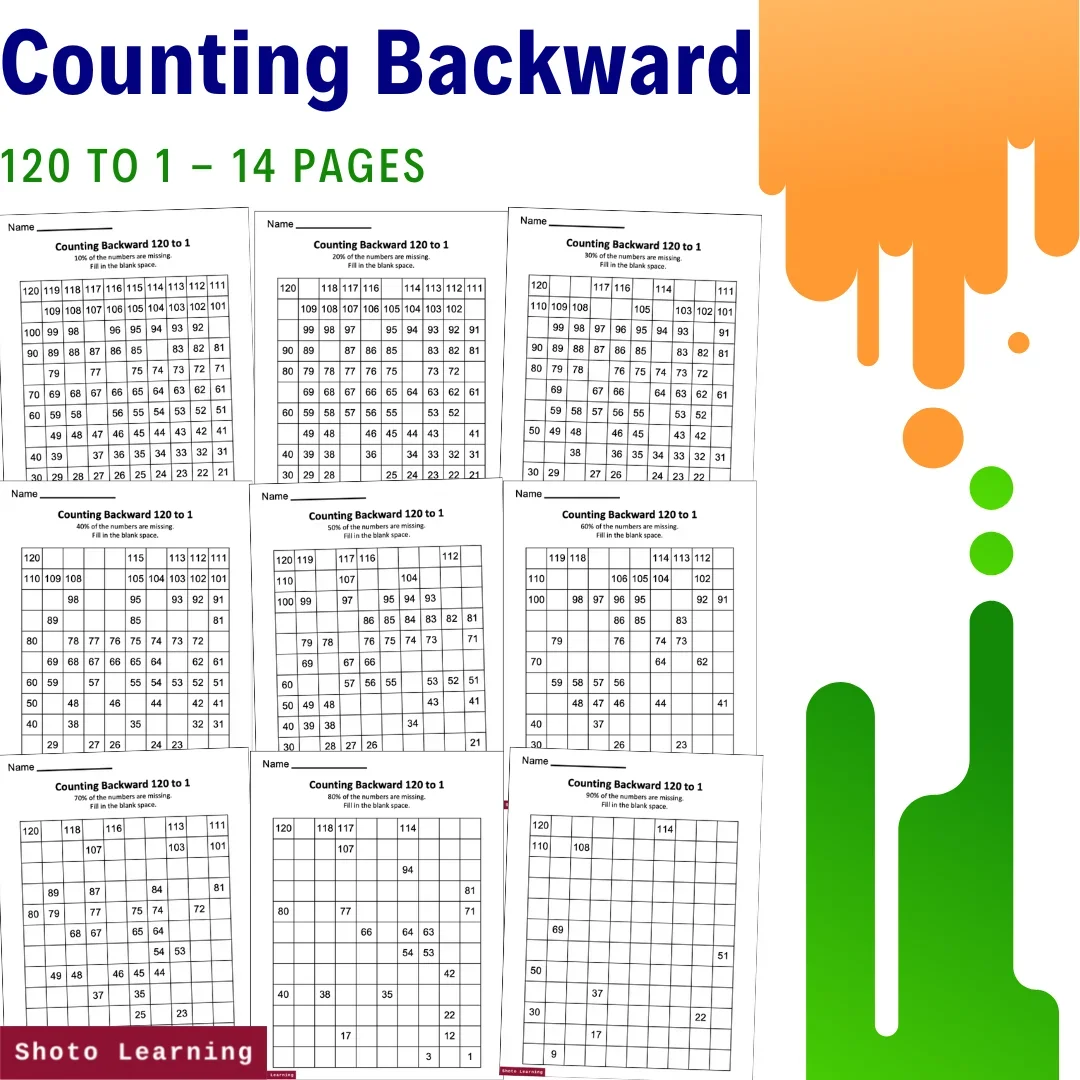
Count backward by one from 120 to 1
Straightforward and simple for beginners! Perfect for identifying numbers and counting backward to 1.
Package
Page 1 - Identification Sheet
Page 2 - 10% Numbers Missing
Page 3 - 20% Numbers Missing
Page 4 - 30% Numbers Missing
Page 5 - 40% Numbers Missing
Page 6 - 50% Numbers Missing
Page 7 - 60% Numbers Missing
Page 8 - 70% Numbers Missing
Pages 9 - 80% Numbers Missing
Pages 10 - 90% Numbers Missing
Pages 11 - 25% Numbers Missing
Pages 12 - 33% Numbers Missing
Pages 13 - 66% Numbers Missing
Pages 14 - 75% Numbers Missing
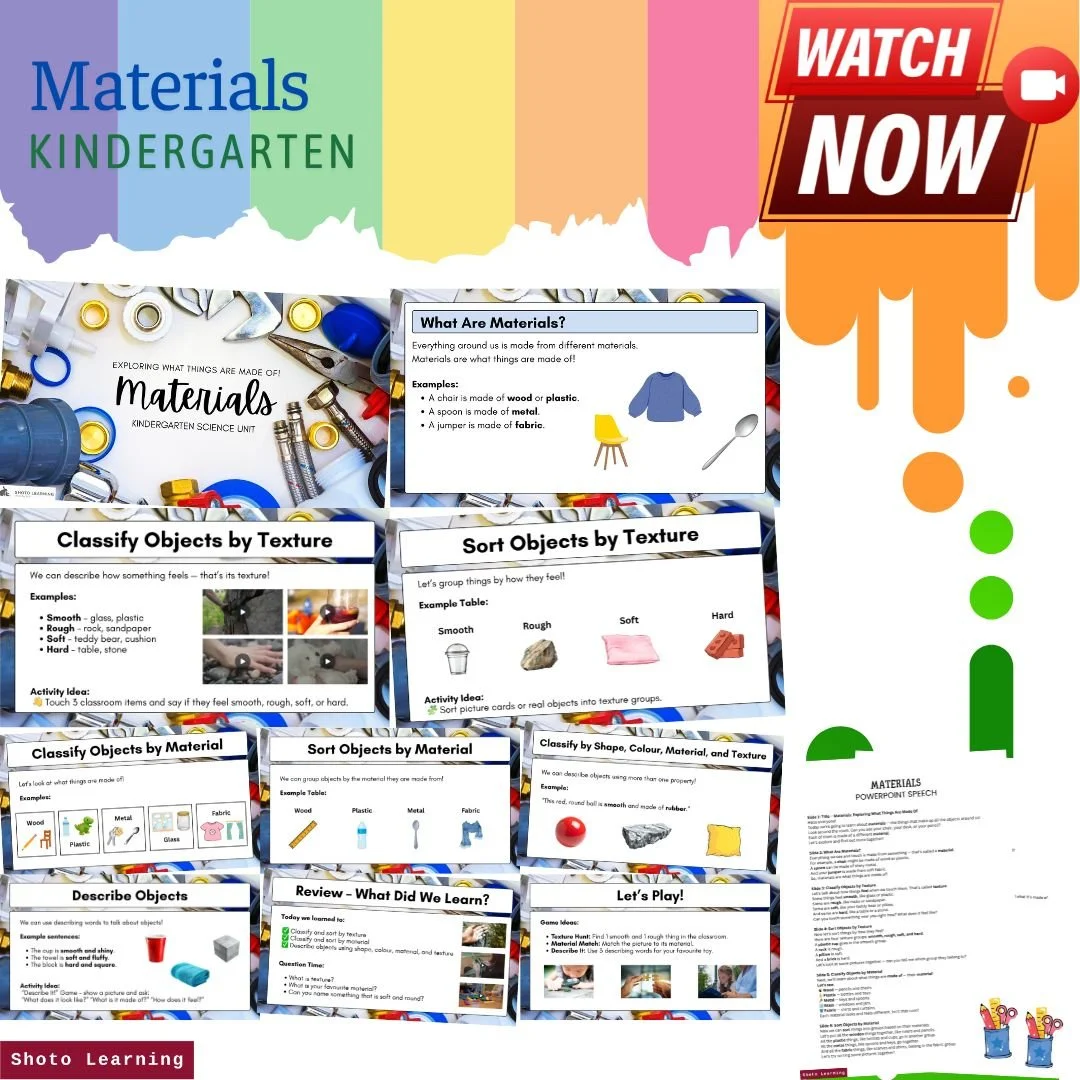
Teach your kindergarten students all about materials with this engaging and easy-to-follow PowerPoint (PDF) and teacher speech (PDF). Students will learn how to classify, sort, and describe objects by their texture, colour, shape, and material.
You can watch the full lesson free on YouTube: https://youtu.be/L8CVTmf_q_M
Key Features:
Kindergarten-level science lesson on Materials
Includes PowerPoint slides (PDF) and matching speech script (PDF)
Covers:
Classifying and sorting objects by texture
Classifying and sorting objects by material
Describing objects by shape, colour, material, and texture
Clear, simple explanations with real-life examples
Perfect for whole-class lessons, group work, or home learning
Encourages hands-on observation and descriptive language
How to Use:
Print or display the PowerPoint PDF during your science lesson.
Read or play the teacher speech PDF while showing the slides.
Encourage students to touch, compare, and describe classroom items.
Extend learning with our matching Materials Worksheets (sold separately).
Perfect for teachers, homeschool parents, and early learners exploring the world of materials through fun and interactive lessons!

Introduce Kindergarten students to materials and their properties with this engaging Materials Worksheet Pack. Children classify, sort, and describe objects by texture, material, shape, and colour—building critical thinking and early science skills.
Key Features:
Classify objects by texture (3 pages)
Sort objects by texture (2 pages)
Classify objects by material (3 pages)
Sort objects by material (2 pages)
Classify objects by shape, colour, material, and texture (2 pages)
Describe objects (2 pages)
How to Use:
Use in science centers, small groups, or independent practice.
Encourage students to observe, compare, and describe everyday objects.
Perfect for hands-on activities, discussion prompts, and early science lessons.
Print and reuse for ongoing practice of material properties.
Help your students explore the world of materials—purchase this Kindergarten Materials Worksheet Pack today!

Help your kindergarten students learn about materials with this fun cut-and-paste sorting worksheet! Children will classify 12 everyday objects into 5 material groups: metal, glass, fabric, wood, and plastic.
This 2-page freebie is perfect for introducing materials, observation, and classification in an engaging, hands-on way!
Key Features:
2 pages:
Page 1 – 12 objects to cut out
Page 2 – Sorting chart with 5 categories
Covers science concepts: materials and their properties
Builds fine motor skills through cutting and pasting
Encourages critical thinking and sorting practice
Designed for Kindergarten and early learners
Clear, easy-to-follow layout — great for classroom or homeschool use
How to Use:
Print both pages for each student.
Cut out the 12 objects on page 1.
Sort and paste them into the correct material category on page 2: Wood, Metal, Glass, Fabric, Plastic.
Discuss why each object belongs in its group to strengthen understanding.
Perfect for science centers, home learning, or independent sorting activities. Pair this worksheet with our Kindergarten “Materials” PowerPoint and Speech Lesson for a complete learning experience!
Join Our Blog for Free Teaching Tips!

Unlock unlimited access to our expanding collection of teaching blogs and free resources. Enjoy fresh content added every month, designed to help you teach a variety of subjects effectively.
Testimonials
-
⭐⭐⭐⭐⭐ Extremely satisfied! I used this as a ticket out the door. Thank you so much!
Yvonne D.
-
⭐⭐⭐⭐⭐ 5 Stars! This was a great resource! It really helped my students understand the topic.
Jamie K.
-
⭐⭐⭐⭐⭐ This was exactly what I was looking for. I wanted my first graders to practice adding & subtracting horizontally and vertically.
Lindsey B.
-
⭐⭐⭐⭐⭐ These free worksheets were great to use as reteaching opportunities. After the curriculum we are using ran out of pages I needed additional resources to help my students master the skills. Will use again next year.
Keith F.
-
⭐⭐⭐⭐⭐ Great resource, students enjoy these so much and a great way to cement content specific vocabulary. Highly recommend.
Lee S.
-
⭐⭐⭐⭐⭐ I needed more 3 digit practice for my students. This was great!
JULIE R.
-
⭐⭐⭐⭐⭐ This worksheet is great. Skip counting seems to help multiplying by 4s stick a little better.
Susan S.
-
⭐⭐⭐⭐⭐ This was an awesome resource! My students loved how engaging this was and had a lot of fun with it!
Michelle H.
-
⭐⭐⭐⭐⭐ This was perfect for my student who is learning how to carry when adding.
Ginger H.
-
⭐⭐⭐⭐⭐ Thanks so much for this resource! It was great for my students.
Kelsey W.
-
⭐⭐⭐⭐⭐ Great resource, my students enjoy reviewing these every day, thanks.
Ruby R.
-
⭐⭐⭐⭐⭐ Good supplement material.
Mendy H.
-
⭐⭐⭐⭐⭐ My class NEEDED this. Great resource
Sydney C.
-
⭐⭐⭐⭐⭐ These were great to leave with a substitute for my students to stay on task and engaged.
Kathryn B.
-
⭐⭐⭐⭐⭐ Enjoyed using this tool with my little ones. Looking forward to future ideas from you. Thanks
Gwen C.
-
⭐⭐⭐⭐⭐ Kids were able to work on skills with me, then branch off to work on the packets. I purchased many of these and would print the packs for the individual students when they were ready. Excellent.
Jill C.
-
⭐⭐⭐⭐⭐ Helpful for my students to practice vocabulary and spelling.
Claudia M.
-
⭐⭐⭐⭐⭐ Loved this iSpy worksheet as a supplemental activity to use during our "5 senses" unit. Will be using again this year!
Haley A.
-
⭐⭐⭐⭐⭐ Enjoyed this for some of my struggling students who needed extra practice!
Francisca T.
-
⭐⭐⭐⭐⭐ My reading intervention group loved this.
Elizabeth P.
Teaching graphs and data analysis becomes exciting when students collect real data, build charts, and explore patterns through hands-on activities. Discover strategies to make data skills meaningful and memorable.